出
go out, produce
At a glance · 出
Evolution of the glyph
Five stages, from a sketch of the real object to regular script — tap a stage, drag the timeline, or play the animation.
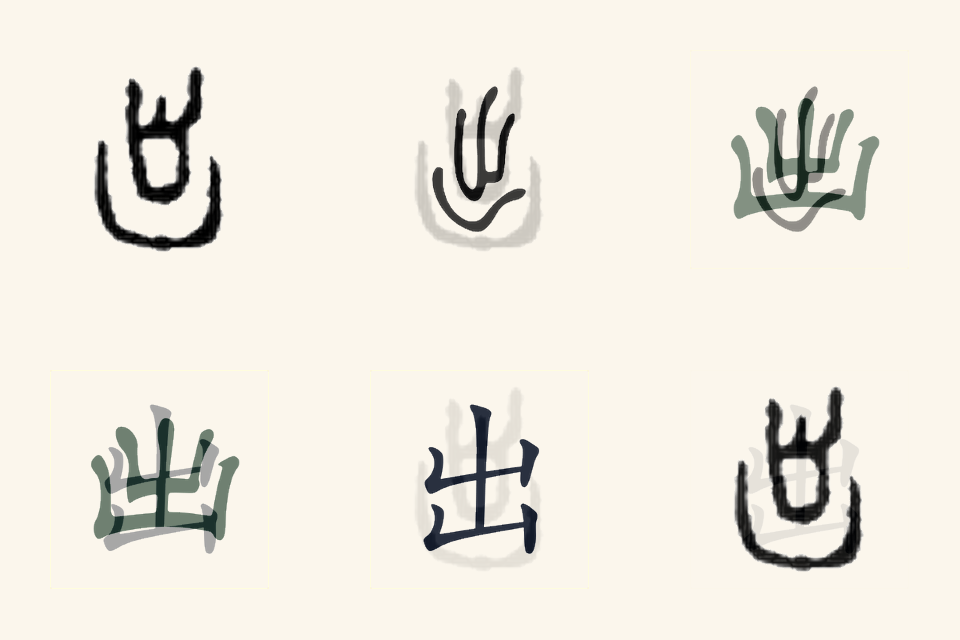
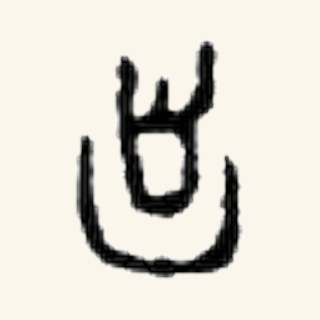
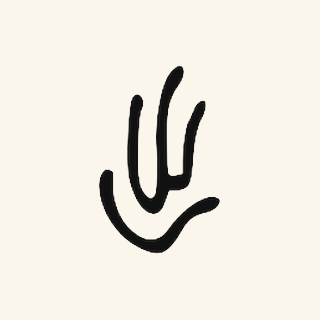

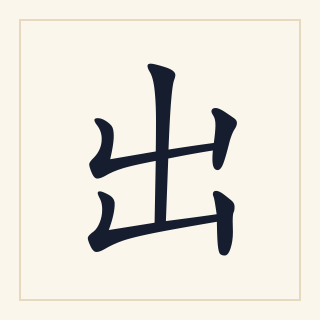
Object sketchBefore writing · drawing what was seenOracle boneShang dynasty · c. 1300–1046 BCESeal scriptQin dynasty · 221–206 BCEClerical scriptHan dynasty · 206 BCE–220 CERegular scriptWei–Jin to Tang · c. 3rd–9th century CE
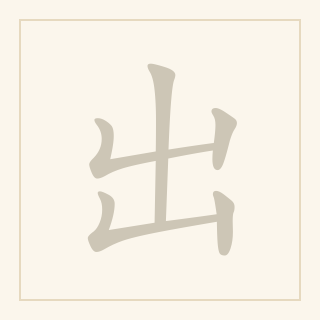
出字甲骨文象足自穴居或丘阜中走出之形,本义为外出;金文、小篆承之。
What the sketch shows
Origins & notes
出本义为出去、出现,引申为产出。
Structure
出为象形字,描摹脚(止)离穴而出。
At a glance
Pinyinchū
Radical凵
Strokes5
UnicodeU+51FA
Character type象形
Theme动作
Six languages, one character
Each page offers hreflang versions; switching language keeps the glyphs and meanings aligned.
English
go out, produce
Chu is a pictograph of a foot leaving a dwelling, meaning to go out and produce.
Français
sortir, produire
Chu est un pictogramme d'un pied quittant un abri, signifiant sortir et produire.
Español
salir, producir
Chu es un pictograma de un pie saliendo de un refugio, significa salir y producir.
العربية
يخرج، ينتج
تشو رسم تخطيطي لقدم تغادر المسكن، ويعني الخروج والإنتاج.
Русский
выходить, производить
Чу — пиктограмма ступни, покидающей жилище, означает выходить и производить.
Common words
- 出口chū kǒuexport
- 出发chū fāset out