勿
do not
At a glance · 勿
Evolution of the glyph
Five stages, from a sketch of the real object to regular script — tap a stage, drag the timeline, or play the animation.
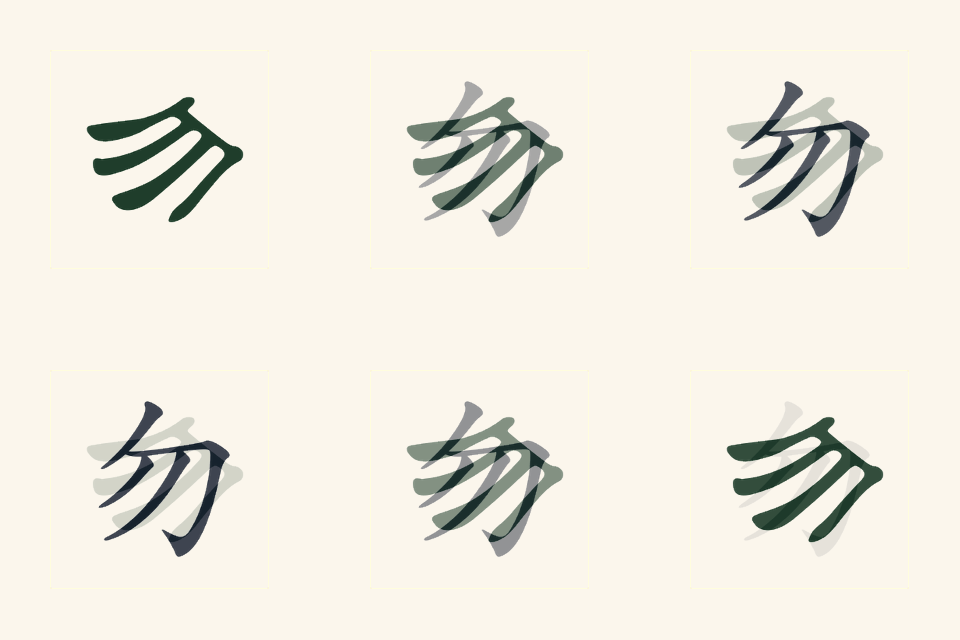

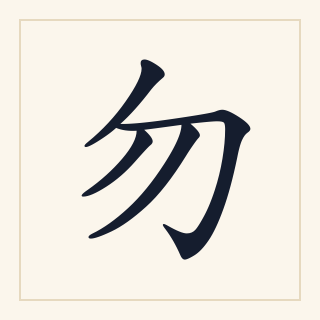
Object sketchBefore writing · drawing what was seenOracle boneShang dynasty · c. 1300–1046 BCESeal scriptQin dynasty · 221–206 BCEClerical scriptHan dynasty · 206 BCE–220 CERegular scriptWei–Jin to Tang · c. 3rd–9th century CE
⚠ Some ancient forms are not attested:oracle bone form、seal script form。No excavated oracle bone / seal artifact is attested for this character yet; we leave it blank rather than fabricate.
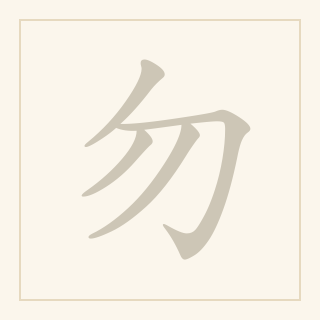
甲骨文、金文象旗帜飘扬之形(或说耒形),象形,后借为否定副词「不要」。隶楷作「勿」。
What the sketch shows
Origins & notes
「勿」本为旗帜之象,假借为禁止性副词。
Structure
象形字,象旗帜飘动之形;后借作副词。
At a glance
Pinyinwù
Radical勹
Strokes4
UnicodeU+52FF
Character type象形
Theme虚词
Six languages, one character
Each page offers hreflang versions; switching language keeps the glyphs and meanings aligned.
English
do not
Do not, must not (prohibitive).
Français
ne pas
Ne pas, il ne faut pas (défense).
Español
no
No, no debes (prohibición).
العربية
لا
لا تفعل (نهي).
Русский
не
Не, нельзя (запрет).
Common words
- 勿wùdo not
- 勿忘wù wàngdon't forget