去
go away
At a glance · 去
Evolution of the glyph
Five stages, from a sketch of the real object to regular script — tap a stage, drag the timeline, or play the animation.
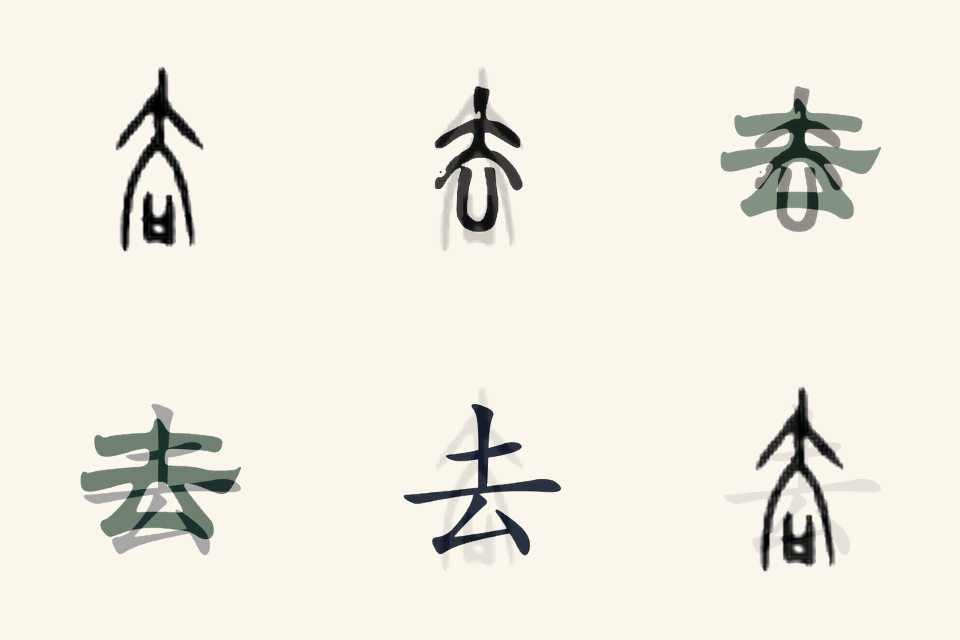
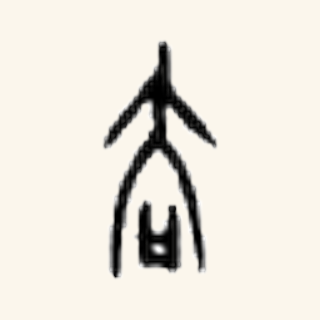
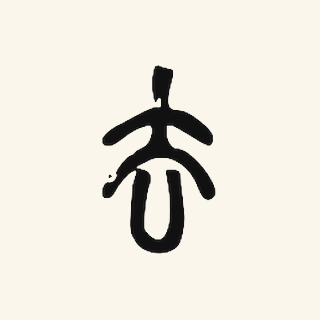

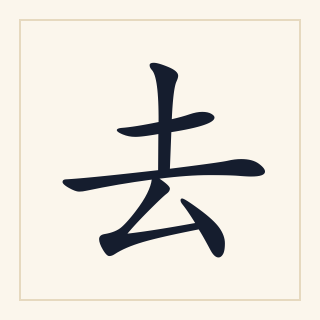
Object sketchBefore writing · drawing what was seenOracle boneShang dynasty · c. 1300–1046 BCESeal scriptQin dynasty · 221–206 BCEClerical scriptHan dynasty · 206 BCE–220 CERegular scriptWei–Jin to Tang · c. 3rd–9th century CE
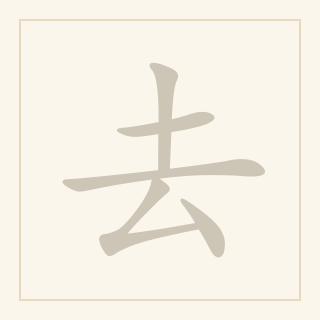
「去」甲骨文从大从凵,象人离穴而去,金文小篆承之。
What the sketch shows
Origins & notes
「去」本义为离开、离去,引申前往、过去的。
Structure
从大、从凵,会意字,象人离居穴,本为离开。
At a glance
Pinyinqù
Radical厶
Strokes5
UnicodeU+53BB
Character type会意
Theme动作
Six languages, one character
Each page offers hreflang versions; switching language keeps the glyphs and meanings aligned.
English
go away
go away, leave, depart
Français
partir / quitter
Partir, quitter. «去而益咏» : après son départ on le célèbre plus.
Español
irse / partir
Irse, partir. «去而益咏»: tras su partida se le celebra más.
العربية
يرحل / يغادر
يرحل، يغادر. «去而益咏»: بعد رحيله يُحتفى به أكثر.
Русский
уходить / покидать
Уходить, покидать. «去而益咏»: после ухода его славят больше.
Common words
- 去年qù niánlast year
- 去qùgo