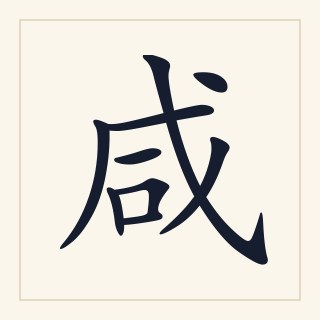
咸
all, salty
At a glance · 咸
Evolution of the glyph
Five stages, from a sketch of the real object to regular script — tap a stage, drag the timeline, or play the animation.
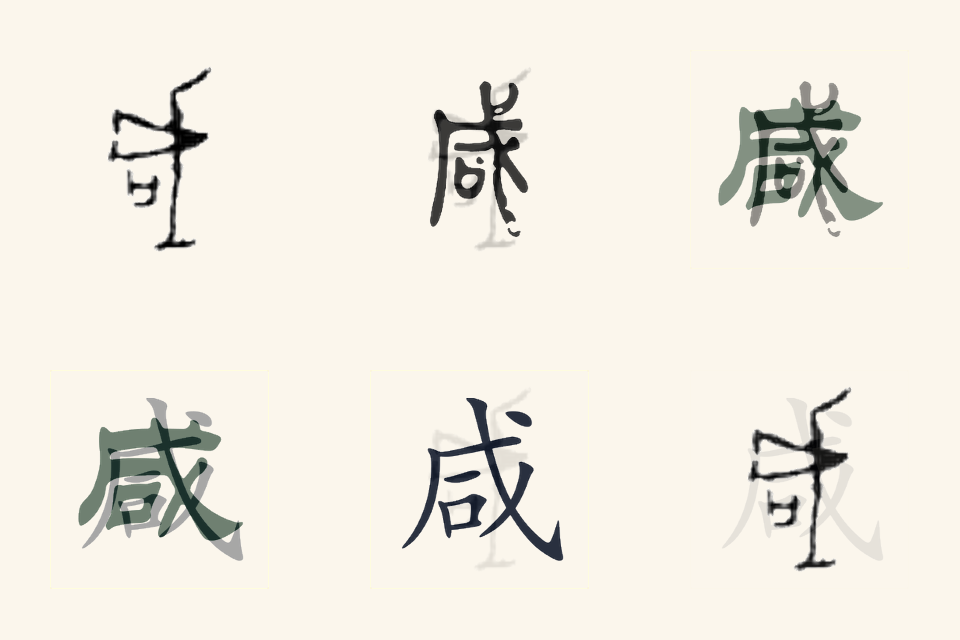
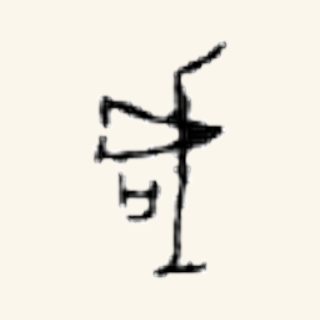
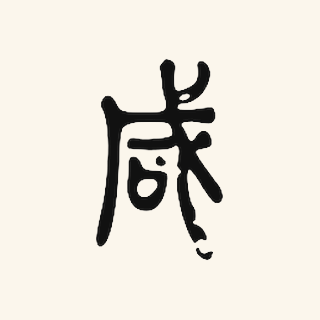
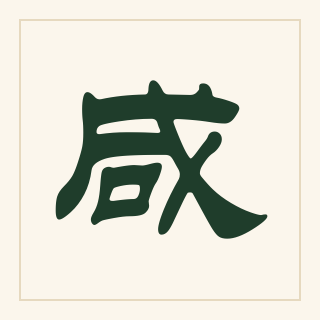
Object sketchBefore writing · drawing what was seenOracle boneShang dynasty · c. 1300–1046 BCESeal scriptQin dynasty · 221–206 BCEClerical scriptHan dynasty · 206 BCE–220 CERegular scriptWei–Jin to Tang · c. 3rd–9th century CE
咸字小篆从口从戌,会意为皆、全;本义为普遍、都。甲骨文象以戈伤人,后借为盐味。
What the sketch shows
Origins & notes
咸本义为皆、都(副词),后借指咸味。
Structure
咸为会意字,从口从戌,表示人人皆然;咸味为后起借义。
At a glance
Pinyinxián
Radical口
Strokes9
UnicodeU+54B8
Character type会意
Theme虚词
Six languages, one character
Each page offers hreflang versions; switching language keeps the glyphs and meanings aligned.
English
all, salty
Xian originally meant all and everyone and was later borrowed for the salty taste.
Français
tous, salé
Xian signifiait à l'origine tous et chacun et a ensuite été emprunté pour le goût salé.
Español
todos, salado
Xian originalmente significaba todos y cada uno y luego se tomó prestado para el sabor salado.
العربية
كل، مالح
شيان كان في الأصل يعني الجميع ثم استُعير للطعم المالح.
Русский
все, солёный
Сянь изначально означало «все» и было заимствовано для солёного вкуса.
Common words
- 咸味xián wèisalty
- 咸菜xián càipickles