弗
not
At a glance · 弗
Evolution of the glyph
Five stages, from a sketch of the real object to regular script — tap a stage, drag the timeline, or play the animation.


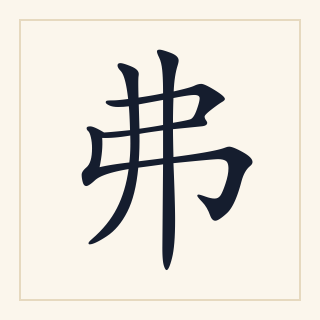
Object sketchBefore writing · drawing what was seenOracle boneShang dynasty · c. 1300–1046 BCESeal scriptQin dynasty · 221–206 BCEClerical scriptHan dynasty · 206 BCE–220 CERegular scriptWei–Jin to Tang · c. 3rd–9th century CE
⚠ Some ancient forms are not attested:oracle bone form、seal script form。No excavated oracle bone / seal artifact is attested for this character yet; we leave it blank rather than fabricate.
「弗」甲骨文象以绳束矫枉之形,后借为否定副词。
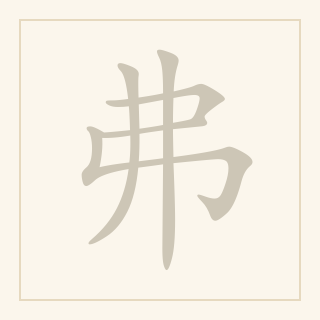
What the sketch shows
Origins & notes
「弗」本为矫枉之具象形,假借为不、勿,文言否定词。
Structure
象形字,本象束物矫直,假借为否定词「不」。
At a glance
Pinyinfú
Radical弓
Strokes5
UnicodeU+5F17
Character type象形
Theme虚词
Six languages, one character
Each page offers hreflang versions; switching language keeps the glyphs and meanings aligned.
English
not
not, negative; dollar
Français
ne pas (classique)
Ne pas (littéraire). «造次弗离» : ne point abandonner.
Español
no (clásico)
No (literario). «造次弗离»: no abandonar.
العربية
لا (كلاسيكي)
لا (أدبي). «造次弗离»: لا تتخلَّ عنه.
Русский
не (классич.)
Не (книжн.). «造次弗离»: не покидать.
Common words
- 弗fúnot (classical)