欣
glad, joyful
At a glance · 欣
Evolution of the glyph
Five stages, from a sketch of the real object to regular script — tap a stage, drag the timeline, or play the animation.
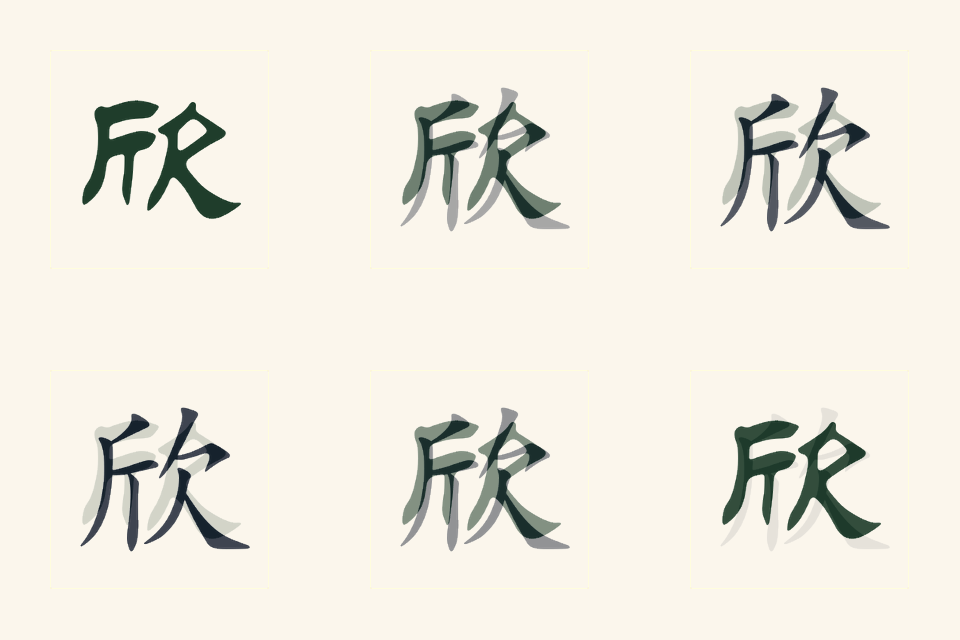
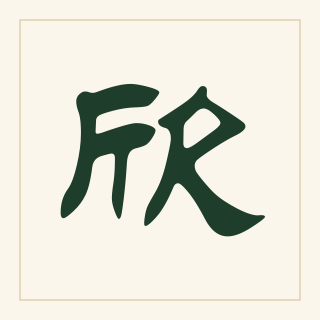
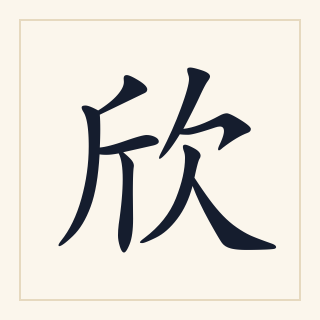
Object sketchBefore writing · drawing what was seenOracle boneShang dynasty · c. 1300–1046 BCESeal scriptQin dynasty · 221–206 BCEClerical scriptHan dynasty · 206 BCE–220 CERegular scriptWei–Jin to Tang · c. 3rd–9th century CE
⚠ Some ancient forms are not attested:oracle bone form、seal script form。No excavated oracle bone / seal artifact is attested for this character yet; we leave it blank rather than fabricate.
小篆从欠斤声,形声字,本指欢悦、笑乐。隶楷作「欣」。
What the sketch shows
Origins & notes
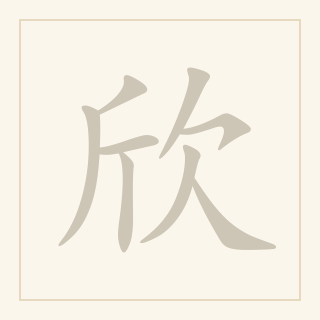
「欣」本指喜悦,引申为欣喜、欣悦。
Structure
形声字,欠为意符(张口出气),斤为声符。
At a glance
Pinyinxīn
Radical欠
Strokes8
UnicodeU+6B23
Character type形声
Theme德行
Six languages, one character
Each page offers hreflang versions; switching language keeps the glyphs and meanings aligned.
English
glad, joyful
Glad, joyful, pleased.
Français
heureux, joyeux
Heureux, joyeux, content.
Español
feliz, alegre
Feliz, alegre, complacido.
العربية
فرح، مسرور
فرح أو مسرور.
Русский
радостный, довольный
Радостный, счастливый, довольный.
Common words
- 欣赏xīn shǎngenjoy
- 欣xīnglad