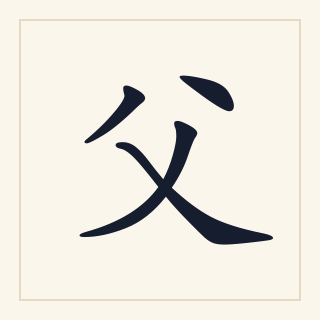
父
father
At a glance · 父
Evolution of the glyph
Five stages, from a sketch of the real object to regular script — tap a stage, drag the timeline, or play the animation.
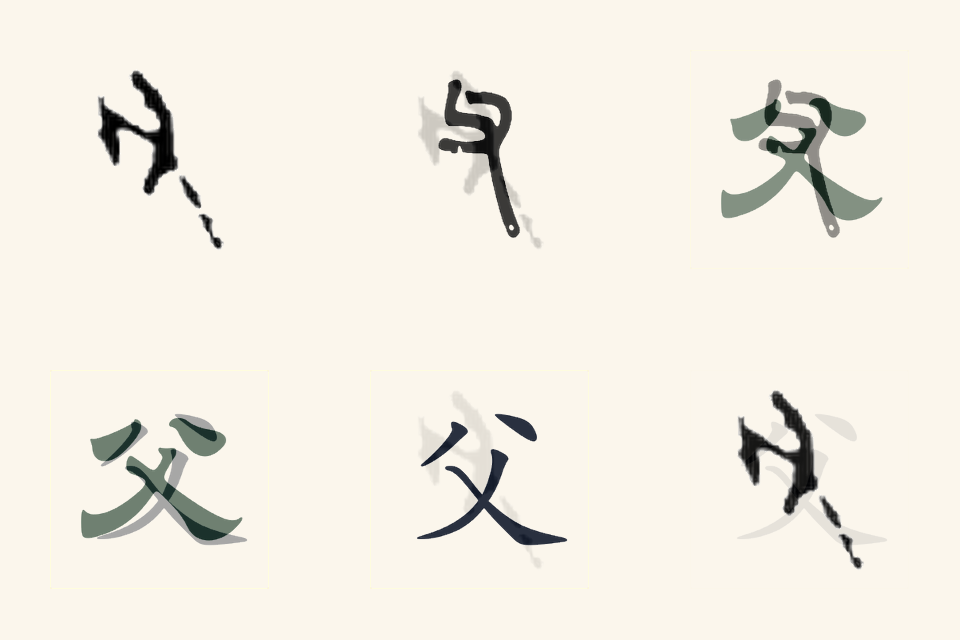
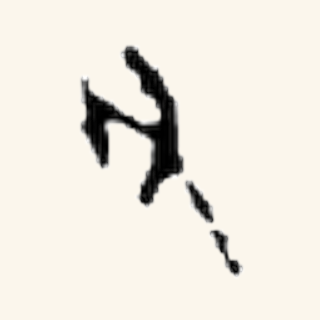
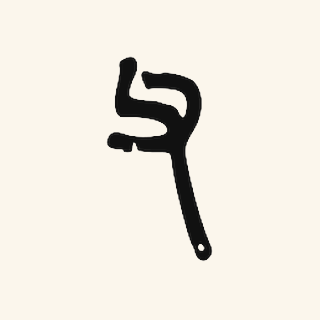
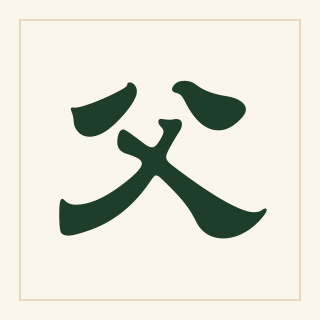
Object sketchBefore writing · drawing what was seenOracle boneShang dynasty · c. 1300–1046 BCESeal scriptQin dynasty · 221–206 BCEClerical scriptHan dynasty · 206 BCE–220 CERegular scriptWei–Jin to Tang · c. 3rd–9th century CE
父字甲骨文象手持石斧之形,本义为父亲、家长,后专指父亲。金文、小篆承之。
What the sketch shows
Origins & notes
父本义为父亲、家长。
Structure
父为象形字,描摹手执斧钺,象征家长权威。
At a glance
Pinyinfù
Radical父
Strokes4
UnicodeU+7236
Character type象形
Theme人伦
Six languages, one character
Each page offers hreflang versions; switching language keeps the glyphs and meanings aligned.
English
father
Fu is a pictograph of a hand holding an axe, meaning father and patriarch.
Français
père
Fu est un pictogramme d'une main tenant une hache, signifiant père et patriarche.
Español
padre
Fu es un pictograma de una mano sosteniendo un hacha, significa padre y patriarca.
العربية
أب
فو رسم تخطيطي ليد تمسك فأساً، ويعني الأب ورئيس العائلة.
Русский
отец
Фу — пиктограмма руки с топором, означает отца и главу семьи.
Common words
- 父亲fù qīnfather
- 父母fù mǔparents