牧
tend, herd
At a glance · 牧
Evolution of the glyph
Five stages, from a sketch of the real object to regular script — tap a stage, drag the timeline, or play the animation.
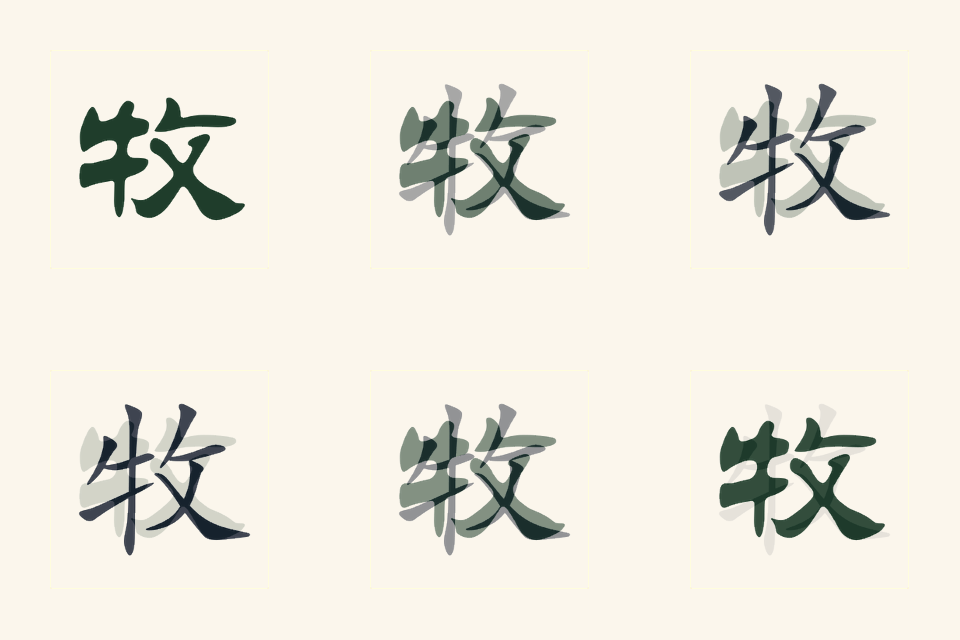
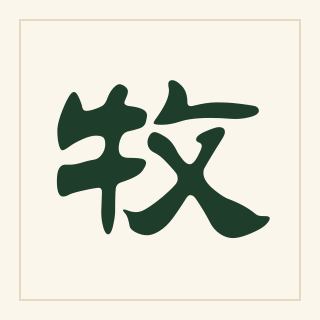
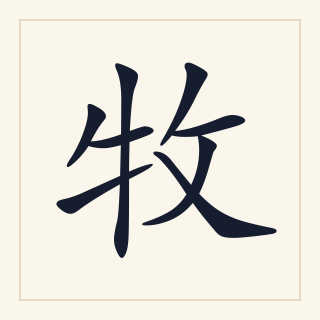
Object sketchBefore writing · drawing what was seenOracle boneShang dynasty · c. 1300–1046 BCESeal scriptQin dynasty · 221–206 BCEClerical scriptHan dynasty · 206 BCE–220 CERegular scriptWei–Jin to Tang · c. 3rd–9th century CE
⚠ Some ancient forms are not attested:oracle bone form、seal script form。No excavated oracle bone / seal artifact is attested for this character yet; we leave it blank rather than fabricate.
甲骨文、金文从攴(手持鞭)从牛,会意放养牲畜。隶楷作「牧」。
What the sketch shows
Origins & notes
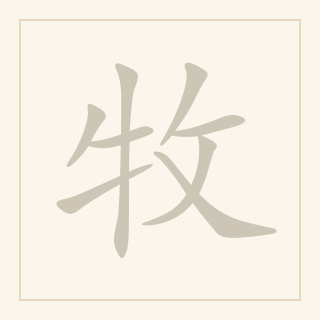
「牧」本指放养牛马,引申为治理百姓之官。
Structure
会意字,从攴从牛,手执鞭放牧之形。
At a glance
Pinyinmù
Radical牜
Strokes8
UnicodeU+7267
Character type会意
Theme动作
Six languages, one character
Each page offers hreflang versions; switching language keeps the glyphs and meanings aligned.
English
tend, herd
To tend (cattle); to govern.
Français
garder, élever
Soigner (bétail); gouverner.
Español
cuidar, pastorear
Cuidar (ganado); gobernar.
العربية
يرعى، يحكم
يرعى الماشية أو يحكم.
Русский
пасти, управлять
Пасти (скот); управлять (народом).
Common words
- 牧mùherd
- 牧场mù chǎngpasture