羔
lamb, kid
At a glance · 羔
Evolution of the glyph
Five stages, from a sketch of the real object to regular script — tap a stage, drag the timeline, or play the animation.
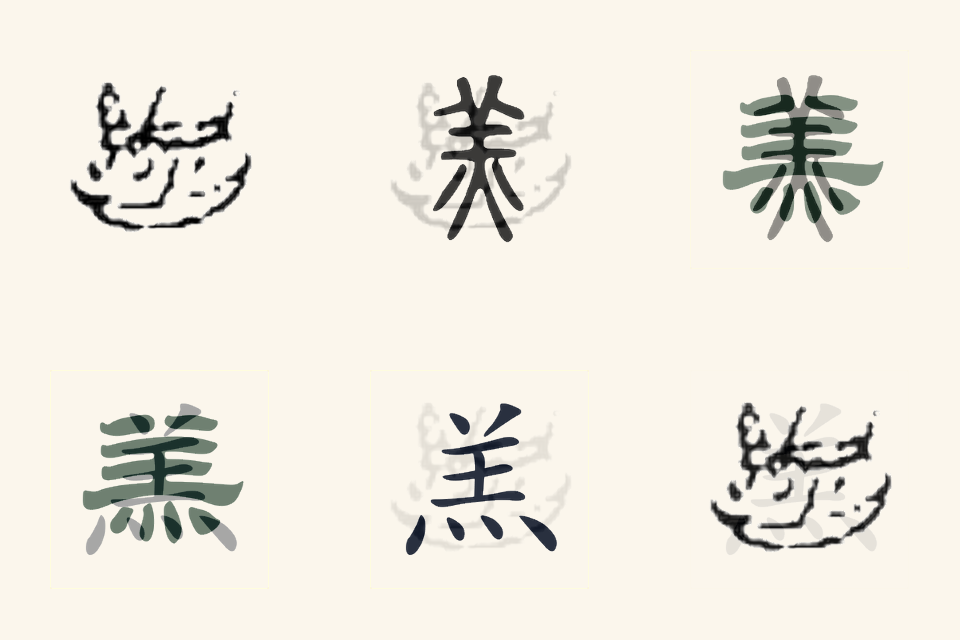
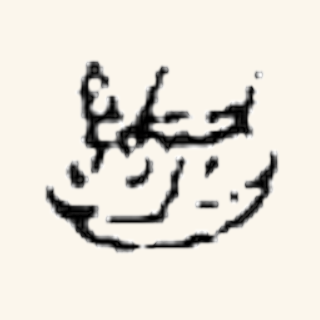
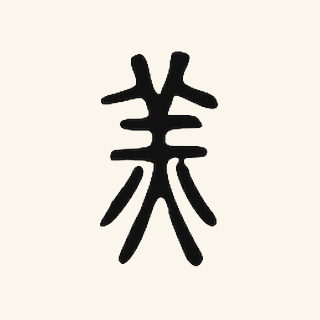
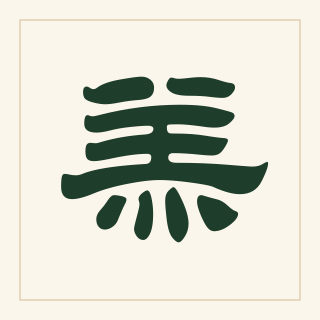
Object sketchBefore writing · drawing what was seenOracle boneShang dynasty · c. 1300–1046 BCESeal scriptQin dynasty · 221–206 BCEClerical scriptHan dynasty · 206 BCE–220 CERegular scriptWei–Jin to Tang · c. 3rd–9th century CE
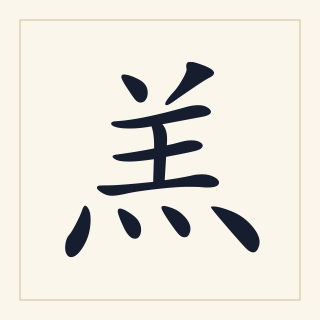
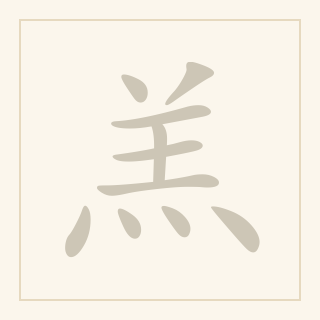
羔字小篆从羊从火,会意为小羊(一说羊在火上烤),本义为小羊、羊羔。甲骨文未见。
What the sketch shows
Origins & notes
羔本义为小羊、羊羔。
Structure
会意字,从羊从火,象羊羔温顺(或烤肉),表示幼羊。
At a glance
Pinyingāo
Radical灬
Strokes10
UnicodeU+7F94
Character type会意
Theme动物
Six languages, one character
Each page offers hreflang versions; switching language keeps the glyphs and meanings aligned.
English
lamb, kid
Gao is an associative character of sheep and fire, meaning a lamb.
Français
agneau
Gao est un caractère associatif de mouton et feu, signifiant un agneau.
Español
cordero
Gao es un carácter asociativo de oveja y fuego, significa cordero.
العربية
حمل
غاو حرف تركيبي لخروف ونار، يعني الحمل (صغير الخروف).
Русский
ягнёнок
Гао — ассоциативный знак овцы и огня, означает ягнёнка.
Common words
- 羔羊gāo yánglamb
- 羊羔yáng gāolamb