行
go, walk, conduct
At a glance · 行
Evolution of the glyph
Five stages, from a sketch of the real object to regular script — tap a stage, drag the timeline, or play the animation.
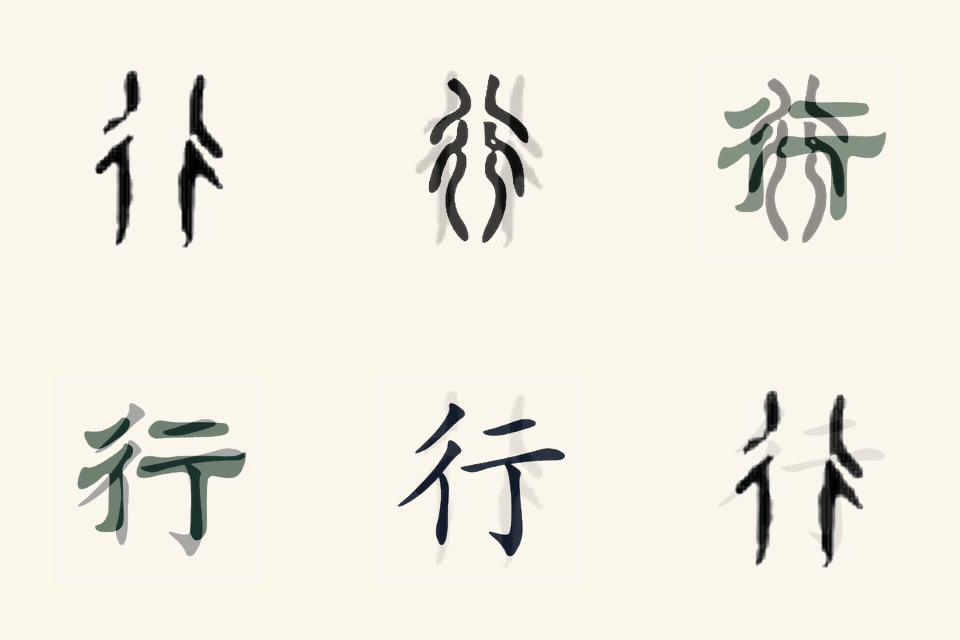
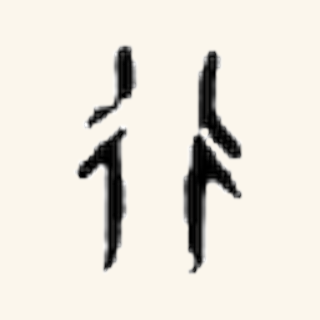
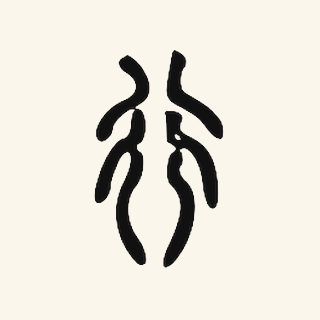
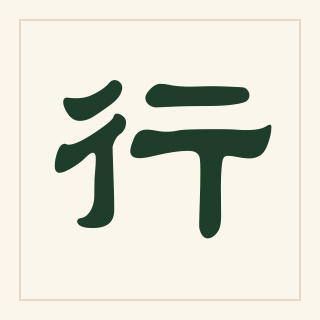
Object sketchBefore writing · drawing what was seenOracle boneShang dynasty · c. 1300–1046 BCESeal scriptQin dynasty · 221–206 BCEClerical scriptHan dynasty · 206 BCE–220 CERegular scriptWei–Jin to Tang · c. 3rd–9th century CE
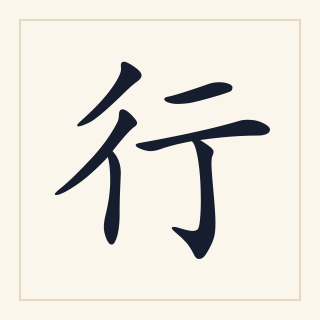
行字甲骨文象十字路口之形,本义为道路,后引申为行走、品行。金文、小篆承之。
What the sketch shows
Origins & notes
行本义为道路(háng),引申为行走(xíng)、品行。
Structure
行为象形字,描摹四达之衢,后引申为行走。
At a glance
Pinyinxíng
Radical行
Strokes6
UnicodeU+884C
Character type象形
Theme动作
Six languages, one character
Each page offers hreflang versions; switching language keeps the glyphs and meanings aligned.
English
go, walk, conduct
Xing was originally a pictograph of a crossroads, meaning road and, by extension, to walk and conduct.
Français
aller, conduite
Xing était à l'origine un pictogramme de carrefour, signifiant route puis marcher et conduite.
Español
ir, conducta
Xing era originalmente un pictograma de encrucijada, significa camino luego caminar y conducta.
العربية
يمشي، سلوك
شينغ كان في الأصل رسماً لتقاطع طرق، يعني الطريق ثم المشي والسلوك.
Русский
идти, поведение
Син изначально было пиктограммой перекрёстка, означает дорогу, затем идти и поведение.
Common words
- 行为xíng wéibehavior
- 行动xíng dòngaction