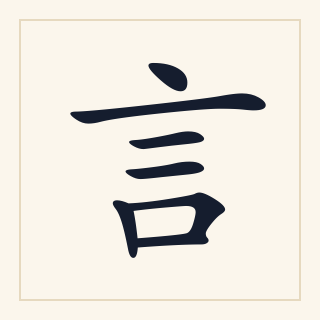
言
words
At a glance · 言
Evolution of the glyph
Five stages, from a sketch of the real object to regular script — tap a stage, drag the timeline, or play the animation.
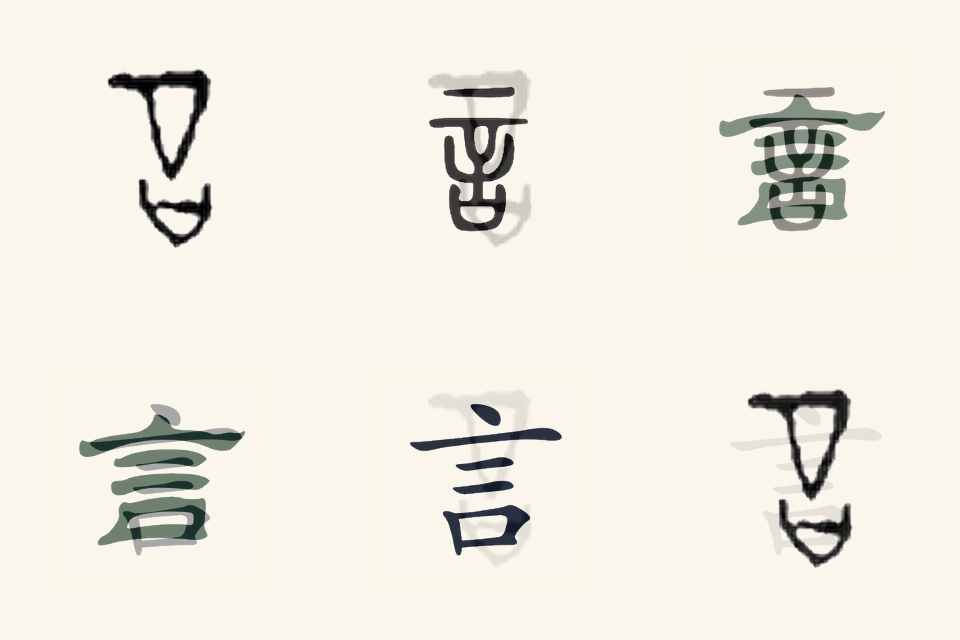
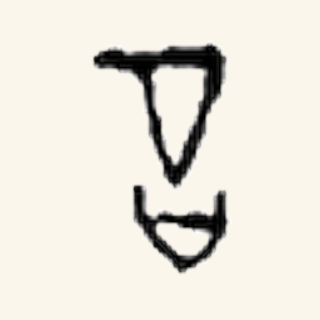
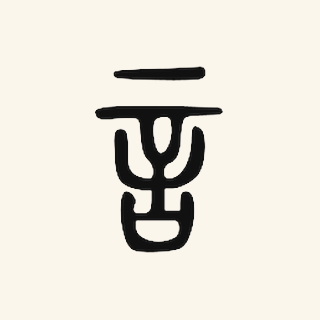
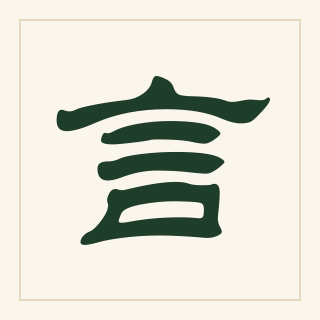
Object sketchBefore writing · drawing what was seenOracle boneShang dynasty · c. 1300–1046 BCESeal scriptQin dynasty · 221–206 BCEClerical scriptHan dynasty · 206 BCE–220 CERegular scriptWei–Jin to Tang · c. 3rd–9th century CE
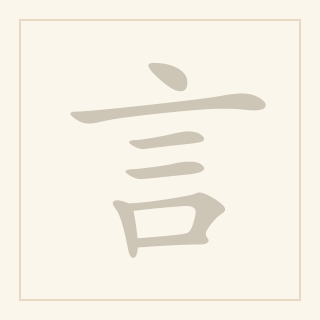
「言」甲骨文从舌从一,象舌上有声气出,指事表言。
What the sketch shows
Origins & notes
「言」本义为说话、言语,引申言论、字句。
Structure
从舌、从一,指事字,一示言出于舌上,本为言语。
At a glance
Pinyinyán
Radical言
Strokes7
UnicodeU+8A00
Character type指事
Theme人伦
Six languages, one character
Each page offers hreflang versions; switching language keeps the glyphs and meanings aligned.
English
words
words, speech; speak, say; Kangxi radical 149
Français
parole
Parole, langage. «言辞安定» : paroles calmes et assurées.
Español
palabra
Palabra, lenguaje. «言辞安定»: palabras calmas y seguras.
العربية
قول
قول، لغة. «言辞安定»: أقوال هادئة واثقة.
Русский
слово
Слово, речь. «言辞安定»: спокойные и уверенные слова.
Common words
- 语言yǔ yánlanguage
- 言论yán lùnspeech