饱
full (eaten)
At a glance · 饱
Evolution of the glyph
Five stages, from a sketch of the real object to regular script — tap a stage, drag the timeline, or play the animation.
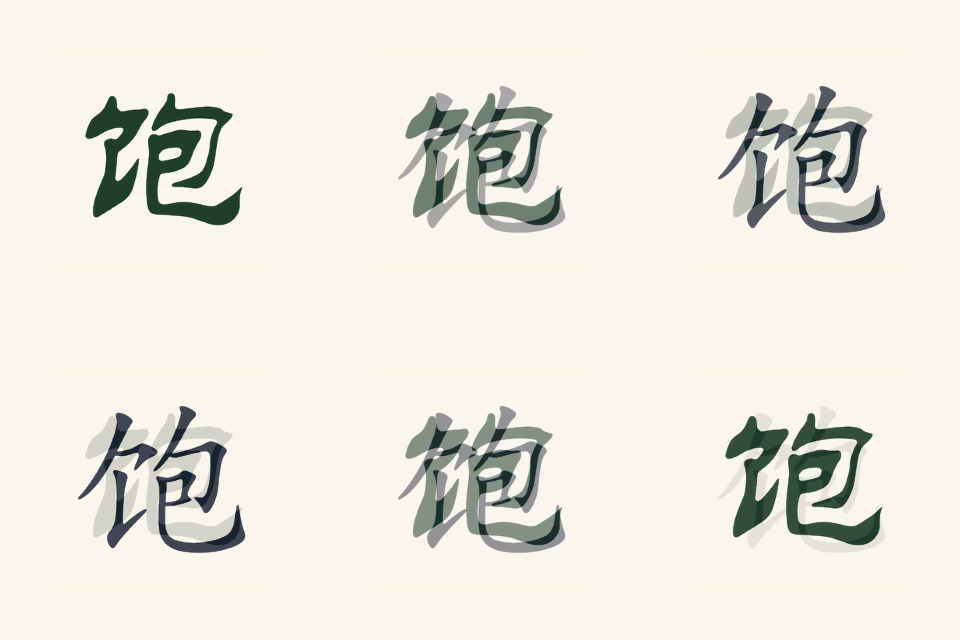
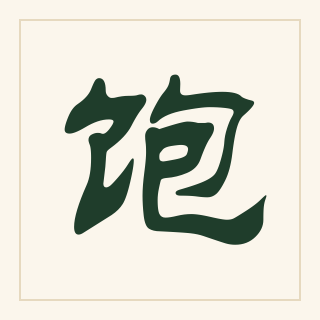
Object sketchBefore writing · drawing what was seenOracle boneShang dynasty · c. 1300–1046 BCESeal scriptQin dynasty · 221–206 BCEClerical scriptHan dynasty · 206 BCE–220 CERegular scriptWei–Jin to Tang · c. 3rd–9th century CE
⚠ Some ancient forms are not attested:oracle bone form、seal script form。No excavated oracle bone / seal artifact is attested for this character yet; we leave it blank rather than fabricate.
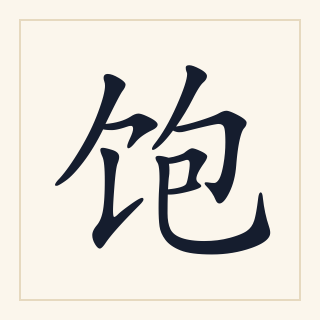
繁体「飽」从食,包声,本义为食足。简体「饱」同。形声清晰。
What the sketch shows
Origins & notes
本义为进食充足。
Structure
形声字,从食(意符),包(bāo)为声符。
At a glance
Pinyinbǎo
Radical饣
Strokes8
UnicodeU+9971
Character type形声
Theme状态
Six languages, one character
Each page offers hreflang versions; switching language keeps the glyphs and meanings aligned.
English
full (eaten)
Having eaten one's fill.
Français
rassasié
Ayant bien mangé, rassasié.
Español
saciado
Haber comido hasta saciarse.
العربية
شبعان
شبعان بعد الأكل.
Русский
сытый
Навшийся досыта.
Common words
- 饱bǎofull
- 饱饱bǎo bǎofull