声
sonido, voz
De un vistazo · 声
Evolución del glifo
Cinco etapas, desde el dibujo del objeto hasta el kaishu: toque una etapa, arrastre la línea de tiempo o reproduzca la animación.


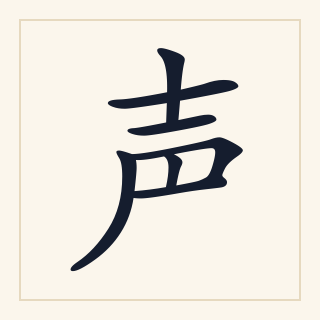
Dibujo del objetoAntes de escribir · dibujar lo que se veíaHueso oracularDinastía Shang · h. 1300–1046 a. C.Sello pequeñoDinastía Qin · 221–206 a. C.Escritura clericalDinastía Han · 206 a. C.–220 d. C.Estilo regularDe Wei-Jin a Tang · h. siglos III–IX d. C.
⚠ Algunas formas antiguas no están attestiguadas:forma en hueso oracular、forma en escritura sello。No hay artefacto en hueso oracular / sello para este carácter; lo dejamos en blanco en vez de inventar.
声字小篆从耳殸声(繁體聲),为形声字;本义为声音、声响。甲骨文象击磬闻声之形。
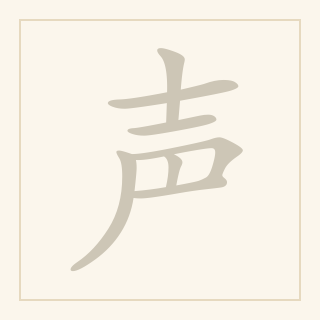
Qué muestra el dibujo
Origen y notas
声本义为声音、声响,亦指音乐。
Estructura
形声字,下部『耳』为意符(闻),右部『殸』为声符。
De un vistazo
Pinyinshēng
Radical士
Trazos7
UnicodeU+58F0
Tipo de carácter形声
Tema礼乐
Seis idiomas, un solo carácter
Cada página ofrece versiones hreflang; al cambiar de idioma, los glifos y los significados siguen alineados.
English
sound, voice
Sheng is a phonetic-semantic character meaning sound and voice.
Français
son, voix
Sheng est un caractère phonético-sémantique signifiant son et voix.
Español
sonido, voz
Sheng es un carácter fonosemántico que significa sonido y voz.
العربية
صوت
شينغ حرف صوتي دلالي يعني الصوت.
Русский
звук, голос
Шэн — фоносемантический знак, означающий звук и голос.
Palabras comunes
- 声音shēng yīnsound
- 回声huí shēngecho