天
cielo, cielo
De un vistazo · 天
Evolución del glifo
Cinco etapas, desde el dibujo del objeto hasta el kaishu: toque una etapa, arrastre la línea de tiempo o reproduzca la animación.
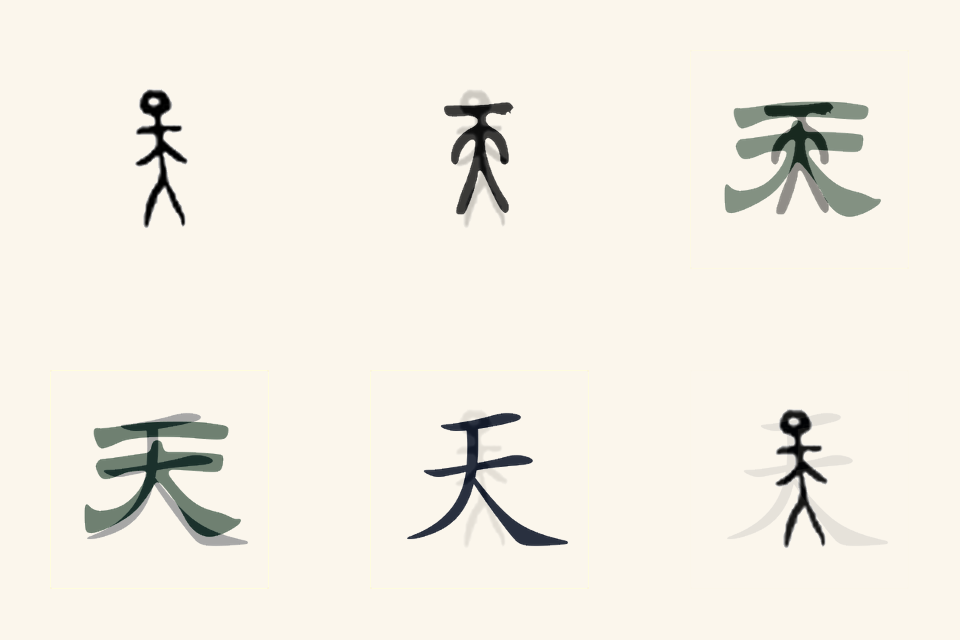
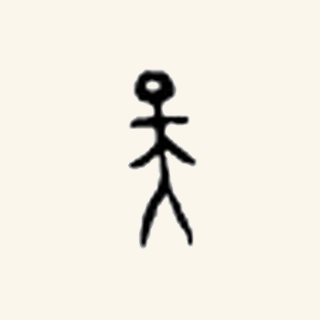
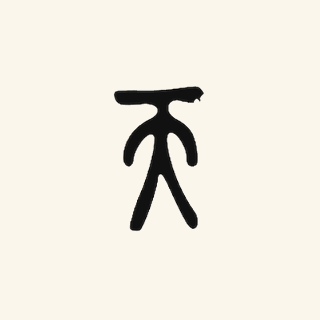
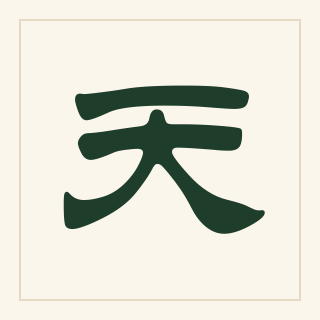
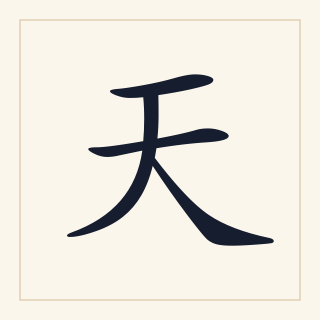
Dibujo del objetoAntes de escribir · dibujar lo que se veíaHueso oracularDinastía Shang · h. 1300–1046 a. C.Sello pequeñoDinastía Qin · 221–206 a. C.Escritura clericalDinastía Han · 206 a. C.–220 d. C.Estilo regularDe Wei-Jin a Tang · h. siglos III–IX d. C.
天字甲骨文像人形之上有一横,指示头顶上方的天空;金文、小篆承之,由『大』(人)与『一』(上)组合,会意为人之上的苍穹。隶变后写作『天』,楷体沿用至今。
Qué muestra el dibujo
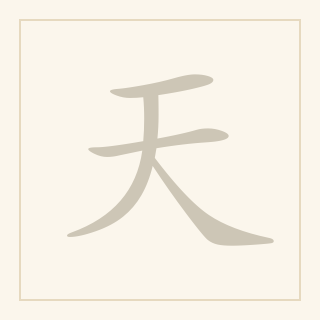
Shuowen Jiezi
他前切。顚也。至高無上,从一、大。。— 《说文解字》
Origen y notas
天本义为头顶、天空,后引申为自然界的主宰与至高无上的天帝。
Estructura
从结构看,天为会意字,从一从大,一指示上方,大像正面人形,合指人头顶之上的天空。
De un vistazo
Pinyintiān
Radical大
Trazos4
UnicodeU+5929
Tipo de carácter会意
Tema天文
Seis idiomas, un solo carácter
Cada página ofrece versiones hreflang; al cambiar de idioma, los glifos y los significados siguen alineados.
English
sky, heaven
Tian originally depicted the sky above the human head; it means sky, heaven, and the supreme celestial ruler.
Français
ciel, ciel
Tian désigne à l'origine le ciel au-dessus de la tête humaine; il signifie le ciel, le paradis et le souverain céleste suprême.
Español
cielo, cielo
Tian representaba originalmente el cielo sobre la cabeza humana; significa cielo, paraíso y el gobernante celestial supremo.
العربية
السماء، السماء
كانت تياني تشير في الأصل إلى السماء فوق رأس الإنسان؛ وتعني السماء والجنة والحاكم السماوي الأعلى.
Русский
небо, небеса
Тянь изначально изображал небо над головой человека; означает небо, рай и верховного небесного правителя.
Palabras comunes
- 天空tiān kōngsky
- 天气tiān qìweather
- 天下tiān xiàthe world