有
tener, poseer
De un vistazo · 有
Evolución del glifo
Cinco etapas, desde el dibujo del objeto hasta el kaishu: toque una etapa, arrastre la línea de tiempo o reproduzca la animación.
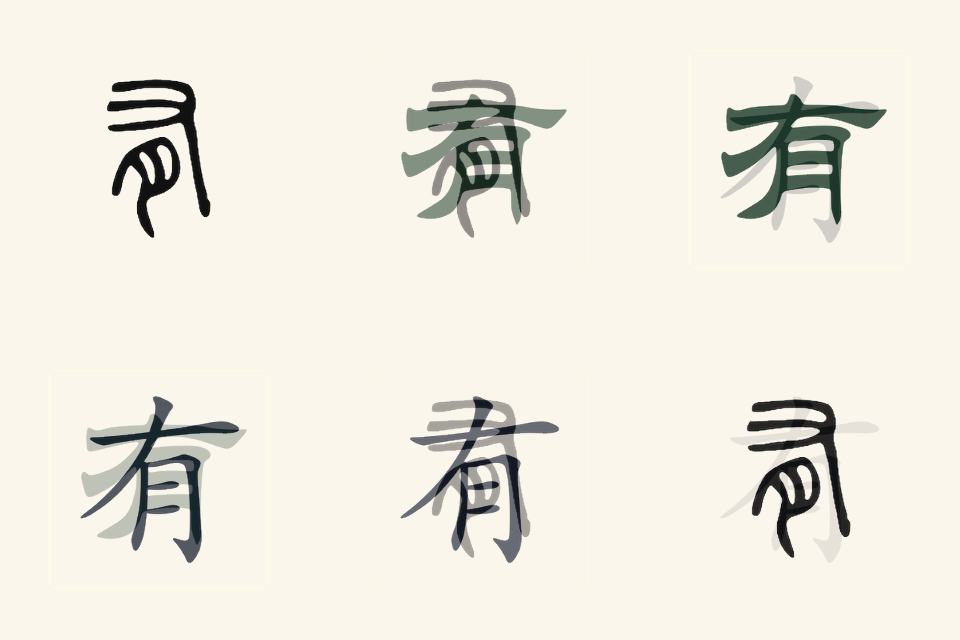
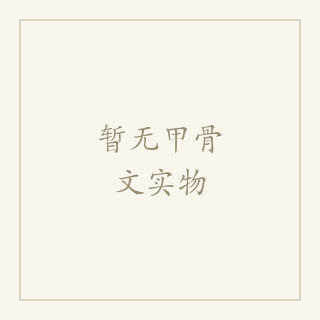
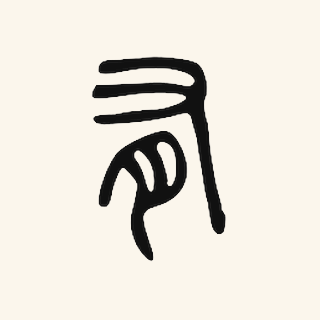
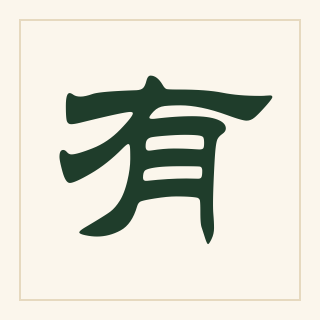
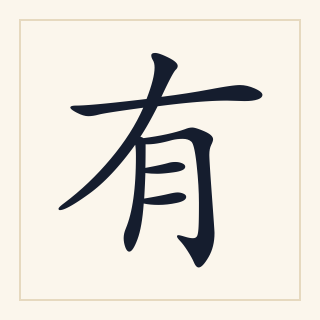
Dibujo del objetoAntes de escribir · dibujar lo que se veíaHueso oracularDinastía Shang · h. 1300–1046 a. C.Sello pequeñoDinastía Qin · 221–206 a. C.Escritura clericalDinastía Han · 206 a. C.–220 d. C.Estilo regularDe Wei-Jin a Tang · h. siglos III–IX d. C.
⚠ Algunas formas antiguas no están attestiguadas:forma en hueso oracular。No hay artefacto en hueso oracular / sello para este carácter; lo dejamos en blanco en vez de inventar.
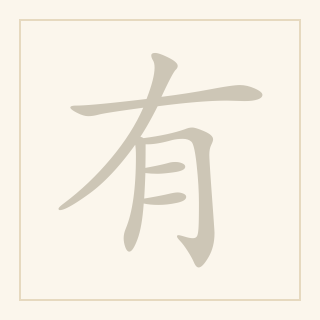
有字甲骨文从又(手)从肉,会意为持有、拥有;本义为具有、存在。金文、小篆承之。
Qué muestra el dibujo
Origen y notas
有本义为持有、具有,引申为存在。
Estructura
会意字,从又(手)从肉,表示手持肉,即拥有。
De un vistazo
Pinyinyǒu
Radical月
Trazos6
UnicodeU+6709
Tipo de carácter会意
Tema状态
Seis idiomas, un solo carácter
Cada página ofrece versiones hreflang; al cambiar de idioma, los glifos y los significados siguen alineados.
English
have, possess
You is an associative character of a hand holding meat, meaning to have and possess.
Français
avoir, posséder
You est un caractère associatif d'une main tenant de la viande, signifiant avoir et posséder.
Español
tener, poseer
You es un carácter asociativo de una mano sosteniendo carne, significa tener y poseer.
العربية
يملك، يمتلك
يو حرف تركيبي ليد تمسك لحماً، يعني الامتلاك والوجود.
Русский
иметь, обладать
Ю — ассоциативный знак руки, держащей мясо, означает иметь и обладать.
Palabras comunes
- 没有méi yǒunot have
- 有趣yǒu qùinteresting