翳
cubrir; sombrear
De un vistazo · 翳
Evolución del glifo
Cinco etapas, desde el dibujo del objeto hasta el kaishu: toque una etapa, arrastre la línea de tiempo o reproduzca la animación.
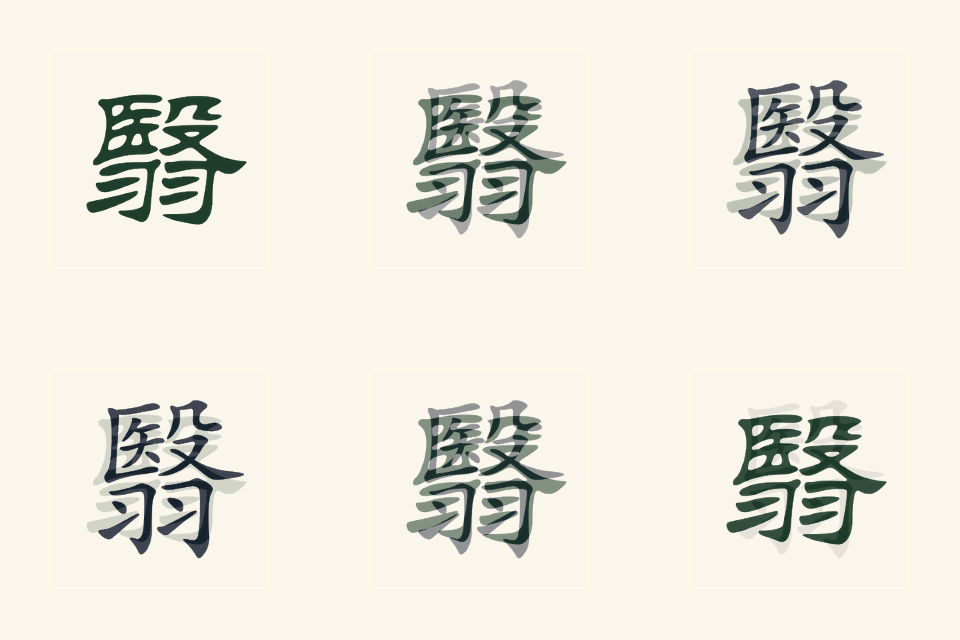
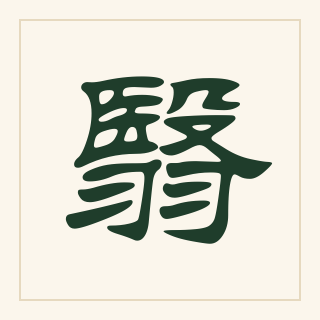
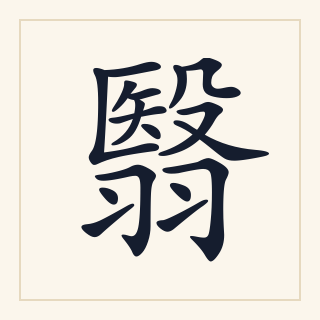
Dibujo del objetoAntes de escribir · dibujar lo que se veíaHueso oracularDinastía Shang · h. 1300–1046 a. C.Sello pequeñoDinastía Qin · 221–206 a. C.Escritura clericalDinastía Han · 206 a. C.–220 d. C.Estilo regularDe Wei-Jin a Tang · h. siglos III–IX d. C.
⚠ Algunas formas antiguas no están attestiguadas:forma en hueso oracular、forma en escritura sello。No hay artefacto en hueso oracular / sello para este carácter; lo dejamos en blanco en vez de inventar.
小篆从羽,殹声,本义为华盖(羽饰遮蔽),引申为遮蔽。形声清晰。
Qué muestra el dibujo
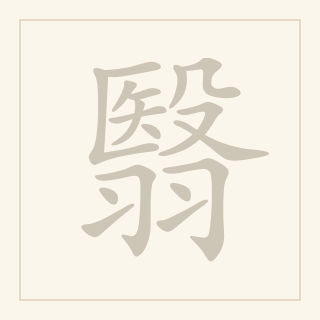
Origen y notas
本义为遮蔽、隐蔽。
Estructura
形声字,从羽(意符,表遮蔽如羽盖),殹(yì)为声符。
De un vistazo
Pinyinyì
Radical羽
Trazos17
UnicodeU+7FF3
Tipo de carácter形声
Tema状态
Seis idiomas, un solo carácter
Cada página ofrece versiones hreflang; al cambiar de idioma, los glifos y los significados siguen alineados.
English
screen; shade
To screen or shade; also an eye film.
Français
couvrir; ombrager
Couvrir ou ombrager ; aussi voile de l’œil.
Español
cubrir; sombrear
Cubrir u obscurecer; también velo del ojo.
العربية
يستر؛ يظلل
يستر أو يظلل؛ ويُطلق على غشاوة العين.
Русский
заслонять; тень
Заслонять или затенять; также плёнка на глазу.
Palabras comunes
- 翳yìcover
- 荫翳yīn yìshaded