阳
sol, yang
De un vistazo · 阳
Evolución del glifo
Cinco etapas, desde el dibujo del objeto hasta el kaishu: toque una etapa, arrastre la línea de tiempo o reproduzca la animación.
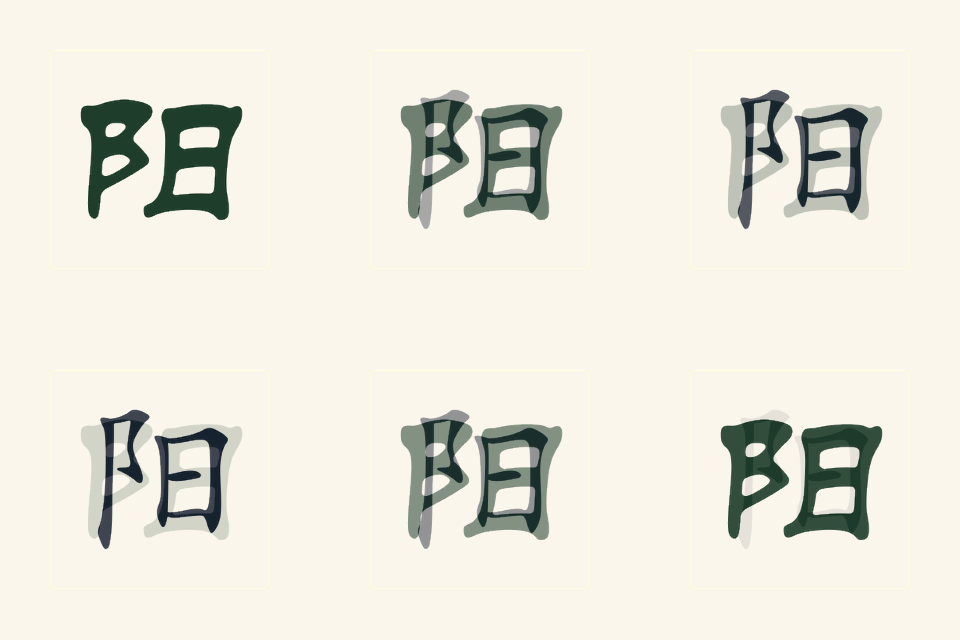
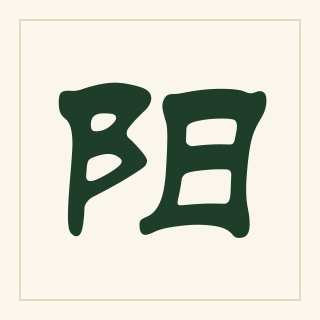
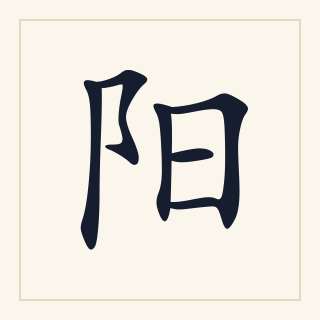
Dibujo del objetoAntes de escribir · dibujar lo que se veíaHueso oracularDinastía Shang · h. 1300–1046 a. C.Sello pequeñoDinastía Qin · 221–206 a. C.Escritura clericalDinastía Han · 206 a. C.–220 d. C.Estilo regularDe Wei-Jin a Tang · h. siglos III–IX d. C.
⚠ Algunas formas antiguas no están attestiguadas:forma en hueso oracular、forma en escritura sello。No hay artefacto en hueso oracular / sello para este carácter; lo dejamos en blanco en vez de inventar.
阳字小篆从阜昜声,为形声字;本义为山南水北、日光所照之处。甲骨文未见。
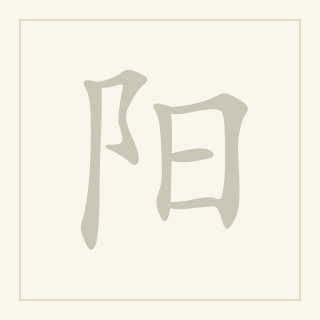
Qué muestra el dibujo
Origen y notas
阳本义为向阳之处,引申为太阳、阳气。
Estructura
形声字,左部『阜』(阝)为意符表山地,右部『昜』为声符。
De un vistazo
Pinyinyáng
Radical阝
Trazos6
UnicodeU+9633
Tipo de carácter形声
Tema天文
Seis idiomas, un solo carácter
Cada página ofrece versiones hreflang; al cambiar de idioma, los glifos y los significados siguen alineados.
English
sun, positive
Yang is a phonetic-semantic character meaning the sunny side and, in cosmology, the active positive principle.
Français
soleil, yang
Yang est un caractère phonético-sémantique signifiant le côté ensoleillé et, en cosmologie, le principe positif.
Español
sol, yang
Yang es un carácter fonosemántico que significa el lado soleado y, en cosmología, el principio positivo.
العربية
شمس، يانغ
يانغ حرف صوتي دلالي يعني الجانب المشمس، ويرمز للمبدأ الموجب.
Русский
солнце, ян
Ян — фоносемантический знак, означающий освещённую сторону и активное начало.
Palabras comunes
- 太阳tài yángsun
- 阳光yáng guāngsunlight