在
être à, exister
En bref · 在
Évolution du tracé
Cinq étapes, du croquis de l'objet au kaishu : touchez une étape, faites glisser la frise ou lancez l'animation.
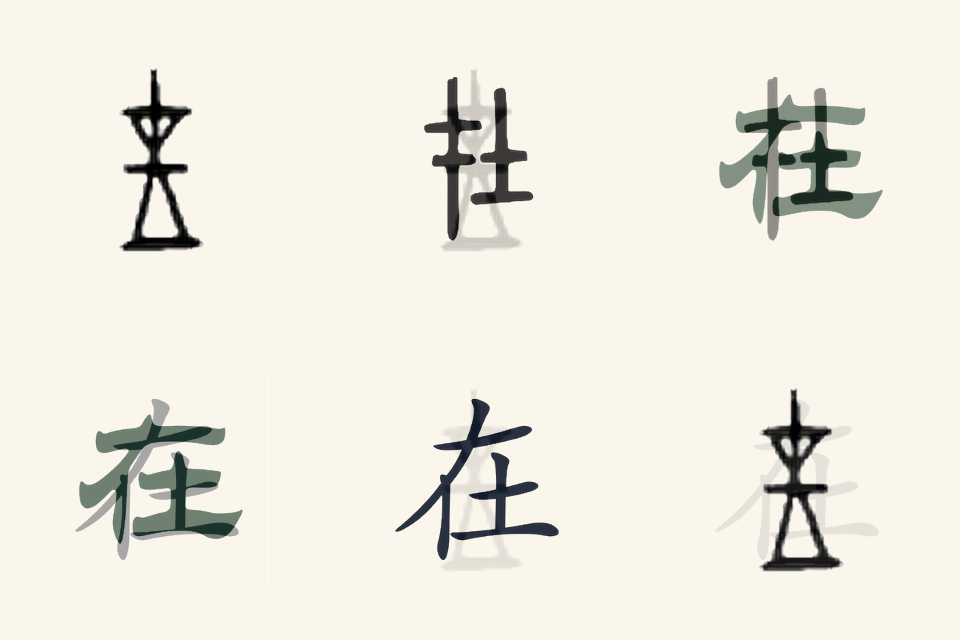
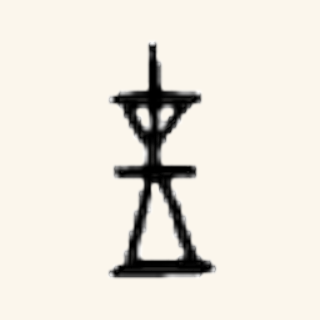
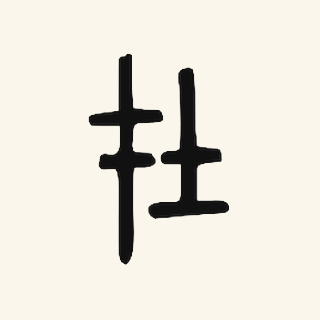
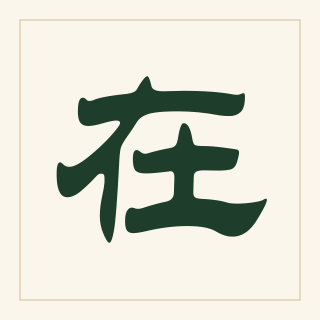
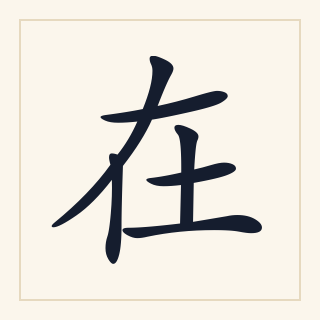
Croquis de l'objetAvant l'écriture · dessiner ce qu'on voyaitOs oraculairesDynastie Shang · v. 1300–1046 av. J.-C.Petit sceauDynastie Qin · 221–206 av. J.-C.Écriture cléricaleDynastie Han · 206 av. J.-C.–220 apr. J.-C.Style régulierDe Wei-Jin aux Tang · v. IIIe–IXe s. apr. J.-C.
在字小篆从土才声,为形声字;本义为存在、处于。甲骨文未见。
Ce que montre le croquis
Origines et compléments
在字本义为存在、居于某处。
Structure du caractère
形声字,下部『土』为意符,上部『才』为声符。
En bref
Pinyinzài
Radical土
Nombre de traits6
UnicodeU+5728
Type de caractère形声
Thème状态
Six langues, un seul caractère
Chaque page propose des versions hreflang ; changer de langue garde les glyphes et les sens alignés.
English
be at, exist
Zai is a phonetic-semantic character meaning to be at and to exist.
Français
être à, exister
Zai est un caractère phonético-sémantique signifiant être à et exister.
Español
estar en, existir
Zai es un carácter fonosemántico que significa estar en y existir.
العربية
يوجد، يكون في
تساي حرف صوتي دلالي يعني الوجود والتواجد في مكان.
Русский
быть, находиться
Цзай — фоносемантический знак, означающий быть и находиться.
Mots courants
- 存在cún zàiexist
- 现在xiàn zàinow