凊
surname
At a glance · 凊
Evolution of the glyph
Five stages, from a sketch of the real object to regular script — tap a stage, drag the timeline, or play the animation.
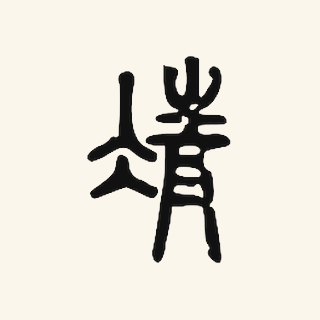

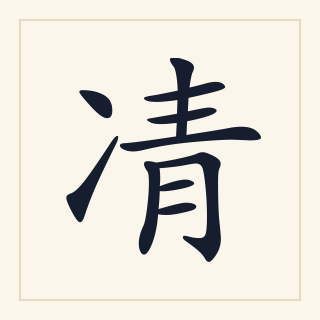
Object sketchBefore writing · drawing what was seenOracle boneShang dynasty · c. 1300–1046 BCESeal scriptQin dynasty · 221–206 BCEClerical scriptHan dynasty · 206 BCE–220 CERegular scriptWei–Jin to Tang · c. 3rd–9th century CE
⚠ Some ancient forms are not attested:oracle bone form。No excavated oracle bone / seal artifact is attested for this character yet; we leave it blank rather than fabricate.
「凊」从仌青声,小篆已见,形声结构。
What the sketch shows
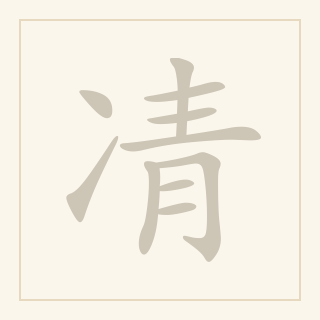
Origins & notes
「凊」本义为清凉、寒冷,古言冬温夏凊。
Structure
从仌(冰)、青声,形声字,仌表寒冷义类,青表音。
At a glance
Pinyinqìng
Radical冫
Strokes10
UnicodeU+51CA
Character type形声
Theme状态
Six languages, one character
Each page offers hreflang versions; switching language keeps the glyphs and meanings aligned.
English
surname
surname
Français
frais
Frais. «夙兴温凊» : frais en été pour les parents.
Español
fresco
Fresco. «夙兴温凊»: fresco en verano para los padres.
العربية
بارد
بارد. «夙兴温凊»: بارد في الصيف للوالدين.
Русский
прохладный
Прохладный. «夙兴温凊»: прохладный летом для родителей.
Common words
- 温凊wēn qìngwarm in winter, cool in summer