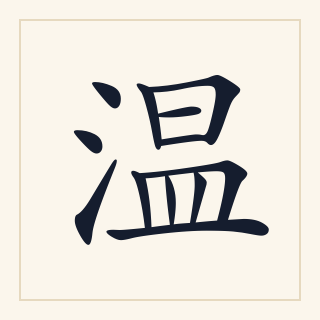
温
lukewarm
At a glance · 温
Evolution of the glyph
Five stages, from a sketch of the real object to regular script — tap a stage, drag the timeline, or play the animation.
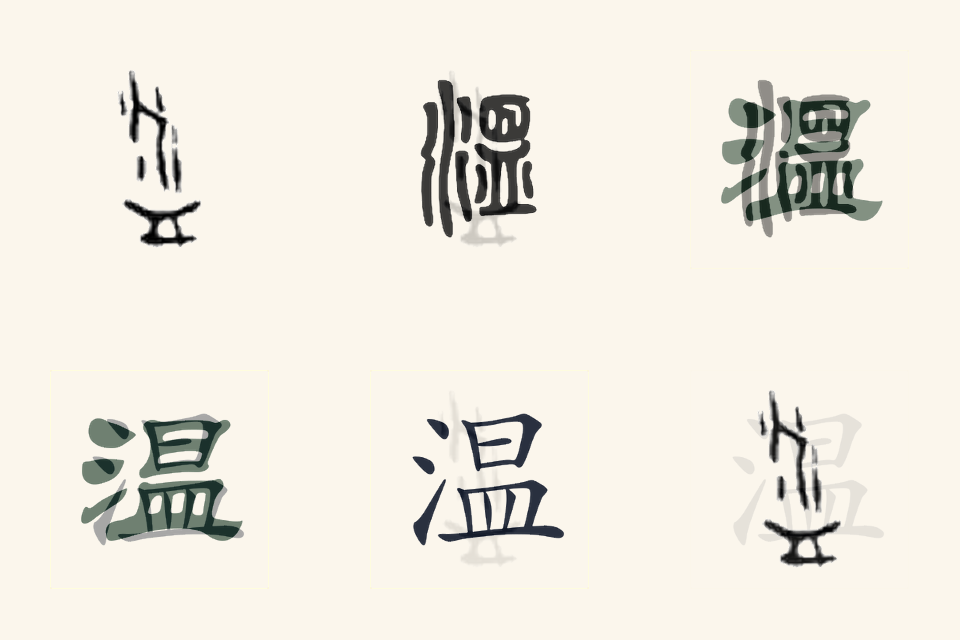
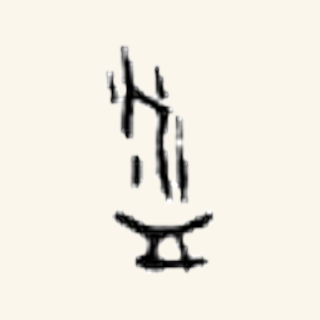
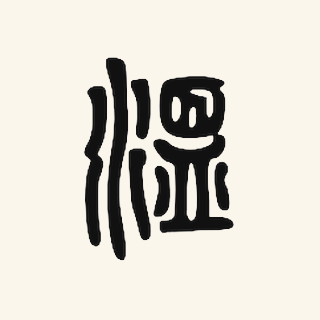
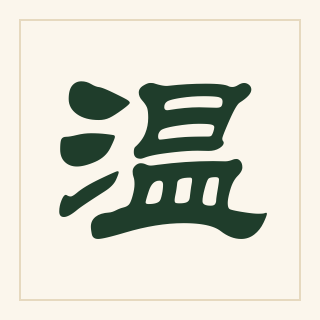
Object sketchBefore writing · drawing what was seenOracle boneShang dynasty · c. 1300–1046 BCESeal scriptQin dynasty · 221–206 BCEClerical scriptHan dynasty · 206 BCE–220 CERegular scriptWei–Jin to Tang · c. 3rd–9th century CE
「温」从水昷声,小篆从水𥁕声,形声清晰。
What the sketch shows
Origins & notes
「温」本义为水名,引申温暖、温和、复习。
Structure
从水、昷(wēn)声,形声字,水表义类,昷表音。
At a glance
Pinyinwēn
Radical氵
Strokes13
UnicodeU+6E29
Character type形声
Theme自然
Six languages, one character
Each page offers hreflang versions; switching language keeps the glyphs and meanings aligned.
English
lukewarm
lukewarm
Français
chaud / doux
Chaleureux, tiède. «夙兴温凊» : tiède en hiver pour les parents.
Español
tibio / cálido
Tibio, cálido. «夙兴温凊»: tibio en invierno para los padres.
العربية
دافئ / لطيف
دافئ، لطيف. «夙兴温凊»: دافئ في الشتاء للوالدين.
Русский
тёплый / мягкий
Тёплый, мягкий. «夙兴温凊»: тёплый зимой для родителей.
Common words
- 温暖wēn nuǎnwarm
- 温度wēn dùtemperature