国
country, state
At a glance · 国
Evolution of the glyph
Five stages, from a sketch of the real object to regular script — tap a stage, drag the timeline, or play the animation.
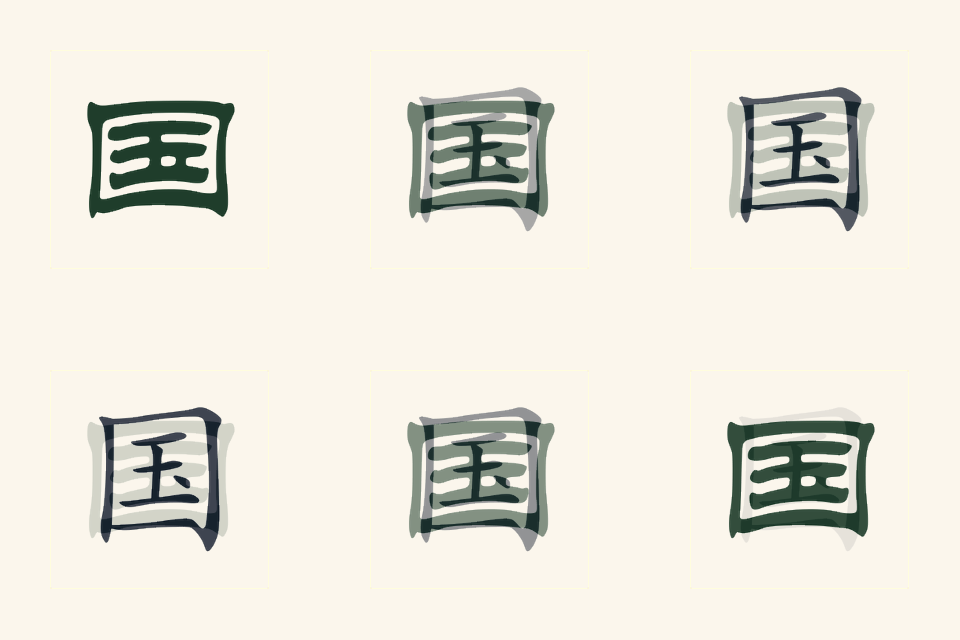
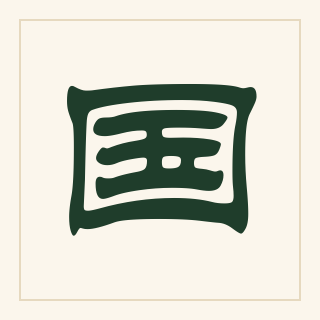
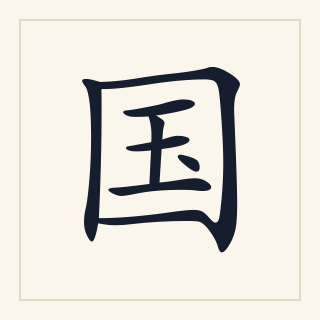
Object sketchBefore writing · drawing what was seenOracle boneShang dynasty · c. 1300–1046 BCESeal scriptQin dynasty · 221–206 BCEClerical scriptHan dynasty · 206 BCE–220 CERegular scriptWei–Jin to Tang · c. 3rd–9th century CE
⚠ Some ancient forms are not attested:oracle bone form、seal script form。No excavated oracle bone / seal artifact is attested for this character yet; we leave it blank rather than fabricate.
国字小篆从囗从或,会意为有疆界、有人守卫之地;后加玉作『國』。甲骨文未见独立国字。
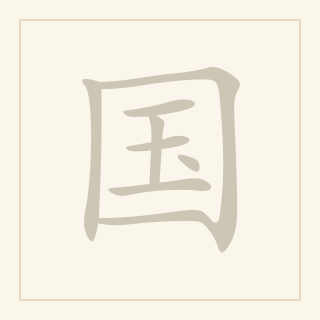
What the sketch shows
Origins & notes
国本义为有 boundaries 的邦国、国家。
Structure
国为会意字,外『囗』象疆界,内『或』表持戈守卫,后加玉以示珍宝之土。
At a glance
Pinyinguó
Radical囗
Strokes8
UnicodeU+56FD
Character type会意
Theme政事
Six languages, one character
Each page offers hreflang versions; switching language keeps the glyphs and meanings aligned.
English
country, state
Guo is an associative character of a bordered territory guarded by weapons, meaning a state or country.
Français
pays, État
Guo est un caractère associatif d'un territoire enclos et gardé, signifiant pays et État.
Español
país, Estado
Guo es un carácter asociativo de un territorio cercado y guardado, significa país y Estado.
العربية
بلد، دولة
غوو حرف تركيبي لإقليم محاط ومحروس، يعني الدولة والبلد.
Русский
страна, государство
Го — ассоциативный знак огороженной и охраняемой территории, означает государство.
Common words
- 国家guó jiācountry
- 中国zhōng guóChina