天
sky, heaven
At a glance · 天
Evolution of the glyph
Five stages, from a sketch of the real object to regular script — tap a stage, drag the timeline, or play the animation.
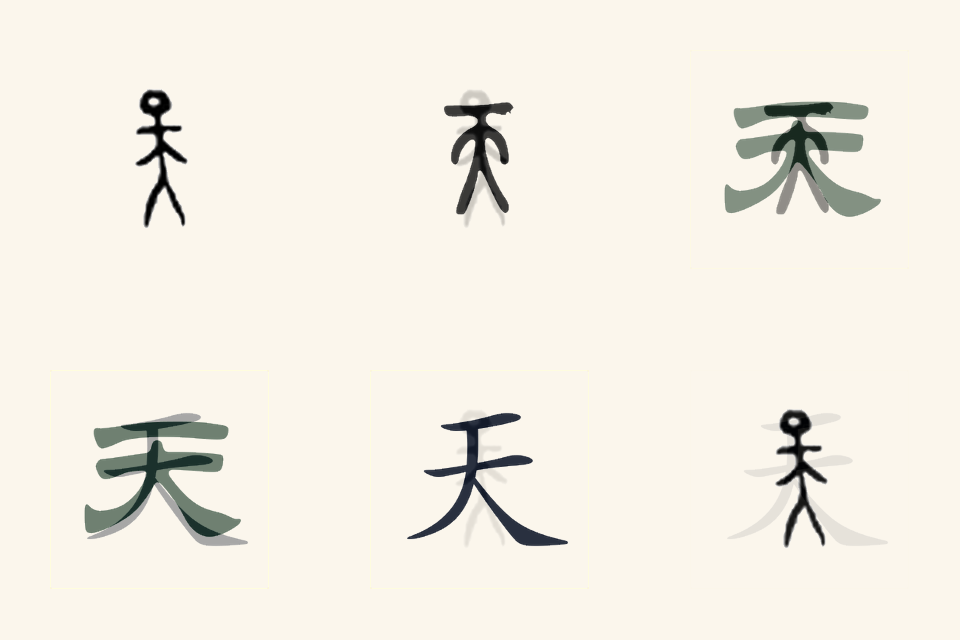
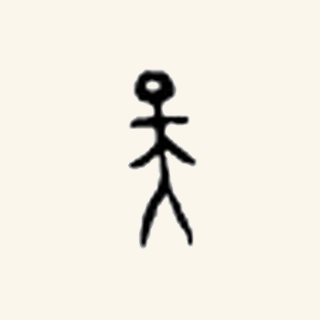
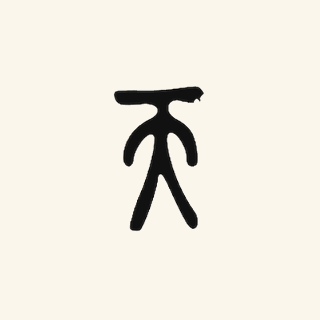
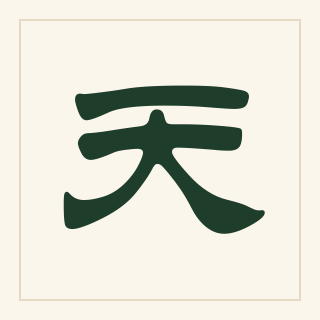
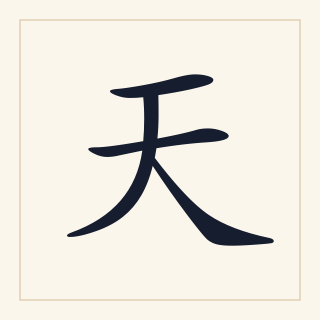
Object sketchBefore writing · drawing what was seenOracle boneShang dynasty · c. 1300–1046 BCESeal scriptQin dynasty · 221–206 BCEClerical scriptHan dynasty · 206 BCE–220 CERegular scriptWei–Jin to Tang · c. 3rd–9th century CE
天字甲骨文像人形之上有一横,指示头顶上方的天空;金文、小篆承之,由『大』(人)与『一』(上)组合,会意为人之上的苍穹。隶变后写作『天』,楷体沿用至今。
What the sketch shows
Shuowen Jiezi
他前切。顚也。至高無上,从一、大。。— 《说文解字》
Origins & notes
天本义为头顶、天空,后引申为自然界的主宰与至高无上的天帝。
Structure
从结构看,天为会意字,从一从大,一指示上方,大像正面人形,合指人头顶之上的天空。
At a glance
Pinyintiān
Radical大
Strokes4
UnicodeU+5929
Character type会意
Theme天文
Six languages, one character
Each page offers hreflang versions; switching language keeps the glyphs and meanings aligned.
English
sky, heaven
Tian originally depicted the sky above the human head; it means sky, heaven, and the supreme celestial ruler.
Français
ciel, ciel
Tian désigne à l'origine le ciel au-dessus de la tête humaine; il signifie le ciel, le paradis et le souverain céleste suprême.
Español
cielo, cielo
Tian representaba originalmente el cielo sobre la cabeza humana; significa cielo, paraíso y el gobernante celestial supremo.
العربية
السماء، السماء
كانت تياني تشير في الأصل إلى السماء فوق رأس الإنسان؛ وتعني السماء والجنة والحاكم السماوي الأعلى.
Русский
небо, небеса
Тянь изначально изображал небо над головой человека; означает небо, рай и верховного небесного правителя.
Common words
- 天空tiān kōngsky
- 天气tiān qìweather
- 天下tiān xiàthe world