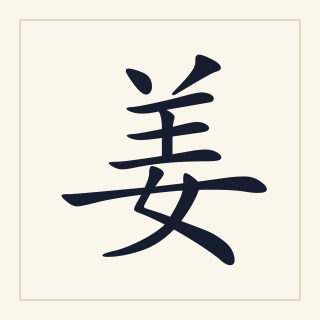
姜
ginger, surname
At a glance · 姜
Evolution of the glyph
Five stages, from a sketch of the real object to regular script — tap a stage, drag the timeline, or play the animation.
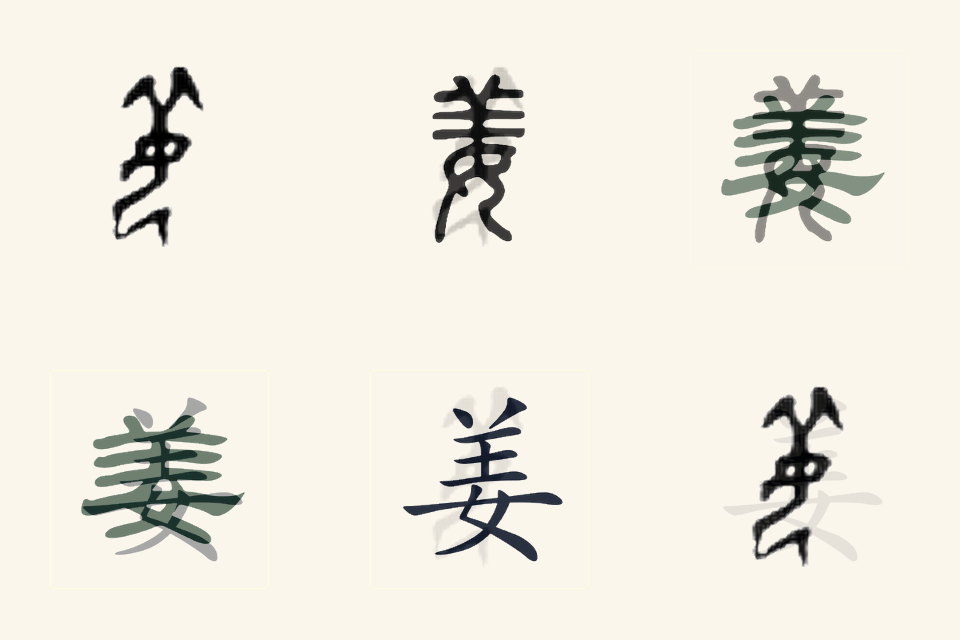
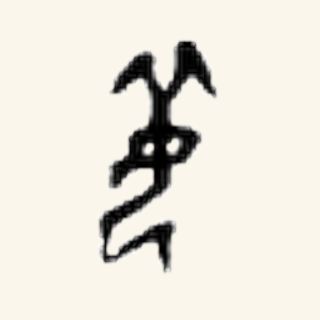
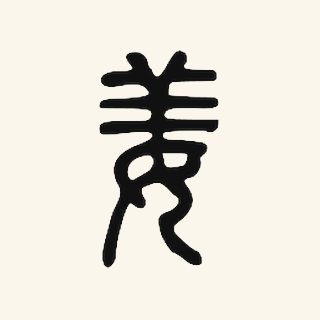
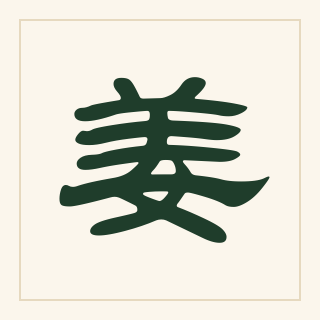
Object sketchBefore writing · drawing what was seenOracle boneShang dynasty · c. 1300–1046 BCESeal scriptQin dynasty · 221–206 BCEClerical scriptHan dynasty · 206 BCE–220 CERegular scriptWei–Jin to Tang · c. 3rd–9th century CE
姜(薑)字小篆从艸疆声(或女部),本义为生姜;亦为姓氏。甲骨文未见。
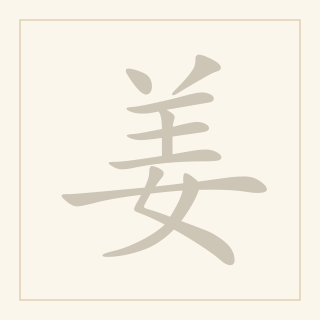
What the sketch shows
Origins & notes
姜本义为姜(调味植物),亦为古姓。
Structure
姜为形声字,从艸(或女)表义,声符相应。
At a glance
Pinyinjiāng
Radical女
Strokes9
UnicodeU+59DC
Character type形声
Theme植物
Six languages, one character
Each page offers hreflang versions; switching language keeps the glyphs and meanings aligned.
English
ginger, surname
Jiang means ginger as a plant and is also an ancient surname.
Français
gingembre, nom
Jiang signifie le gingembre en tant que plante et est aussi un ancien nom de famille.
Español
jengibre, apellido
Jiang significa jengibre como planta y también es un apellido antiguo.
العربية
زنجبيل، لقب
جيانغ تعني الزنجبيل نباتاً وهي أيضاً لقب قديم.
Русский
имбирь, фамилия
Цзян означает имбирь как растение и также является древней фамилией.
Common words
- 生姜shēng jiāngginger
- 姜汤jiāng tāngginger soup