宇
eaves, universe
At a glance · 宇
Evolution of the glyph
Five stages, from a sketch of the real object to regular script — tap a stage, drag the timeline, or play the animation.
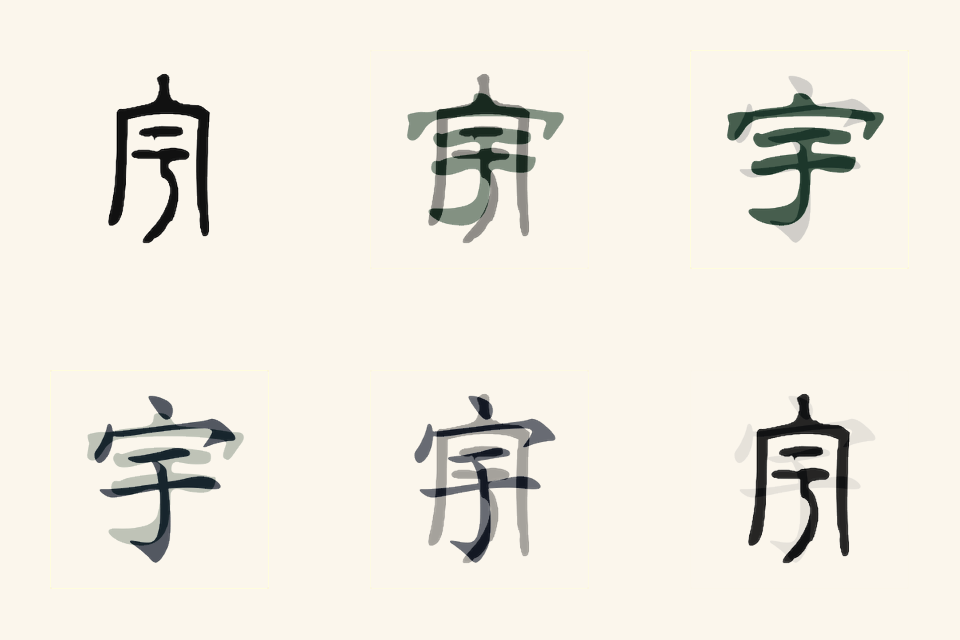
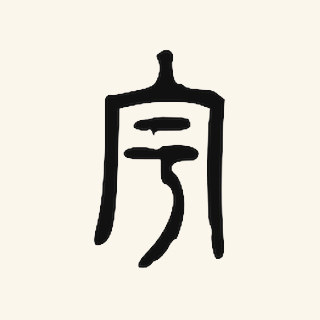
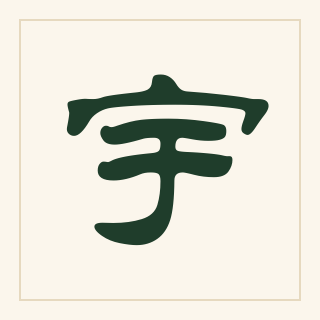
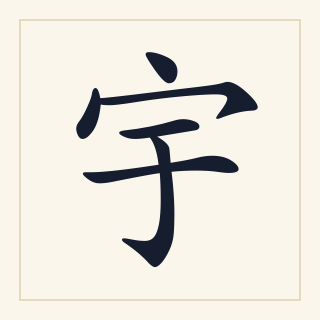
Object sketchBefore writing · drawing what was seenOracle boneShang dynasty · c. 1300–1046 BCESeal scriptQin dynasty · 221–206 BCEClerical scriptHan dynasty · 206 BCE–220 CERegular scriptWei–Jin to Tang · c. 3rd–9th century CE
⚠ Some ancient forms are not attested:oracle bone form。No excavated oracle bone / seal artifact is attested for this character yet; we leave it blank rather than fabricate.
宇字小篆从宀于声,为形声字;本义为屋檐,后引申为天地四方之空间。甲骨文未见,形体自小篆而下清晰。
What the sketch shows
Shuowen Jiezi
王榘切。屋邊也。从宀亏聲。《易》曰:「上棟下宇。」。籒文宇从禹。。— 《说文解字》
Origins & notes
宇本义为屋檐,引申为房屋、空间与天下。
Structure
形声字,上部『宀』为意符表房屋,下部『于』为声符。
At a glance
Pinyinyǔ
Radical宀
Strokes6
UnicodeU+5B87
Character type形声
Theme建筑
Six languages, one character
Each page offers hreflang versions; switching language keeps the glyphs and meanings aligned.
English
eaves, universe
Yu was originally the eaves of a house and extended to mean space and the world.
Français
avant-toit, univers
Yu désignait à l'origine l'avant-toit d'une maison et s'est étendu à l'espace et au monde.
Español
alero, universo
Yu era originalmente el alero de una casa y se extendió al espacio y al mundo.
العربية
ميزاب، الكون
يو كان في الأصل حافة سقف البيت ثم اتسع ليعني الفضاء والعالم.
Русский
карниз, вселенная
Юй изначально означал карниз крыши и расширился до пространства и мира.
Common words
- 宇宙yǔ zhòuuniverse
- 屋宇wū yǔhouse