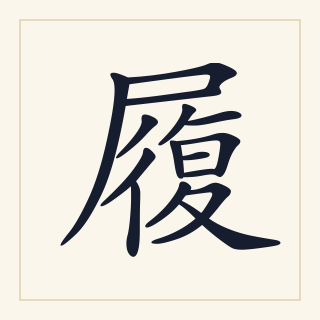
履
footwear
At a glance · 履
Evolution of the glyph
Five stages, from a sketch of the real object to regular script — tap a stage, drag the timeline, or play the animation.
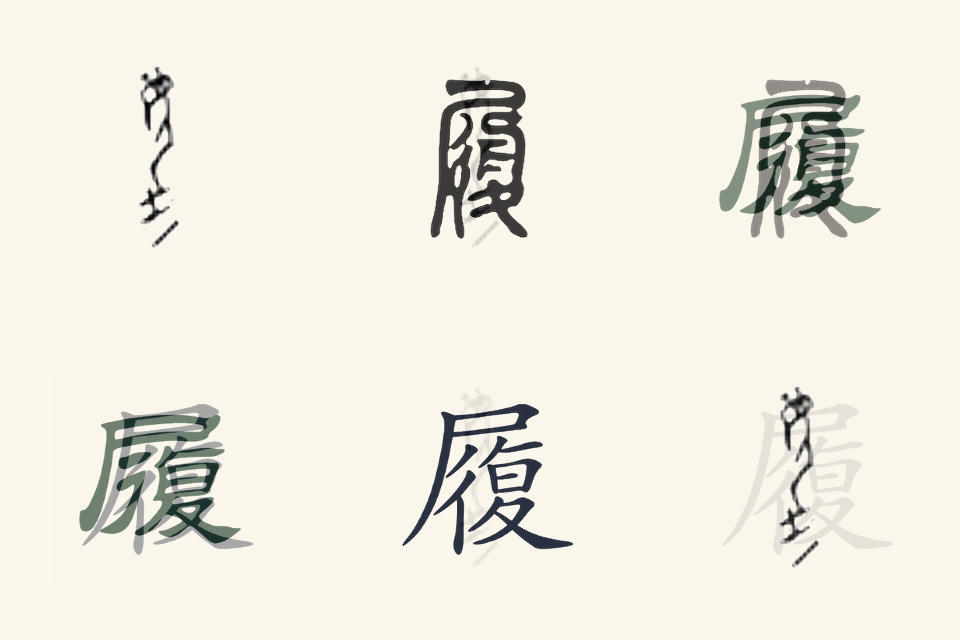
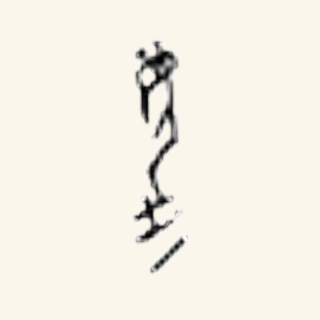
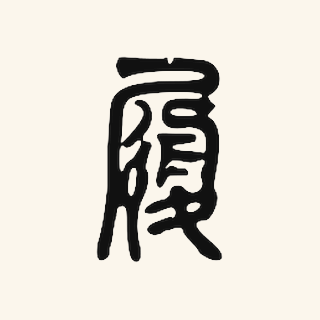
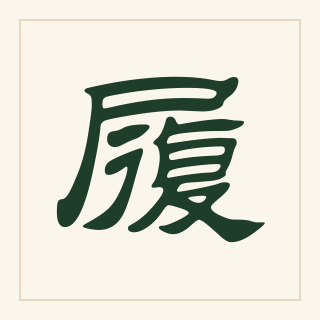
Object sketchBefore writing · drawing what was seenOracle boneShang dynasty · c. 1300–1046 BCESeal scriptQin dynasty · 221–206 BCEClerical scriptHan dynasty · 206 BCE–220 CERegular scriptWei–Jin to Tang · c. 3rd–9th century CE
「履」从尸从彳从夂从舟,象人在舟上行走,金文小篆相承。
What the sketch shows
Origins & notes
「履」本义为踩、践踏,引申鞋、履行。
Structure
从尸从彳从夂从舟,会意字,象足著鞋行走之形。
At a glance
Pinyinlǚ
Radical尸
Strokes15
UnicodeU+5C65
Character type会意
Theme器物
Six languages, one character
Each page offers hreflang versions; switching language keeps the glyphs and meanings aligned.
English
footwear
footwear, shoes; walk on, tread; hexagram ䷉
Français
fouler / chaussure
Fouler, chaussure. «临深履薄» : marcher comme sur glace mince, prudence.
Español
pisar / calzado
Pisar, calzado. «临深履薄»: andar como sobre hielo tenue, prudencia.
العربية
يطأ / حذاء
يطأ، حذاء. «临深履薄»: يمشي كأن على جليد رقيق، حذر.
Русский
ступать / обувь
Ступать, обувь. «临深履薄»: идти как по тонкому льду, осторожность.
Common words
- 履历lǚ lìrésumé
- 履行lǚ xíngfulfill