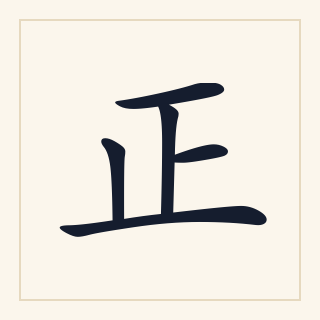
正
correct, upright
At a glance · 正
Evolution of the glyph
Five stages, from a sketch of the real object to regular script — tap a stage, drag the timeline, or play the animation.
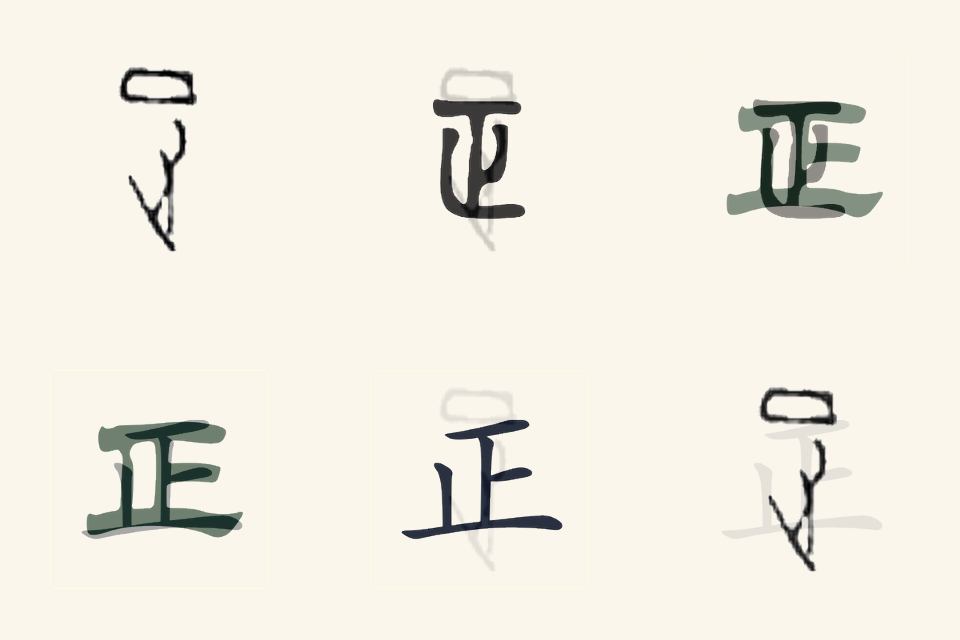
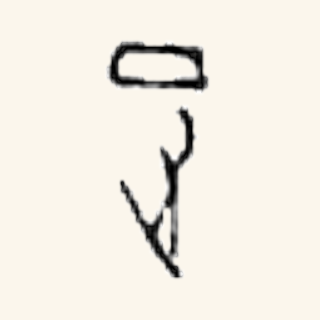
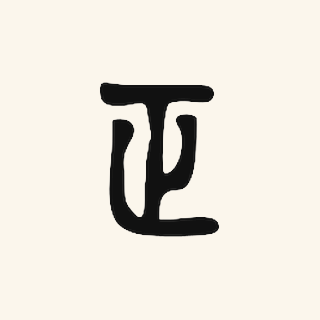
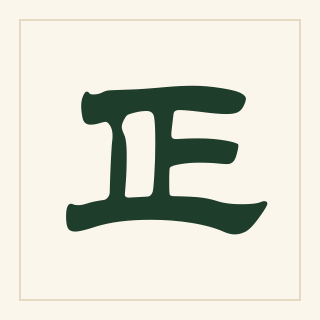
Object sketchBefore writing · drawing what was seenOracle boneShang dynasty · c. 1300–1046 BCESeal scriptQin dynasty · 221–206 BCEClerical scriptHan dynasty · 206 BCE–220 CERegular scriptWei–Jin to Tang · c. 3rd–9th century CE
正字甲骨文从止从一,会意为足向目标直行,本义为正直、正中。金文、小篆承之。
What the sketch shows
Origins & notes
正本义为正直、正确、正中。
Structure
会意字,从止(足)从一(目标),表示行止得正。
At a glance
Pinyinzhèng
Radical止
Strokes5
UnicodeU+6B63
Character type会意
Theme德行
Six languages, one character
Each page offers hreflang versions; switching language keeps the glyphs and meanings aligned.
English
correct, upright
Zheng is an associative character of foot and line, meaning correct and upright.
Français
correct, droit
Zheng est un caractère associatif de pied et trait, signifiant correct et droit.
Español
correcto, recto
Zheng es un carácter asociativo de pie y trazo, significa correcto y recto.
العربية
صحيح، مستقيم
تشينغ حرف تركيبي لقدم وخط، يعني الصحيح والمستقيم.
Русский
правильный, прямой
Чжэн — ассоциативный знак ступни и черты, означает правильный и прямой.
Common words
- 正确zhèng quècorrect
- 正式zhèng shìformal