甘
sweetness
At a glance · 甘
Evolution of the glyph
Five stages, from a sketch of the real object to regular script — tap a stage, drag the timeline, or play the animation.
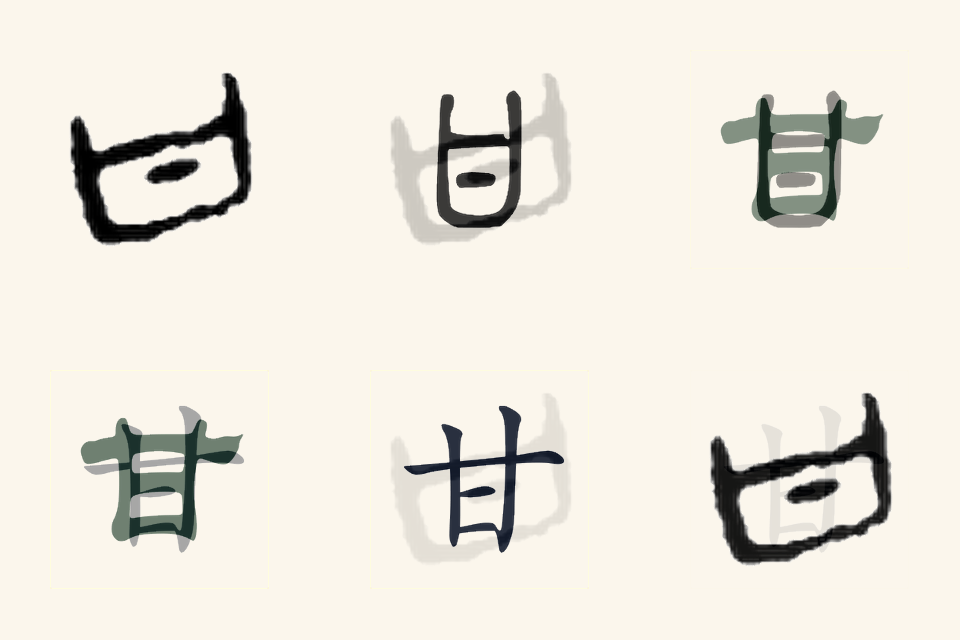
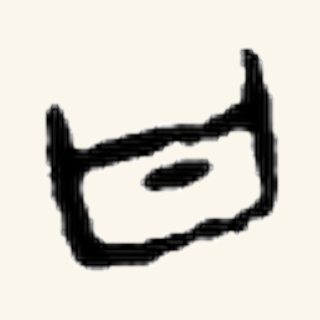
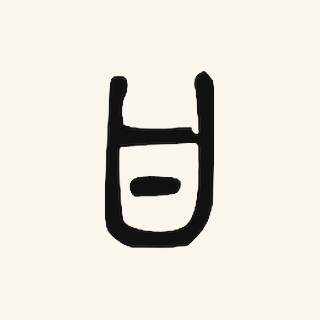
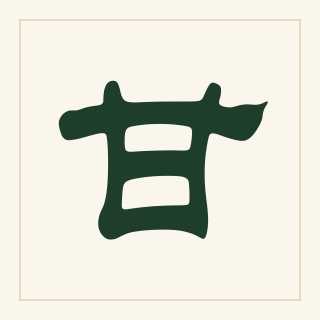
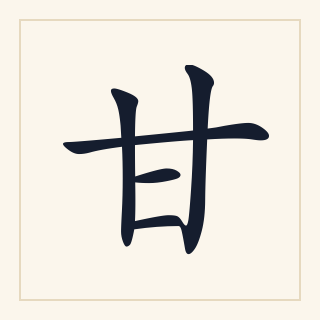
Object sketchBefore writing · drawing what was seenOracle boneShang dynasty · c. 1300–1046 BCESeal scriptQin dynasty · 221–206 BCEClerical scriptHan dynasty · 206 BCE–220 CERegular scriptWei–Jin to Tang · c. 3rd–9th century CE
「甘」甲骨文从口含一,指事表口中味甘,金文小篆承之。
What the sketch shows
Origins & notes
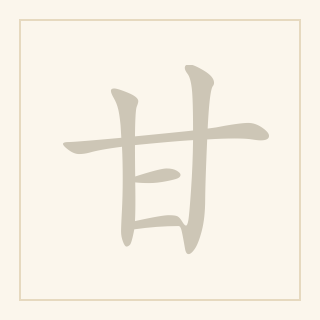
「甘」本义为甜、美味,引申甘愿、甘心。
Structure
从口、中一,指事字,一在口中表味甘,本为甜。
At a glance
Pinyingān
Radical甘
Strokes5
UnicodeU+7518
Character type指事
Theme状态
Six languages, one character
Each page offers hreflang versions; switching language keeps the glyphs and meanings aligned.
English
sweetness
sweetness; sweet, tasty
Français
doux
Doux, sucré. «存以甘棠» : l'arbre gân-tang.
Español
dulce
Dulce, sabroso. «存以甘棠»: el árbol gan-tang.
العربية
حلو
حلو، لذيذ. «存以甘棠»: شجرة الغان-تانغ.
Русский
сладкий
Сладкий, вкусный. «存以甘棠»: дерево гань-тан.
Common words
- 甘甜gān tiánsweet
- 甘草gān cǎolicorice