身
body, self
At a glance · 身
Evolution of the glyph
Five stages, from a sketch of the real object to regular script — tap a stage, drag the timeline, or play the animation.
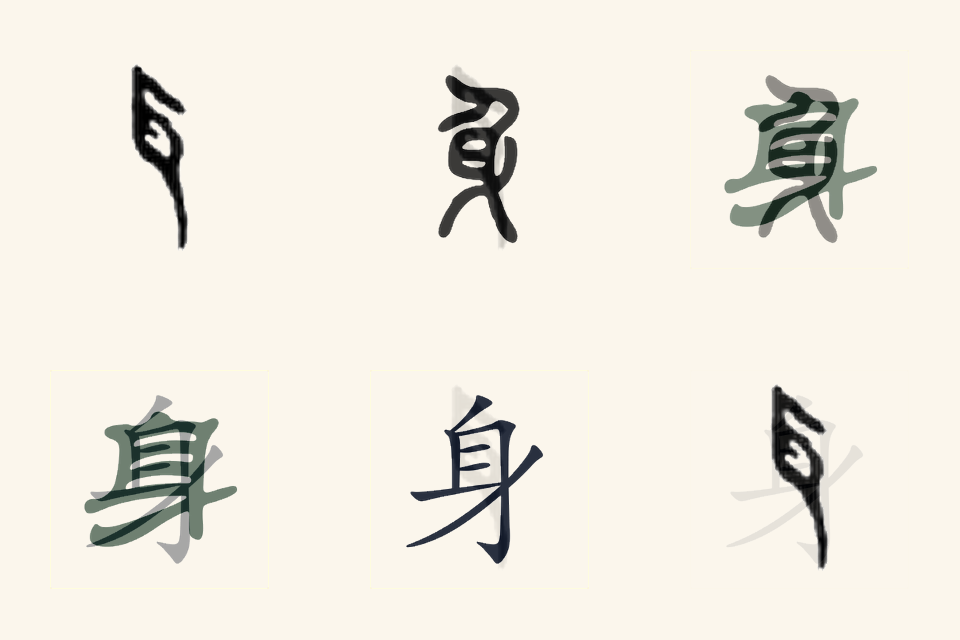
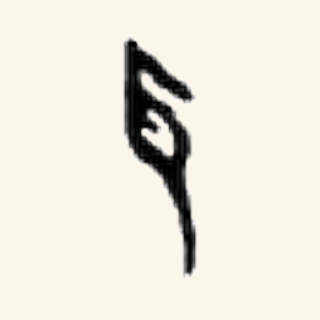
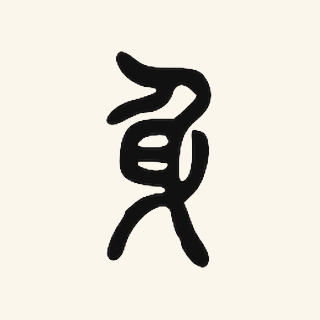
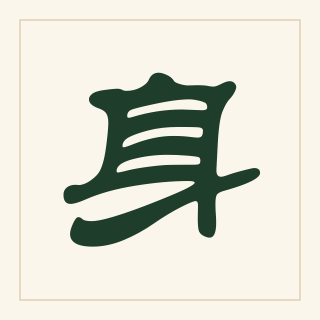
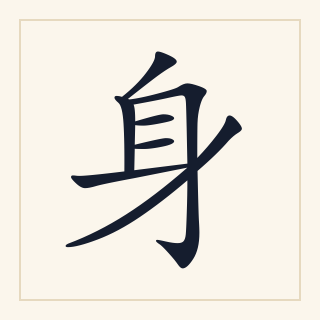
Object sketchBefore writing · drawing what was seenOracle boneShang dynasty · c. 1300–1046 BCESeal scriptQin dynasty · 221–206 BCEClerical scriptHan dynasty · 206 BCE–220 CERegular scriptWei–Jin to Tang · c. 3rd–9th century CE
身字甲骨文象人腹隆起之形(孕),本义为身躯、身体;金文、小篆承之。
What the sketch shows
Origins & notes
身本义为身体,亦指自身、怀孕。
Structure
身为象形字,描摹人躯或孕妇之形。
At a glance
Pinyinshēn
Radical身
Strokes7
UnicodeU+8EAB
Character type象形
Theme人体
Six languages, one character
Each page offers hreflang versions; switching language keeps the glyphs and meanings aligned.
English
body, self
Shen is a pictograph of a person's torso, meaning body and self.
Français
corps, soi
Shen est un pictogramme du torse d'une personne, signifiant corps et soi.
Español
cuerpo, uno mismo
Shen es un pictograma del torso de una persona, significa cuerpo y uno mismo.
العربية
جسم، نفس
شن رسم تخطيطي لجذع شخص، ويعني الجسم والنفس.
Русский
тело, сам
Шэнь — пиктограмма туловища человека, означает тело и себя.
Common words
- 身体shēn tǐbody
- 身份shēn fènidentity