逸
flee
At a glance · 逸
Evolution of the glyph
Five stages, from a sketch of the real object to regular script — tap a stage, drag the timeline, or play the animation.
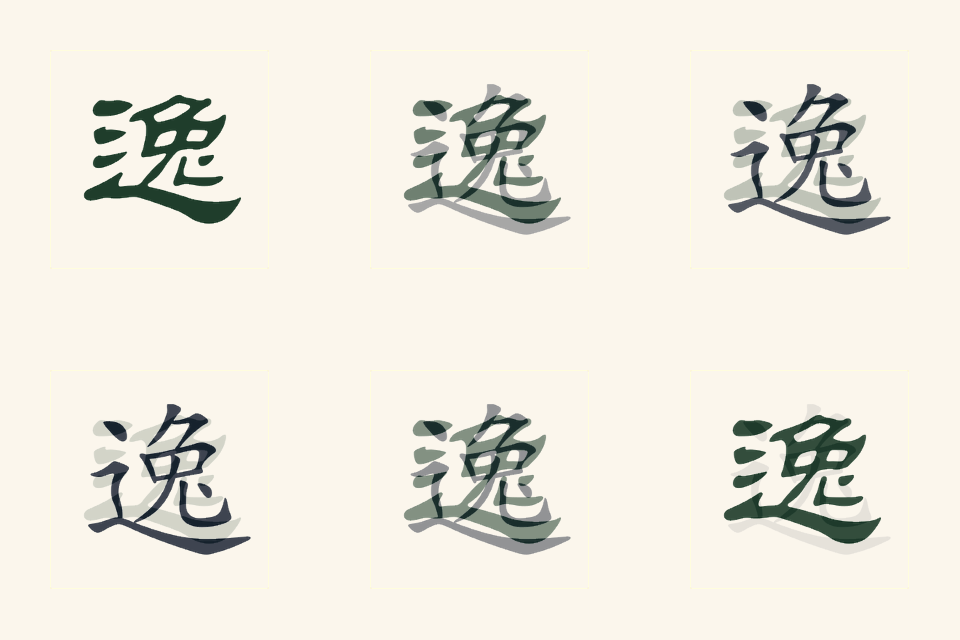
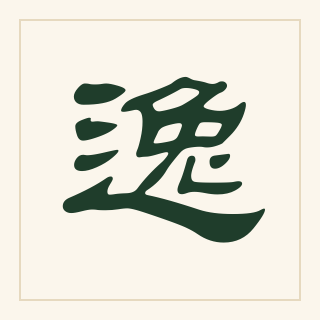
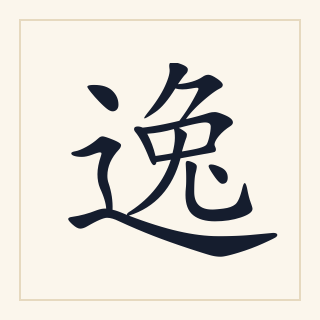
Object sketchBefore writing · drawing what was seenOracle boneShang dynasty · c. 1300–1046 BCESeal scriptQin dynasty · 221–206 BCEClerical scriptHan dynasty · 206 BCE–220 CERegular scriptWei–Jin to Tang · c. 3rd–9th century CE
⚠ Some ancient forms are not attested:oracle bone form、seal script form。No excavated oracle bone / seal artifact is attested for this character yet; we leave it blank rather than fabricate.
「逸」从辵从兔,金文象兔逃脱,小篆从辵兔声。
What the sketch shows
Origins & notes
「逸」本义为逃亡、奔跑,引申安闲、安逸、超逸。
Structure
从辵、从兔,会意字,兔善逃,本为逃逸、安闲。
At a glance
Pinyinyì
Radical辶
Strokes12
UnicodeU+9038
Character type会意
Theme动作
Six languages, one character
Each page offers hreflang versions; switching language keeps the glyphs and meanings aligned.
English
flee
flee, escape, break loose
Français
loisir / aisé
Loisir, aisé. «性静情逸» : le repos, la quiétude.
Español
ocio / holgado
Ocio, holgado. «性静情逸»: el reposo, la quietud.
العربية
راحة / منشرح
راحة، منشرح. «性静情逸»: الراحة، السكينة.
Русский
досуг / беззаботный
Досуг, беззаботный. «性静情逸»: покой, душевная лёгкость.
Common words
- 逸yìleisure
- 安逸ān yìease