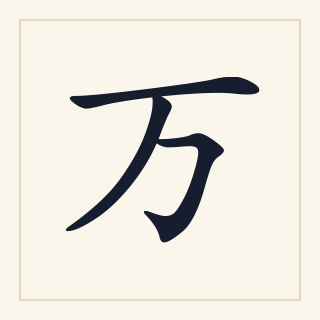
万
dix mille, beaucoup
En bref · 万
Évolution du tracé
Cinq étapes, du croquis de l'objet au kaishu : touchez une étape, faites glisser la frise ou lancez l'animation.
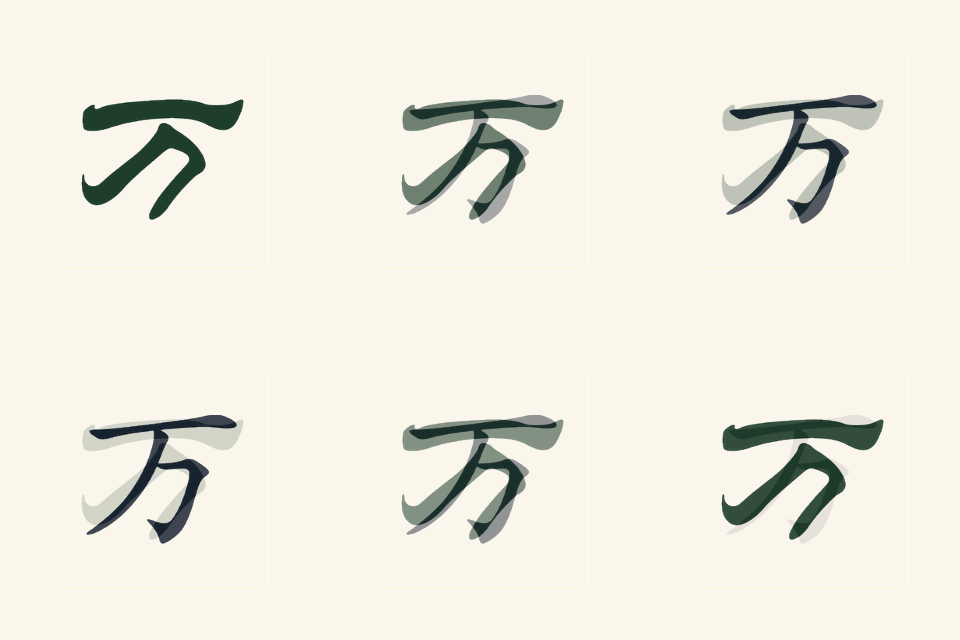
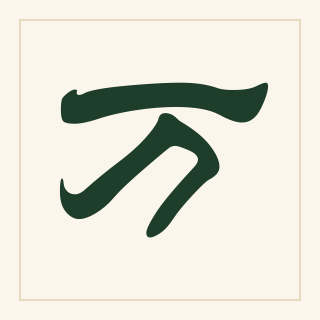
Croquis de l'objetAvant l'écriture · dessiner ce qu'on voyaitOs oraculairesDynastie Shang · v. 1300–1046 av. J.-C.Petit sceauDynastie Qin · 221–206 av. J.-C.Écriture cléricaleDynastie Han · 206 av. J.-C.–220 apr. J.-C.Style régulierDe Wei-Jin aux Tang · v. IIIe–IXe s. apr. J.-C.
⚠ Certaines formes anciennes ne sont pas attestées:forme sur os oraculaire、forme en écriture sceau。Aucun artefact sur os oraculaire / sceau n'est attesté ; nous laissons vide plutôt que d'inventer.
万字甲骨文象蝎子之形,本义为蝎,后借为数词『万』(繁體萬)。金文、小篆承之。
Ce que montre le croquis
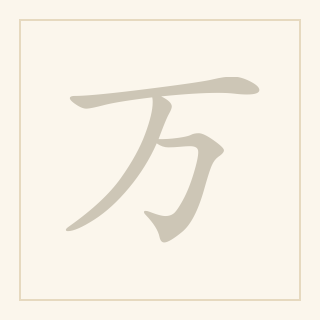
Origines et compléments
万本义为蝎子,假借为数词表示极多。
Structure du caractère
万为象形字,描摹蝎形;其数词义为假借用法。
En bref
Pinyinwàn
Radical一
Nombre de traits3
UnicodeU+4E07
Type de caractère象形
Thème数术
Six langues, un seul caractère
Chaque page propose des versions hreflang ; changer de langue garde les glyphes et les sens alignés.
English
ten thousand, many
Wan was originally a pictograph of a scorpion and was borrowed as the numeral ten thousand.
Français
dix mille, beaucoup
Wan était à l'origine un pictogramme de scorpion et a été emprunté comme nombre dix mille.
Español
diez mil, muchos
Wan era originalmente un pictograma de alacrán y se tomó prestado como número diez mil.
العربية
عشرة آلاف، كثير
وان حرف رسمه عقرباً في الأصل ثم استُعير للعدد عشرة آلاف.
Русский
десять тысяч, много
Вань изначально было пиктограммой скорпиона и было заимствовано как число десять тысяч.
Mots courants
- 万一wàn yījust in case
- 万wànten thousand