吕
colonne, ton
En bref · 吕
Évolution du tracé
Cinq étapes, du croquis de l'objet au kaishu : touchez une étape, faites glisser la frise ou lancez l'animation.
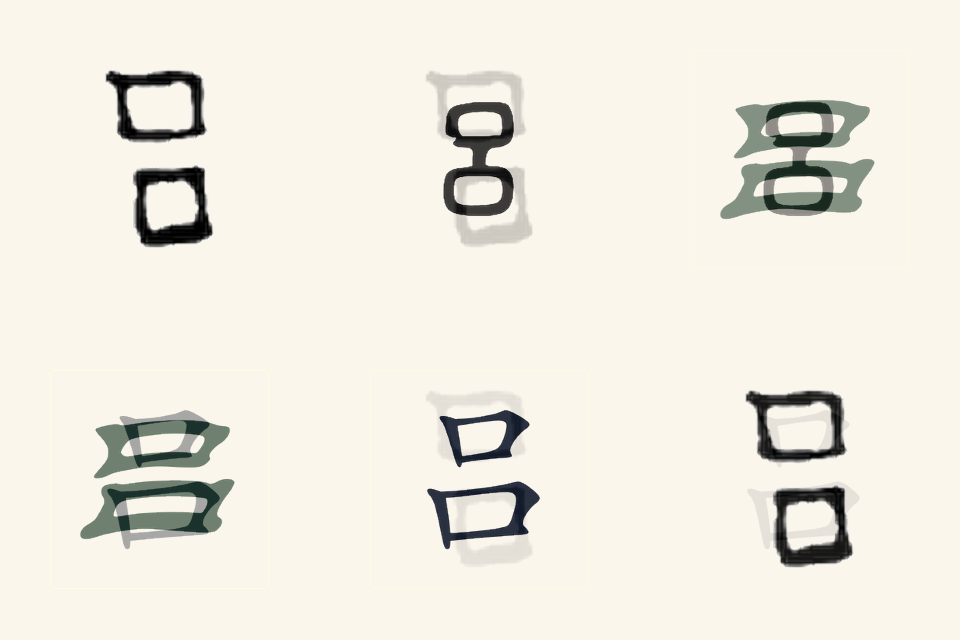
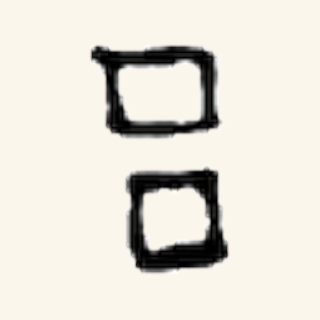



Croquis de l'objetAvant l'écriture · dessiner ce qu'on voyaitOs oraculairesDynastie Shang · v. 1300–1046 av. J.-C.Petit sceauDynastie Qin · 221–206 av. J.-C.Écriture cléricaleDynastie Han · 206 av. J.-C.–220 apr. J.-C.Style régulierDe Wei-Jin aux Tang · v. IIIe–IXe s. apr. J.-C.
吕字甲骨文象脊骨一节一节相连之形,本义为脊骨;后借为乐律名。金文、小篆承之。
Ce que montre le croquis

Origines et compléments
吕本义为脊骨,后指乐律(六吕)。
Structure du caractère
吕为象形字,描摹脊椎骨节相连之形。
En bref
Pinyinlǚ
Radical口
Nombre de traits6
UnicodeU+5415
Type de caractère象形
Thème礼乐
Six langues, un seul caractère
Chaque page propose des versions hreflang ; changer de langue garde les glyphes et les sens alignés.
English
spine, pitch
Lü was originally a pictograph of the spine and was later used as a name for musical pitches.
Français
colonne, ton
Lü était à l'origine un pictogramme de la colonne vertébrale et a ensuite nommé des tons musicaux.
Español
columna, tono
Lü era originalmente un pictograma de la columna y luego nombró tonos musicales.
العربية
عمود فقري، نغمة
لǚ كان في الأصل رسماً للعمود الفقري ثم استُخدم لاسم النغمات الموسيقية.
Русский
позвоночник, тон
Люй изначально было пиктограммой позвоночника и позже стало названием музыкальных тонов.
Mots courants
- 律吕lǜ lǚmusical pitches
- 吕剧lǚ jùLü opera