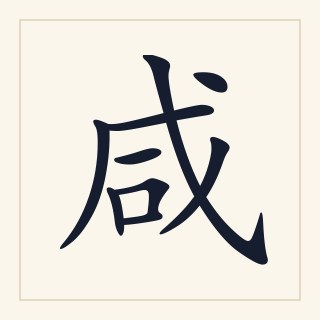
咸
tous, salé
En bref · 咸
Évolution du tracé
Cinq étapes, du croquis de l'objet au kaishu : touchez une étape, faites glisser la frise ou lancez l'animation.
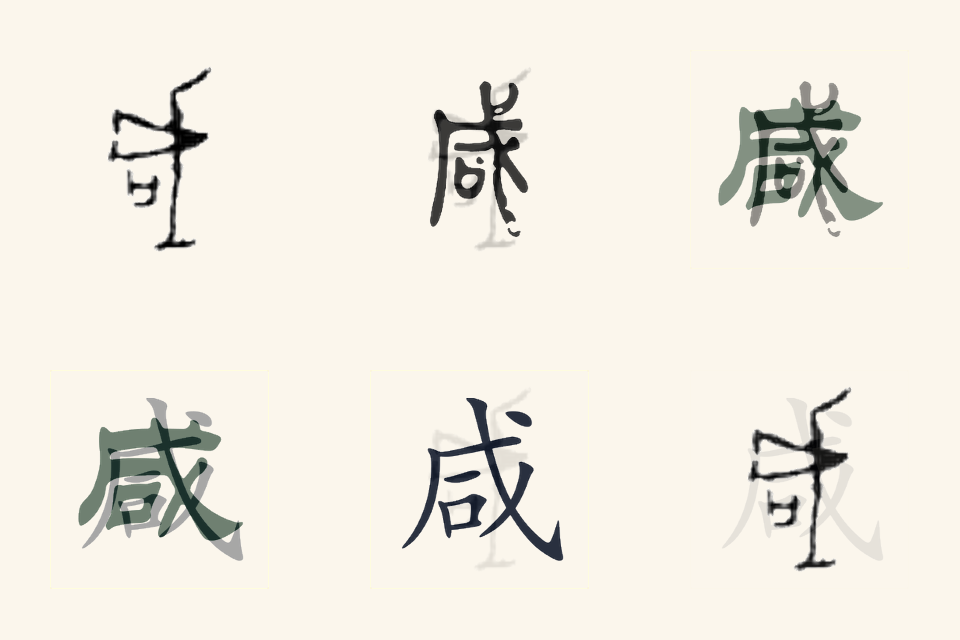
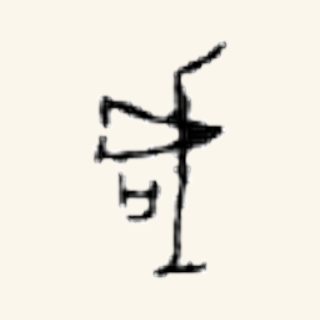
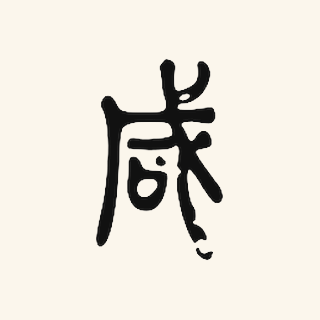
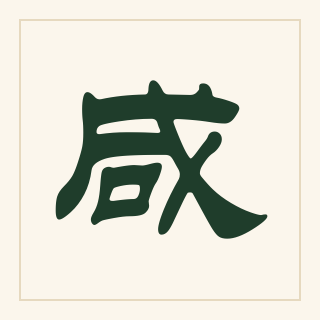
Croquis de l'objetAvant l'écriture · dessiner ce qu'on voyaitOs oraculairesDynastie Shang · v. 1300–1046 av. J.-C.Petit sceauDynastie Qin · 221–206 av. J.-C.Écriture cléricaleDynastie Han · 206 av. J.-C.–220 apr. J.-C.Style régulierDe Wei-Jin aux Tang · v. IIIe–IXe s. apr. J.-C.
咸字小篆从口从戌,会意为皆、全;本义为普遍、都。甲骨文象以戈伤人,后借为盐味。
Ce que montre le croquis
Origines et compléments
咸本义为皆、都(副词),后借指咸味。
Structure du caractère
咸为会意字,从口从戌,表示人人皆然;咸味为后起借义。
En bref
Pinyinxián
Radical口
Nombre de traits9
UnicodeU+54B8
Type de caractère会意
Thème虚词
Six langues, un seul caractère
Chaque page propose des versions hreflang ; changer de langue garde les glyphes et les sens alignés.
English
all, salty
Xian originally meant all and everyone and was later borrowed for the salty taste.
Français
tous, salé
Xian signifiait à l'origine tous et chacun et a ensuite été emprunté pour le goût salé.
Español
todos, salado
Xian originalmente significaba todos y cada uno y luego se tomó prestado para el sabor salado.
العربية
كل، مالح
شيان كان في الأصل يعني الجميع ثم استُعير للطعم المالح.
Русский
все, солёный
Сянь изначально означало «все» и было заимствовано для солёного вкуса.
Mots courants
- 咸味xián wèisalty
- 咸菜xián càipickles