莫
aucun, ne pas
En bref · 莫
Évolution du tracé
Cinq étapes, du croquis de l'objet au kaishu : touchez une étape, faites glisser la frise ou lancez l'animation.
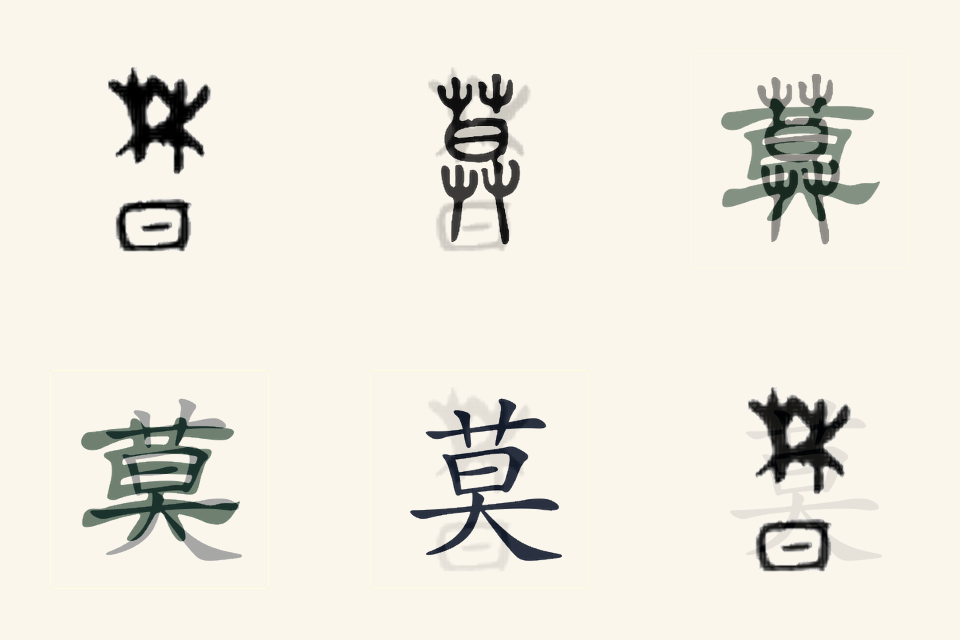
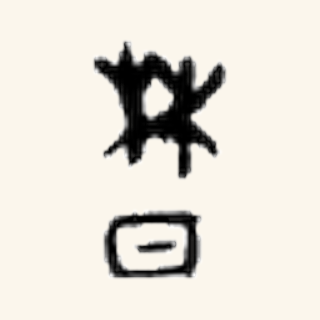
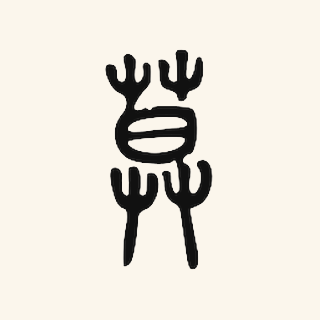
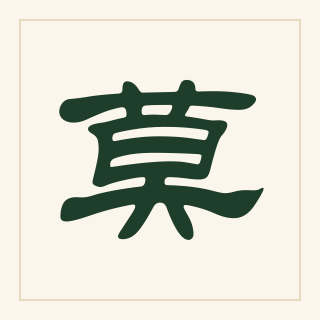
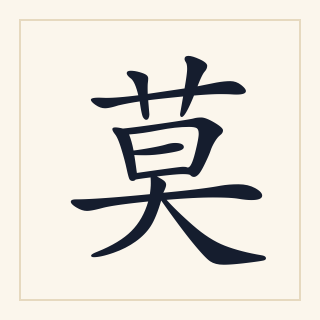
Croquis de l'objetAvant l'écriture · dessiner ce qu'on voyaitOs oraculairesDynastie Shang · v. 1300–1046 av. J.-C.Petit sceauDynastie Qin · 221–206 av. J.-C.Écriture cléricaleDynastie Han · 206 av. J.-C.–220 apr. J.-C.Style régulierDe Wei-Jin aux Tang · v. IIIe–IXe s. apr. J.-C.
莫字甲骨文从艸从日,日没草中,会意为日暮、无;后借为否定词『莫(不)』。金文、小篆承之。
Ce que montre le croquis
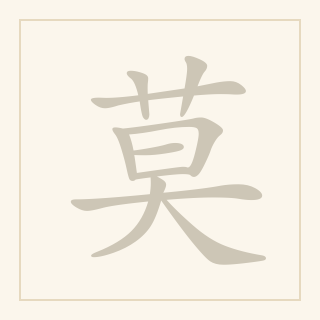
Origines et compléments
莫本义为日暮(暮),假借为否定词『没有、不要』。
Structure du caractère
莫为会意字,日在草中,表示天晚;否定义为假借。
En bref
Pinyinmò
Radical艹
Nombre de traits11
UnicodeU+83AB
Type de caractère会意
Thème虚词
Six langues, un seul caractère
Chaque page propose des versions hreflang ; changer de langue garde les glyphes et les sens alignés.
English
none, do not
Mo was originally an associative character of the sun in grass meaning dusk and was borrowed as a negative none or do not.
Français
aucun, ne pas
Mo était à l'origine un caractère associatif du soleil dans l'herbe signifiant le crépuscule et a été emprunté comme négation aucun ou ne pas.
Español
ninguno, no
Mo era originalmente un carácter asociativo del sol en la hierba que significaba el crepúsculo y se tomó prestado como negación ninguno o no.
العربية
لا، لا أحد
مو كان في الأصل حرفاً تركيبياً للشمس في العشب يعني الغسق ثم استُعير نفياً (لا، لا أحد).
Русский
никто, не
Мо изначально было ассоциативным знаком солнца в траве со значением сумерки и было заимствовано как отрицание «никто, не».
Mots courants
- 莫mòdo not
- 莫非mò fēicould it be