丝
silk, thread
At a glance · 丝
Evolution of the glyph
Five stages, from a sketch of the real object to regular script — tap a stage, drag the timeline, or play the animation.
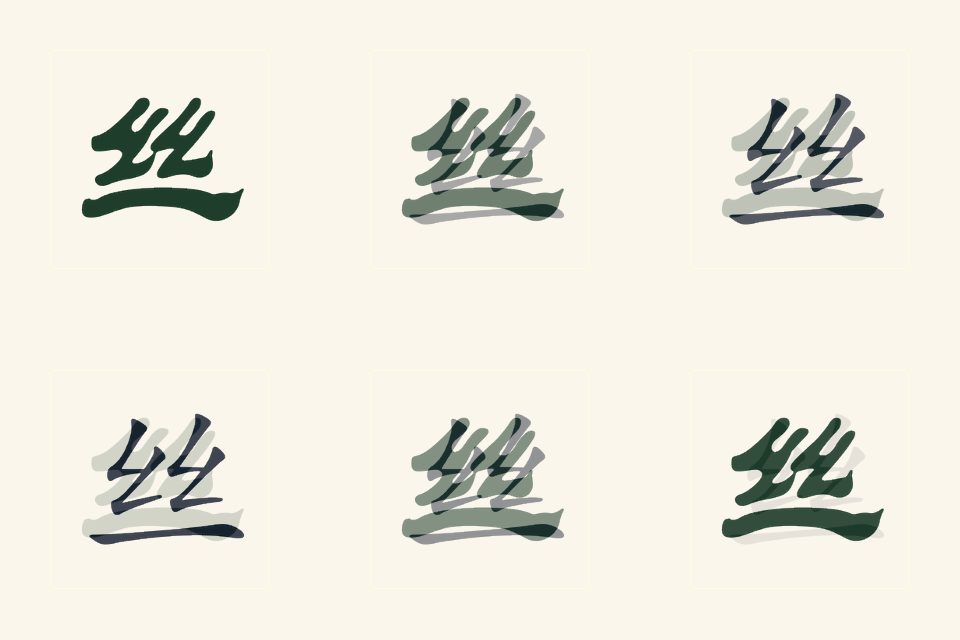
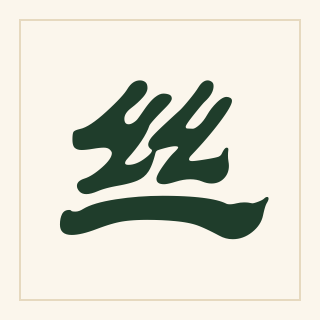
Object sketchBefore writing · drawing what was seenOracle boneShang dynasty · c. 1300–1046 BCESeal scriptQin dynasty · 221–206 BCEClerical scriptHan dynasty · 206 BCE–220 CERegular scriptWei–Jin to Tang · c. 3rd–9th century CE
⚠ Some ancient forms are not attested:oracle bone form、seal script form。No excavated oracle bone / seal artifact is attested for this character yet; we leave it blank rather than fabricate.
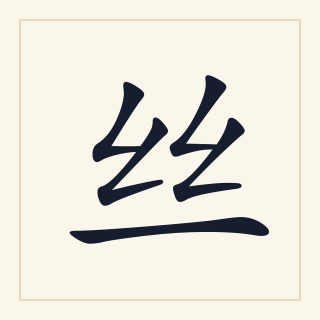
丝字甲骨文、小篆象两束蚕丝之形(繁體絲),本义为蚕丝、丝线。金文承之。
What the sketch shows
Origins & notes
丝本义为蚕丝、丝线。
Structure
丝为象形字,描摹两束丝缕相连。
At a glance
Pinyinsī
Radical一
Strokes5
UnicodeU+4E1D
Character type象形
Theme器物
Six languages, one character
Each page offers hreflang versions; switching language keeps the glyphs and meanings aligned.
English
silk, thread
Si is a pictograph of two skeins of silk, meaning silk and thread.
Français
soie, fil
Si est un pictogramme de deux écheveaux de soie, signifiant soie et fil.
Español
seda, hilo
Si es un pictograma de dos madejas de seda, significa seda e hilo.
العربية
حرير، خيط
سي رسم تخطيطي لحزمتين من الحرير، ويعني الحرير والخيط.
Русский
шёлк, нить
Сы — пиктограмма двух мотков шёлка, означает шёлк и нить.
Common words
- 丝绸sī chóusilk
- 丝线sī xiànsilk thread