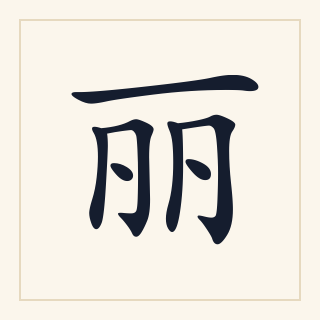
丽
beautiful, pair
At a glance · 丽
Evolution of the glyph
Five stages, from a sketch of the real object to regular script — tap a stage, drag the timeline, or play the animation.
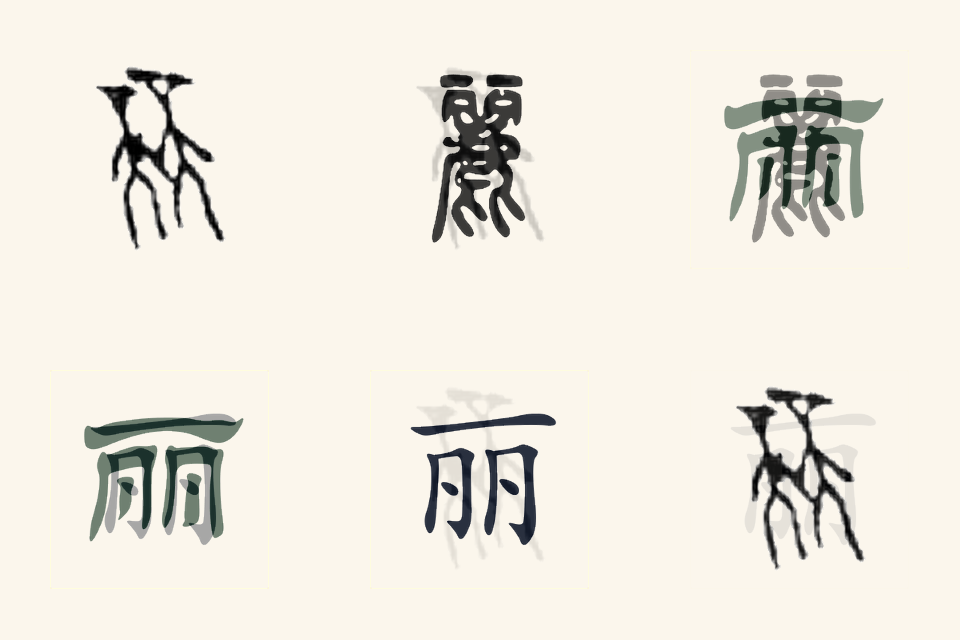
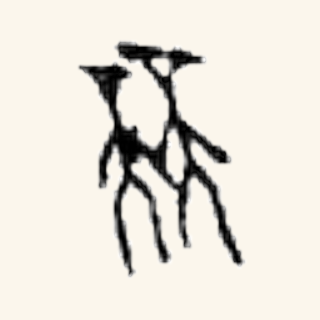
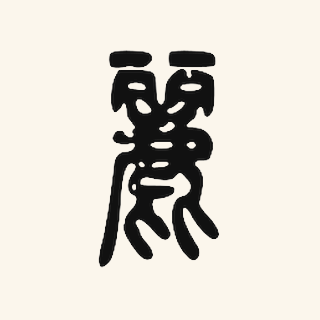
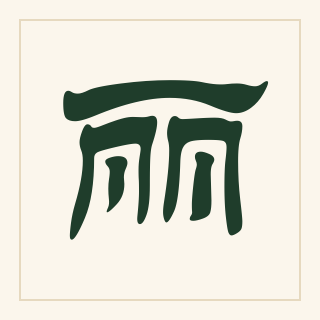
Object sketchBefore writing · drawing what was seenOracle boneShang dynasty · c. 1300–1046 BCESeal scriptQin dynasty · 221–206 BCEClerical scriptHan dynasty · 206 BCE–220 CERegular scriptWei–Jin to Tang · c. 3rd–9th century CE
丽(麗)字甲骨文象两头鹿并列之形,本义为成双、美丽;小篆承之,简化作『丽』。
What the sketch shows
Origins & notes
丽本义为成对、美丽,引申为华丽。
Structure
丽(麗)为象形字,描摹二鹿并行为偶,表成双之美。
At a glance
Pinyinlì
Radical一
Strokes8
UnicodeU+4E3D
Character type象形
Theme其他
Six languages, one character
Each page offers hreflang versions; switching language keeps the glyphs and meanings aligned.
English
beautiful, pair
Li (originally li) pictured two deer together, meaning a pair and, by extension, beautiful.
Français
beau, paire
Li (à l'origine li) représentait deux cerfs ensemble, signifiant une paire puis beau.
Español
bello, par
Li (originalmente li) representaba dos ciervos juntos, significando par y luego bello.
العربية
جميل، زوج
لي (لي في الأصل) كانت تصور غزالين معاً، تعني الزوج ثم الجميل.
Русский
красивый, пара
Ли (изначально ли) изображало двух оленей вместе — пара, отсюда красивый.
Common words
- 美丽měi lìbeautiful
- 丽水lí shuǐLishui