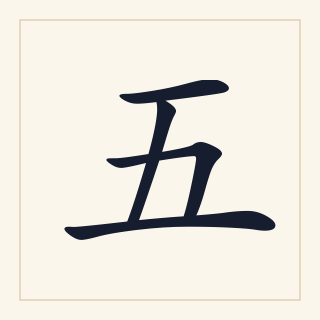
五
five
At a glance · 五
Evolution of the glyph
Five stages, from a sketch of the real object to regular script — tap a stage, drag the timeline, or play the animation.
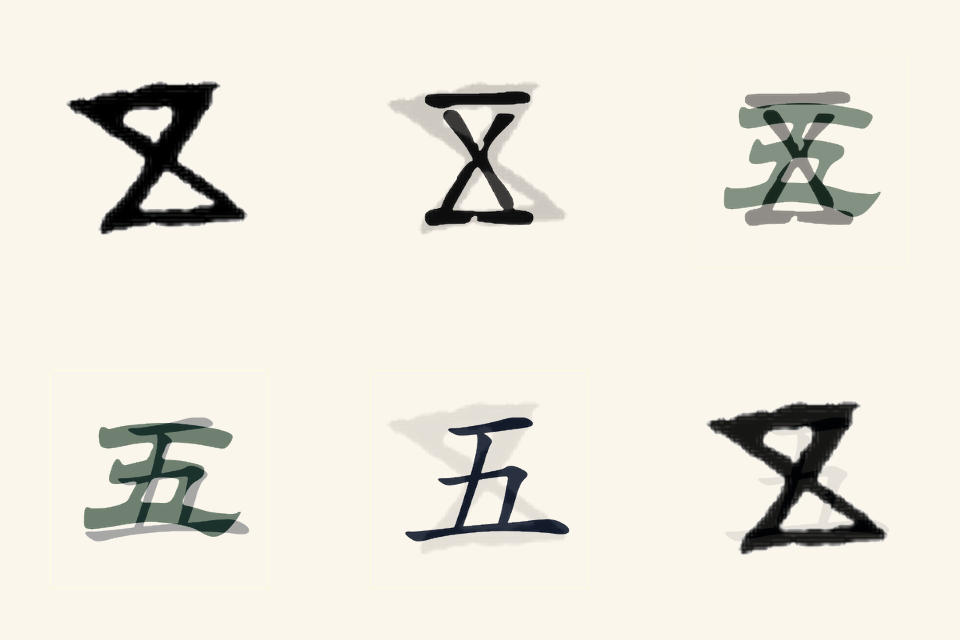
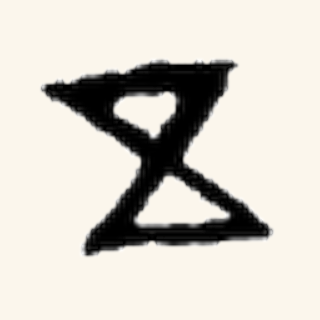
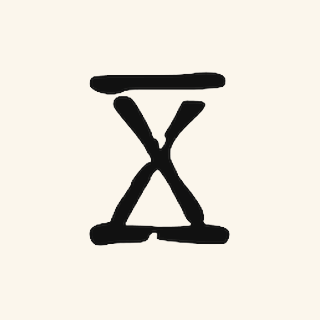
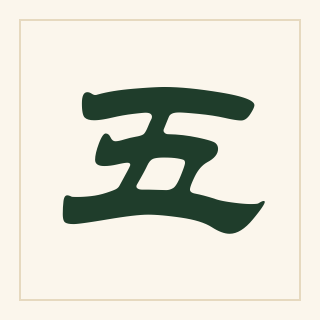
Object sketchBefore writing · drawing what was seenOracle boneShang dynasty · c. 1300–1046 BCESeal scriptQin dynasty · 221–206 BCEClerical scriptHan dynasty · 206 BCE–220 CERegular scriptWei–Jin to Tang · c. 3rd–9th century CE
五字甲骨文、金文象两横相交或X形,为指事字,本义为数目五;小篆作『五』。
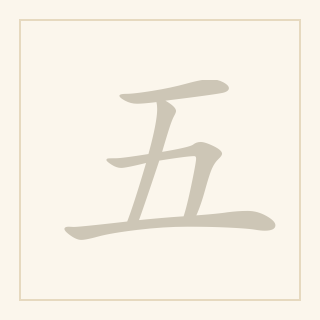
What the sketch shows
Origins & notes
五本义为数目五。
Structure
五为指事字,以交错之形表数之中位。
At a glance
Pinyinwǔ
Radical二
Strokes4
UnicodeU+4E94
Character type指事
Theme数术
Six languages, one character
Each page offers hreflang versions; switching language keeps the glyphs and meanings aligned.
English
five
Wu is an ideograph marking the number five.
Français
cinq
Wu est un caractère indicatif marquant le nombre cinq.
Español
cinco
Wu es un carácter indicativo que marca el número cinco.
العربية
خمسة
وو حرف دال على العدد خمسة.
Русский
пять
У — указательный знак, обозначающий число пять.
Common words
- 五个wǔ gèfive
- 五月wǔ yuèMay