必
must, certainly
At a glance · 必
Evolution of the glyph
Five stages, from a sketch of the real object to regular script — tap a stage, drag the timeline, or play the animation.
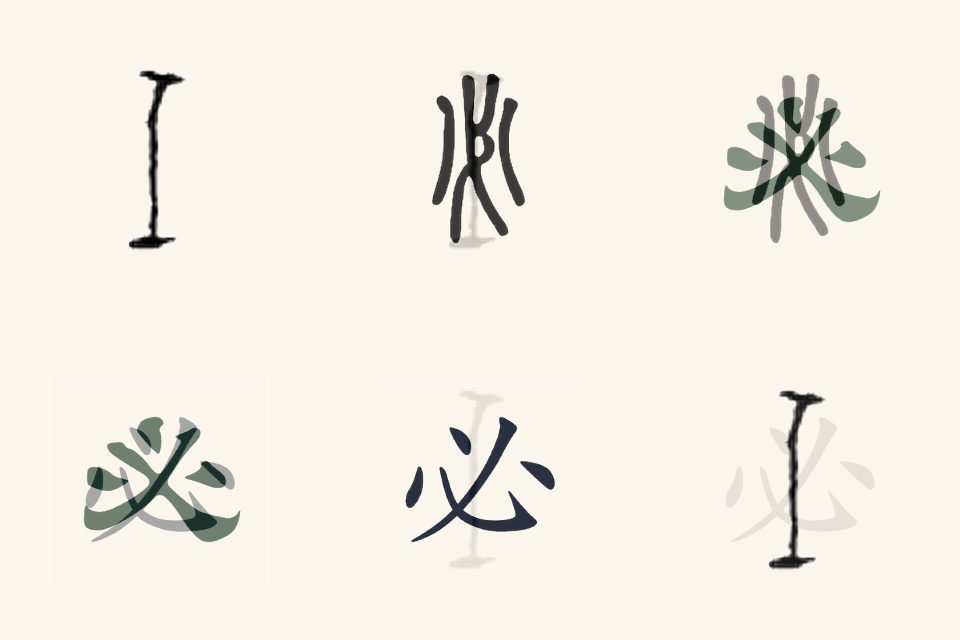
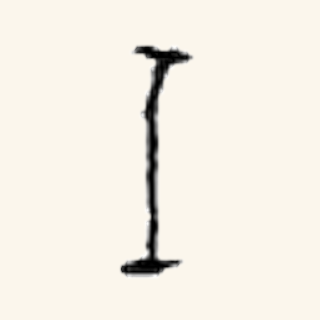
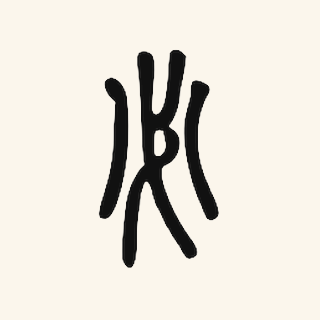
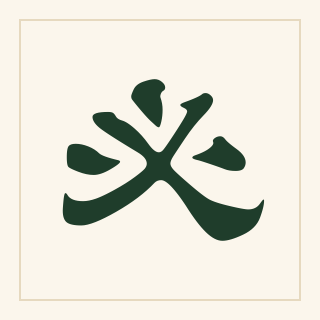
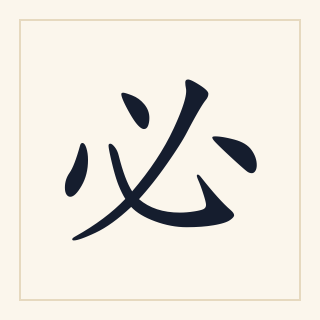
Object sketchBefore writing · drawing what was seenOracle boneShang dynasty · c. 1300–1046 BCESeal scriptQin dynasty · 221–206 BCEClerical scriptHan dynasty · 206 BCE–220 CERegular scriptWei–Jin to Tang · c. 3rd–9th century CE
必字小篆从八从弋,为指事字,本义为分极、必定;表示肯定副词『一定』。甲骨文未见。
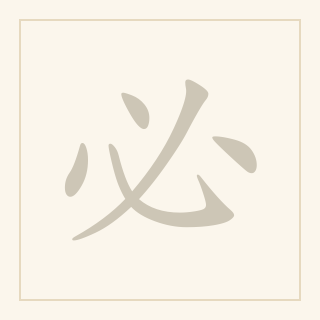
What the sketch shows
Origins & notes
必本义为肯定、必定,副词。
Structure
必为指事字,从八(分)从弋,表示必然之分定。
At a glance
Pinyinbì
Radical心
Strokes5
UnicodeU+5FC5
Character type指事
Theme虚词
Six languages, one character
Each page offers hreflang versions; switching language keeps the glyphs and meanings aligned.
English
must, certainly
Bi is an ideograph meaning certainly and must.
Français
certainement, devoir
Bi est un caractère indicatif signifiant certainement et devoir.
Español
debe, ciertamente
Bi es un carácter indicativo que significa debe y ciertamente.
العربية
يجب، حتماً
بي حرف دال يعني حتماً ويجب.
Русский
обязательно, непременно
Би — указательный знак, означающий обязательно и непременно.
Common words
- 必须bì xūmust
- 必然bì ráninevitable