改
change, correct
At a glance · 改
Evolution of the glyph
Five stages, from a sketch of the real object to regular script — tap a stage, drag the timeline, or play the animation.
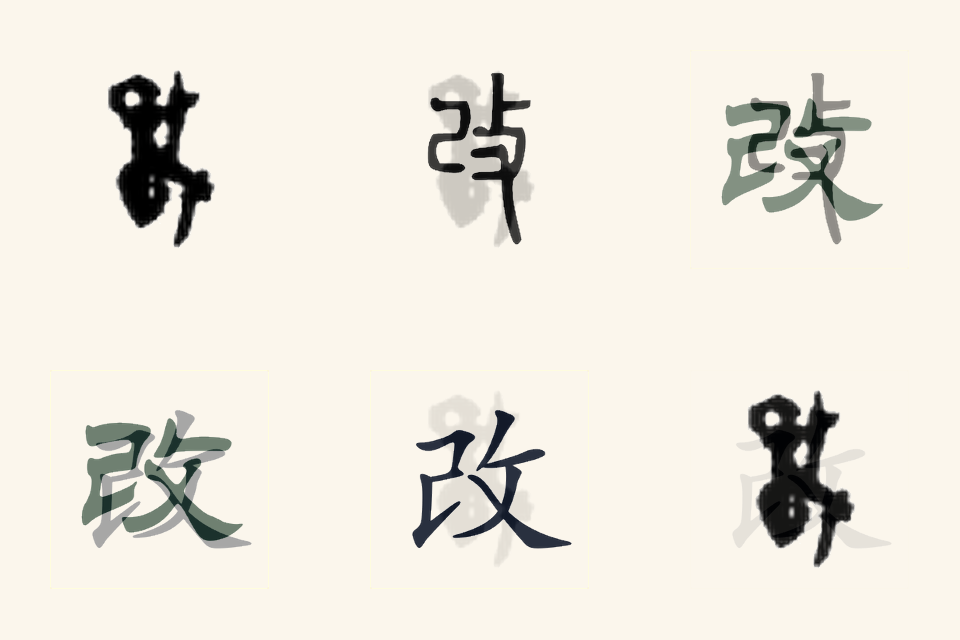
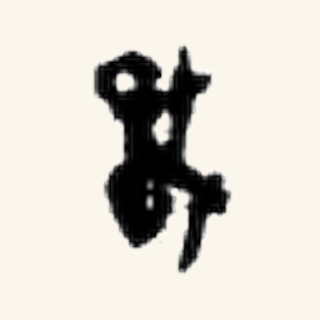
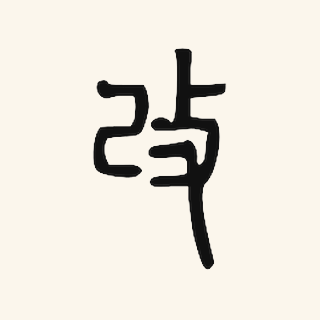
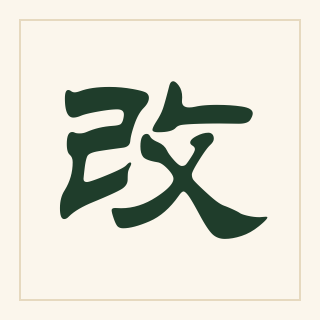
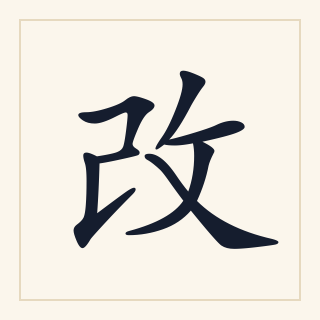
Object sketchBefore writing · drawing what was seenOracle boneShang dynasty · c. 1300–1046 BCESeal scriptQin dynasty · 221–206 BCEClerical scriptHan dynasty · 206 BCE–220 CERegular scriptWei–Jin to Tang · c. 3rd–9th century CE
改字小篆从攴从己,会意为以杖改己,本义为更改、改正。甲骨文未见。
What the sketch shows
Origins & notes
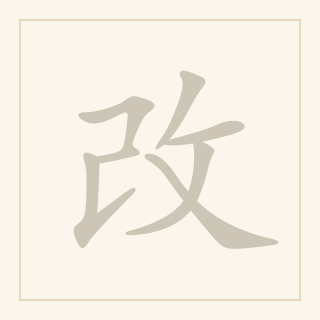
改本义为改变、改正。
Structure
会意字,从攴(击)从己(自身),表示改过。
At a glance
Pinyingǎi
Radical攵
Strokes7
UnicodeU+6539
Character type会意
Theme动作
Six languages, one character
Each page offers hreflang versions; switching language keeps the glyphs and meanings aligned.
English
change, correct
Gai is an associative character of striking and self, meaning to change and correct.
Français
changer, corriger
Gai est un caractère associatif de frapper et soi, signifiant changer et corriger.
Español
cambiar, corregir
Gai es un carácter asociativo de golpear y uno mismo, significa cambiar y corregir.
العربية
يغيّر، يصحّح
غاي حرف تركيبي للضرب والنفس، يعني التغيير والتصحيح.
Русский
менять, исправлять
Гай — ассоциативный знак удара и себя, означает менять и исправлять.
Common words
- 改变gǎi biànchange
- 改正gǎi zhèngcorrect