来
come, wheat
At a glance · 来
Evolution of the glyph
Five stages, from a sketch of the real object to regular script — tap a stage, drag the timeline, or play the animation.
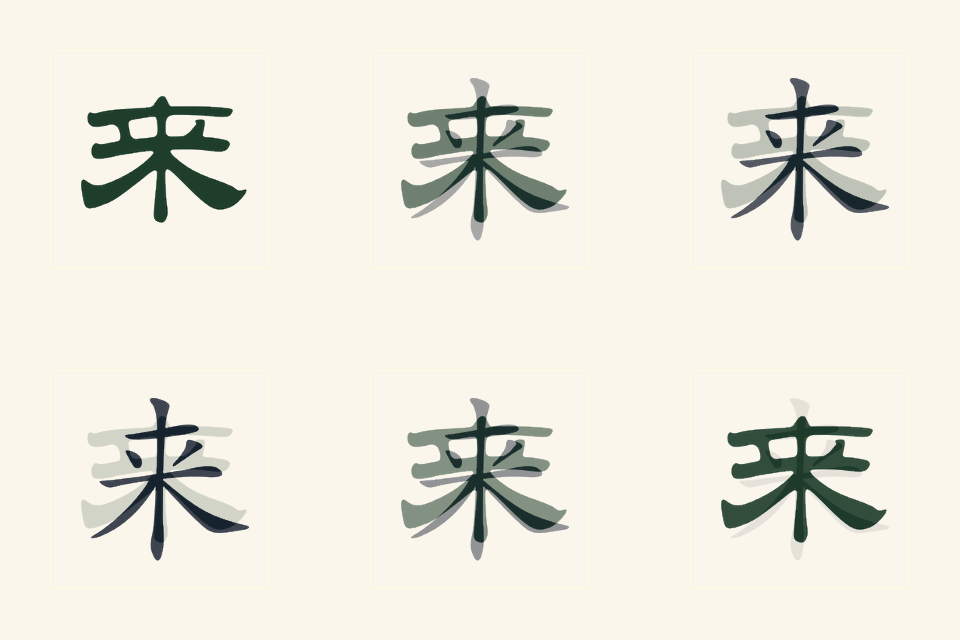
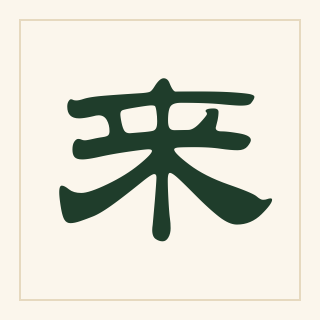
Object sketchBefore writing · drawing what was seenOracle boneShang dynasty · c. 1300–1046 BCESeal scriptQin dynasty · 221–206 BCEClerical scriptHan dynasty · 206 BCE–220 CERegular scriptWei–Jin to Tang · c. 3rd–9th century CE
⚠ Some ancient forms are not attested:oracle bone form、seal script form。No excavated oracle bone / seal artifact is attested for this character yet; we leave it blank rather than fabricate.
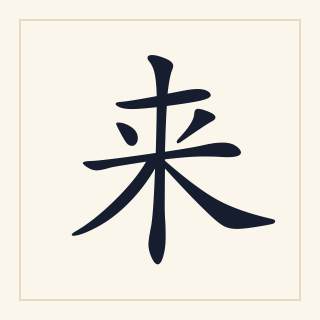
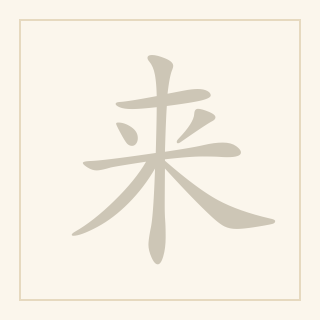
来字甲骨文象小麦之形,本义为麦;后借为来往之来。金文、小篆承其形,隶变作『来』。
What the sketch shows
Origins & notes
来本义为麦类作物,假借为来去之来。
Structure
来为象形字,描摹麦株;其『来去』义为假借用法。
At a glance
Pinyinlái
Radical木
Strokes7
UnicodeU+6765
Character type象形
Theme植物
Six languages, one character
Each page offers hreflang versions; switching language keeps the glyphs and meanings aligned.
English
come, wheat
Lai was originally a pictograph of wheat and was borrowed to mean come and go.
Français
venir, blé
Lai était à l'origine un pictogramme du blé et a été emprunté pour signifier venir et aller.
Español
venir, trigo
Lai era originalmente un pictograma del trigo y se tomó prestado para significar venir y ir.
العربية
يأتي، قمح
لاي كان في الأصل رسماً للقمح ثم استعير ليعني المجيء والذهاب.
Русский
приходить, пшеница
Лай изначально был пиктограммой пшеницы и был заимствован для значения приходить.
Common words
- 来去lái qùcome and go
- 将来jiāng láifuture