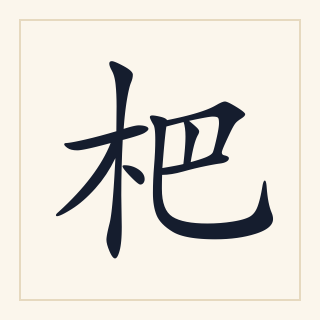
杷
loquat (in "pipa")
At a glance · 杷
Evolution of the glyph
Five stages, from a sketch of the real object to regular script — tap a stage, drag the timeline, or play the animation.
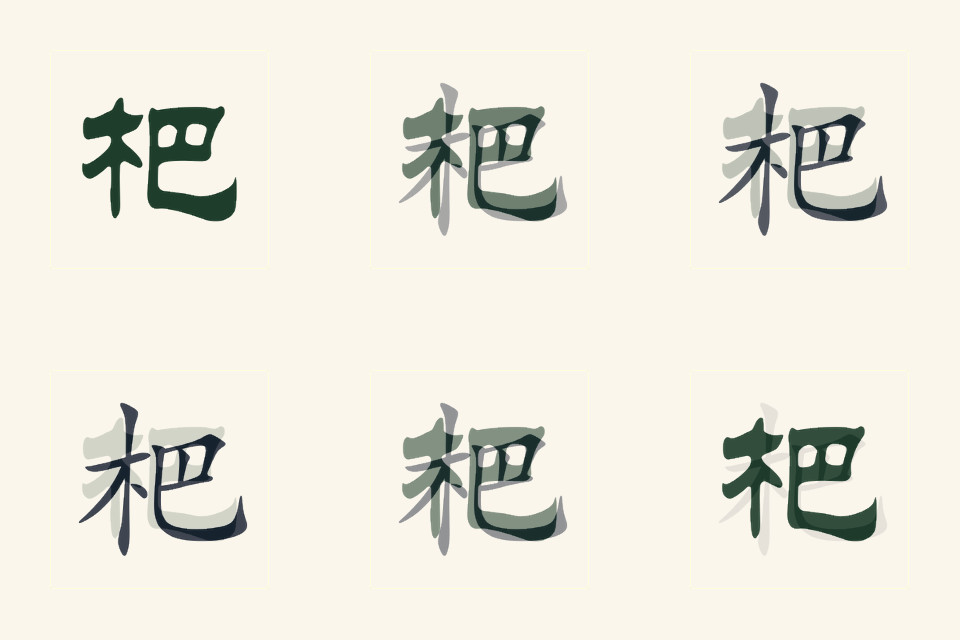
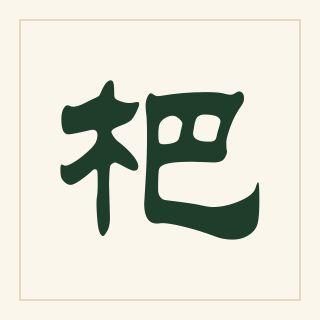
Object sketchBefore writing · drawing what was seenOracle boneShang dynasty · c. 1300–1046 BCESeal scriptQin dynasty · 221–206 BCEClerical scriptHan dynasty · 206 BCE–220 CERegular scriptWei–Jin to Tang · c. 3rd–9th century CE
⚠ Some ancient forms are not attested:oracle bone form、seal script form。No excavated oracle bone / seal artifact is attested for this character yet; we leave it blank rather than fabricate.
「杷」从木,巴声,与「枇」合为枇杷。形声字,未见甲骨文。
What the sketch shows
Origins & notes
本义为枇杷,亦指杷(农具)类。
Structure
形声字,从木(意符),巴(bā)为声符。
At a glance
Pinyinpá
Radical木
Strokes8
UnicodeU+6777
Character type形声
Theme植物
Six languages, one character
Each page offers hreflang versions; switching language keeps the glyphs and meanings aligned.
English
loquat (in "pipa")
Used in "pipa" for the loquat.
Français
néflier (dans "pipa")
Employé dans "pipa" pour le néflier.
Español
níspero (en "pipa")
Usado en "pipa" para el níspero.
العربية
الكمثري (في «بيبا»)
يُستخدم في «بيبا» للكمثري.
Русский
мушмула (в «пипа»)
Используется в «пипа» для мушмулы.
Common words
- 杷páloquat
- 枇杷pí páloquat