立
stand, establish
At a glance · 立
Evolution of the glyph
Five stages, from a sketch of the real object to regular script — tap a stage, drag the timeline, or play the animation.
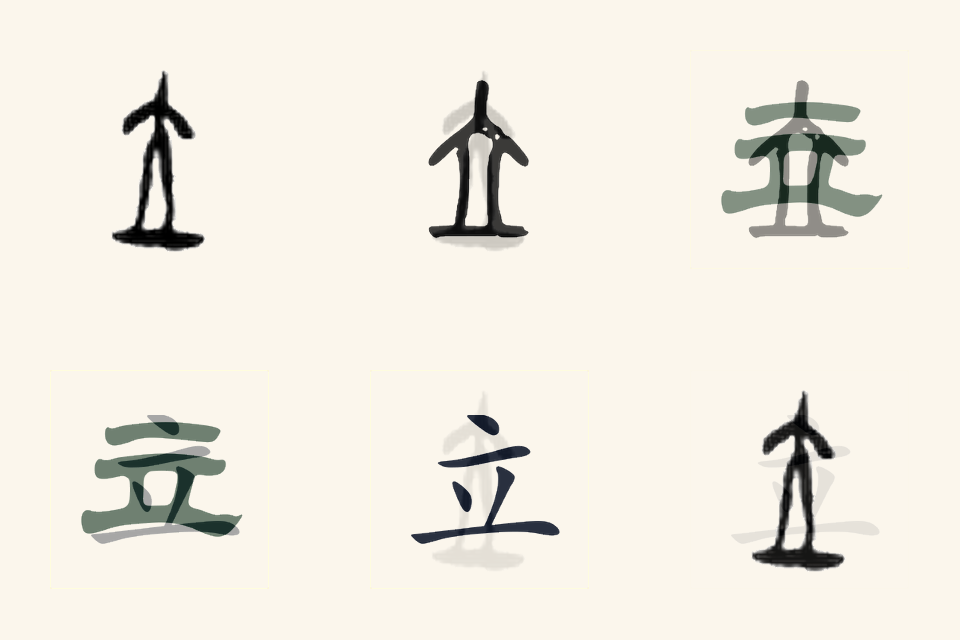
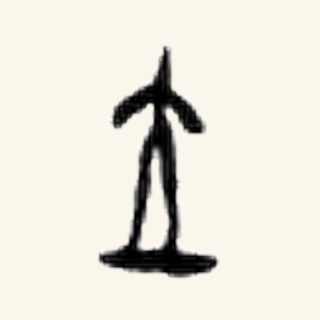
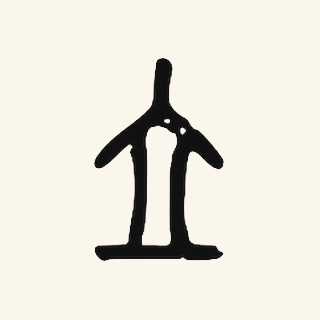
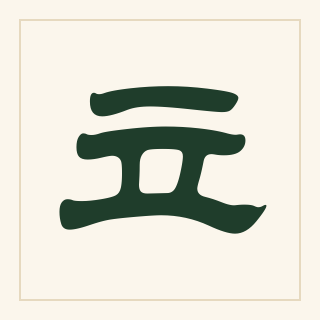
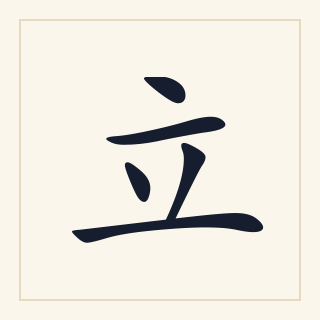
Object sketchBefore writing · drawing what was seenOracle boneShang dynasty · c. 1300–1046 BCESeal scriptQin dynasty · 221–206 BCEClerical scriptHan dynasty · 206 BCE–220 CERegular scriptWei–Jin to Tang · c. 3rd–9th century CE
立字甲骨文象人站立于地之形,本义为站立、竖立。金文、小篆承之。
What the sketch shows
Origins & notes
立本义为站立、建立。
Structure
立为象形字,描摹人挺立地上。
At a glance
Pinyinlì
Radical立
Strokes5
UnicodeU+7ACB
Character type象形
Theme动作
Six languages, one character
Each page offers hreflang versions; switching language keeps the glyphs and meanings aligned.
English
stand, establish
Li is a pictograph of a person standing on the ground, meaning to stand and establish.
Français
debout, établir
Li est un pictogramme d'une personne debout sur terre, signifiant se tenir debout et établir.
Español
de pie, establecer
Li es un pictograma de una persona de pie en la tierra, significa estar de pie y establecer.
العربية
يقف، يؤسس
لي رسم تخطيطي لشخص واقف على الأرض، ويعني الوقوف والتأسيس.
Русский
стоять, учреждать
Ли — пиктограмма человека, стоящего на земле, означает стоять и учреждать.
Common words
- 站立zhàn lìstand
- 成立chéng lìestablish