宙
tiempo, eternidad
De un vistazo · 宙
Evolución del glifo
Cinco etapas, desde el dibujo del objeto hasta el kaishu: toque una etapa, arrastre la línea de tiempo o reproduzca la animación.
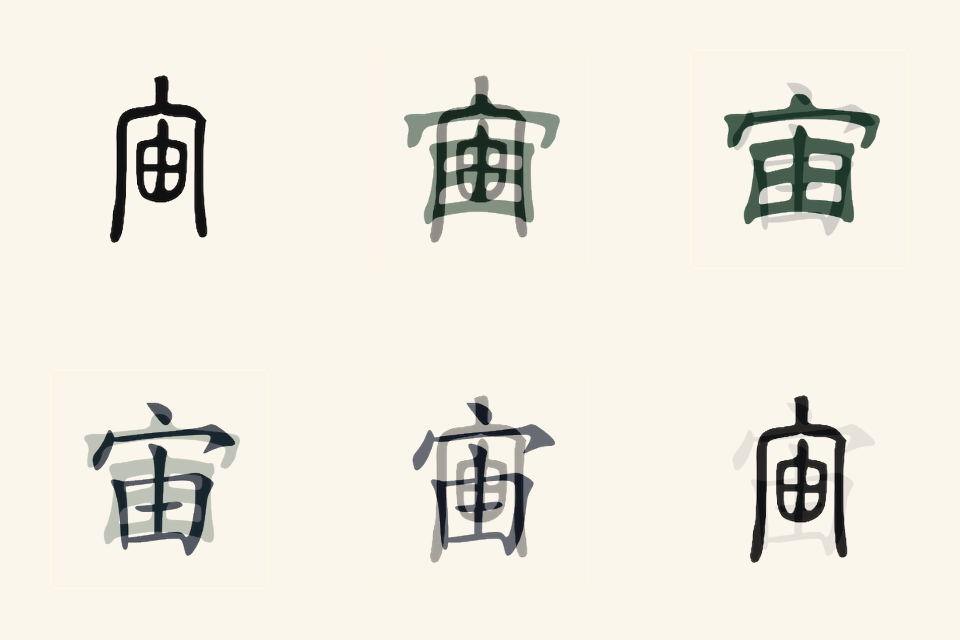
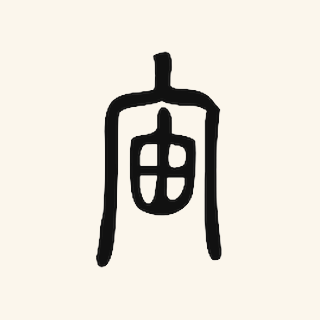
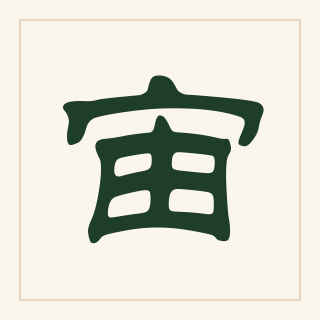
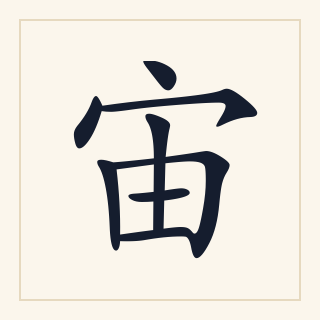
Dibujo del objetoAntes de escribir · dibujar lo que se veíaHueso oracularDinastía Shang · h. 1300–1046 a. C.Sello pequeñoDinastía Qin · 221–206 a. C.Escritura clericalDinastía Han · 206 a. C.–220 d. C.Estilo regularDe Wei-Jin a Tang · h. siglos III–IX d. C.
⚠ Algunas formas antiguas no están attestiguadas:forma en hueso oracular。No hay artefacto en hueso oracular / sello para este carácter; lo dejamos en blanco en vez de inventar.
宙字小篆从宀由声,为形声字;本义指房屋的栋梁,后引申为往来古今之时间。甲骨文未见。
Qué muestra el dibujo
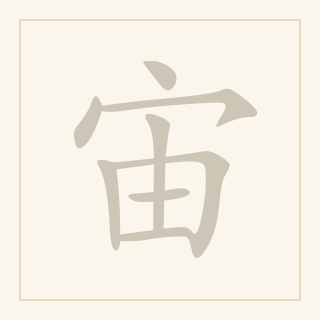
Shuowen Jiezi
直又切。舟輿所極覆也。从宀由聲。。— 《说文解字》
Origen y notas
宙本义为屋栋,后专指古往今来的时间。
Estructura
形声字,上部『宀』为意符表房屋,下部『由』为声符。
De un vistazo
Pinyinzhòu
Radical宀
Trazos8
UnicodeU+5B99
Tipo de carácter形声
Tema其他
Seis idiomas, un solo carácter
Cada página ofrece versiones hreflang; al cambiar de idioma, los glifos y los significados siguen alineados.
English
time, eternity
Zhou originally meant the ridge beam of a house and later came to denote time and eternity.
Français
temps, éternité
Zhou signifiait à l'origine la poutre faîtière d'une maison et a fini par désigner le temps et l'éternité.
Español
tiempo, eternidad
Zhou originalmente significaba la viga del techo y luego pasó a denotar el tiempo y la eternidad.
العربية
الزمن، الأبدية
تشو كان في الأصل يعني العارضة العلوية للسقف ثم أصبح يدل على الزمن والخلود.
Русский
время, вечность
Чжоу изначально означал коньковую балку крыши и позже стал обозначать время и вечность.
Palabras comunes
- 宇宙yǔ zhòuuniverse