子
enfant / fils
En bref · 子
Évolution du tracé
Cinq étapes, du croquis de l'objet au kaishu : touchez une étape, faites glisser la frise ou lancez l'animation.
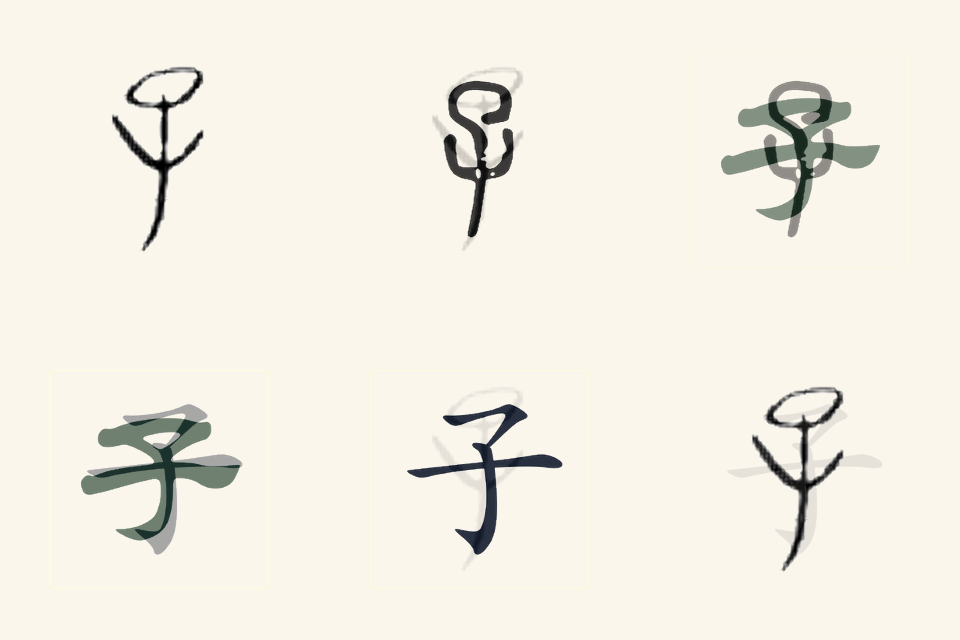
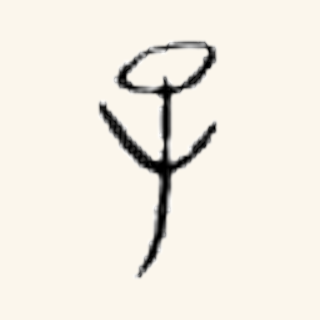
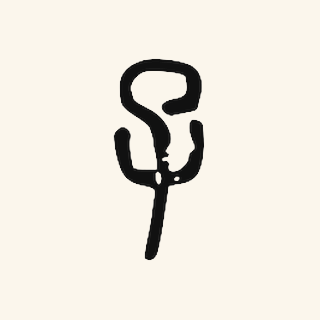
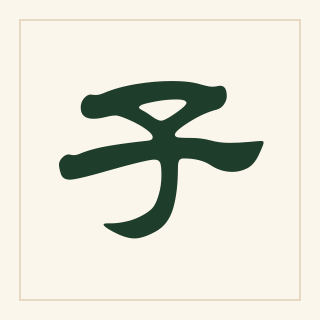
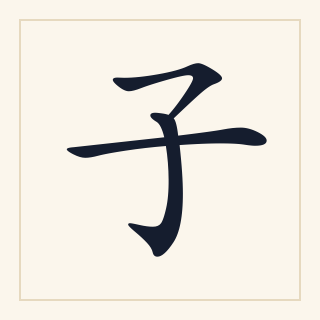
Croquis de l'objetAvant l'écriture · dessiner ce qu'on voyaitOs oraculairesDynastie Shang · v. 1300–1046 av. J.-C.Petit sceauDynastie Qin · 221–206 av. J.-C.Écriture cléricaleDynastie Han · 206 av. J.-C.–220 apr. J.-C.Style régulierDe Wei-Jin aux Tang · v. IIIe–IXe s. apr. J.-C.
「子」甲骨文象幼儿裹襁褓之形,有头双臂与足,小篆承之。
Ce que montre le croquis
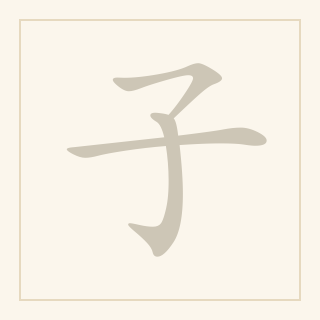
Origines et compléments
「子」本义为婴儿、孩子,引申子女、子嗣、尊称。
Structure du caractère
象形字,象幼儿之形,本为小儿,引申子女、子时。
En bref
Pinyinzǐ
Radical子
Nombre de traits3
UnicodeU+5B50
Type de caractère象形
Thème人伦
Six langues, un seul caractère
Chaque page propose des versions hreflang ; changer de langue garde les glyphes et les sens alignés.
English
offspring
offspring, child; fruit, seed of; first earthly branch
Français
enfant / fils
Enfant, fils. «犹子比儿» : l'enfant, le neveu.
Español
niño / hijo
Niño, hijo. «犹子比儿»: el niño, el sobrino.
العربية
طفل / ابن
طفل، ابن. «犹子比儿»: الطفل، ابن الأخ.
Русский
ребёнок / сын
Ребёнок, сын. «犹子比儿»: дитя, племянник.
Mots courants
- 儿子ér zison
- 孩子hái zichild