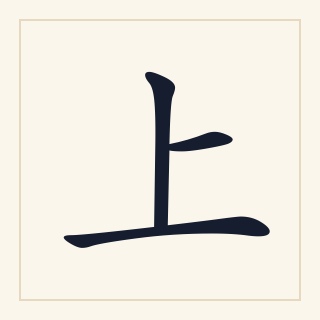
上
top
At a glance · 上
Evolution of the glyph
Five stages, from a sketch of the real object to regular script — tap a stage, drag the timeline, or play the animation.
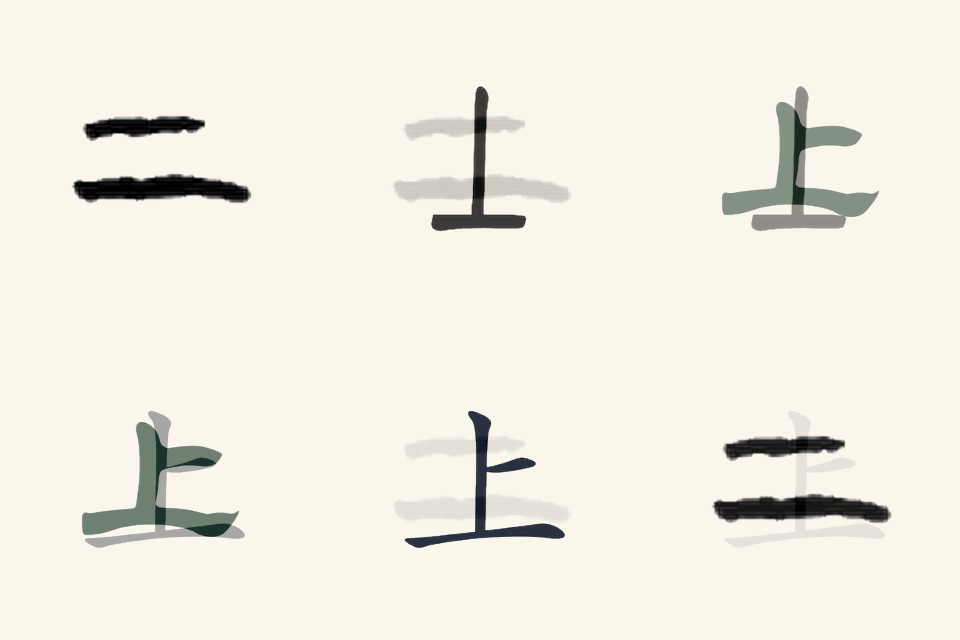
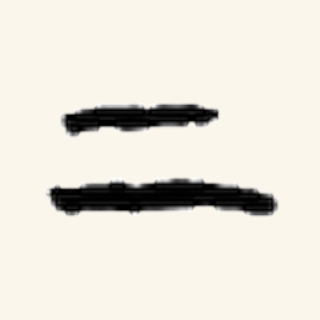
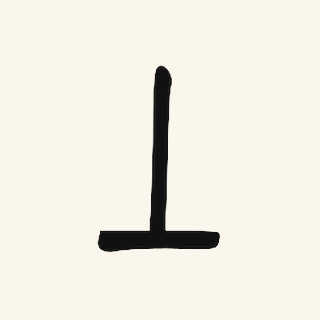
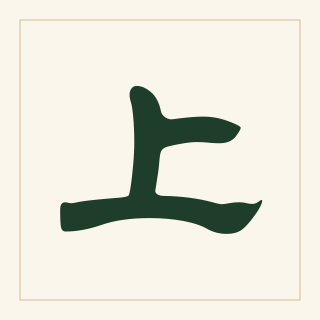
Object sketchBefore writing · drawing what was seenOracle boneShang dynasty · c. 1300–1046 BCESeal scriptQin dynasty · 221–206 BCEClerical scriptHan dynasty · 206 BCE–220 CERegular scriptWei–Jin to Tang · c. 3rd–9th century CE
「上」甲骨文以一长画之上加短画指事,金文小篆承之。
What the sketch shows
Origins & notes
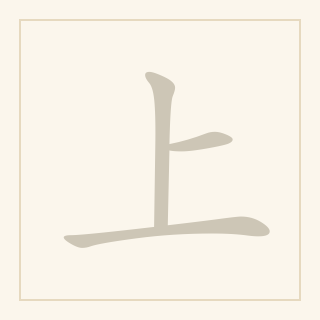
「上」本义为上面、高处,引申上等、在上者。
Structure
指事字,于长画上方着点画表上方,本为上下之上。
At a glance
Pinyinshàng
Radical一
Strokes3
UnicodeU+4E0A
Character type指事
Theme数术
Six languages, one character
Each page offers hreflang versions; switching language keeps the glyphs and meanings aligned.
English
top
top; superior, highest; go up, send up
Français
haut / supérieur
Haut, supérieur. «上和下睦» : ceux du dessus.
Español
alto / superior
Alto, superior. «上和下睦»: los de arriba.
العربية
أعلى / متفوّق
أعلى، متفوّق. «上和下睦»: من في الأعلى.
Русский
верхний / высший
Верхний, высший. «上和下睦»: те, что сверху.
Common words
- 上面shàng miànabove
- 上学shàng xuégo to school