仕
official
At a glance · 仕
Evolution of the glyph
Five stages, from a sketch of the real object to regular script — tap a stage, drag the timeline, or play the animation.
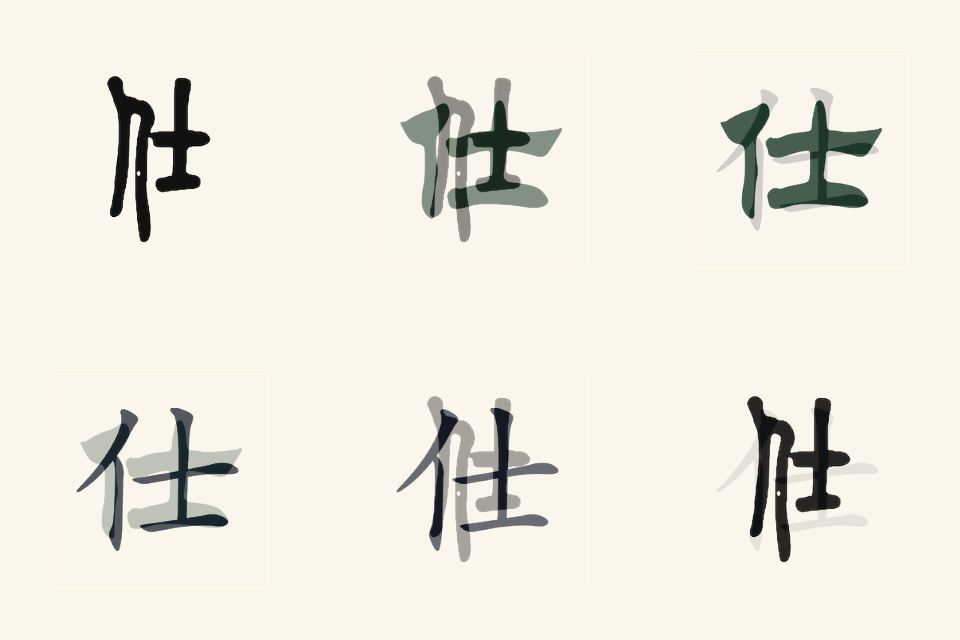
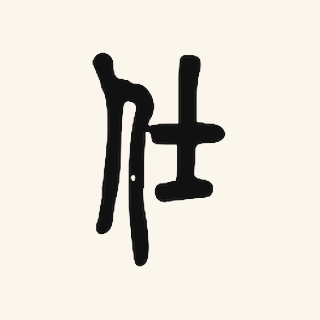
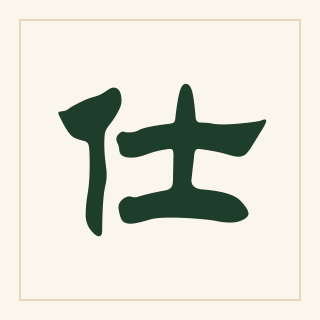
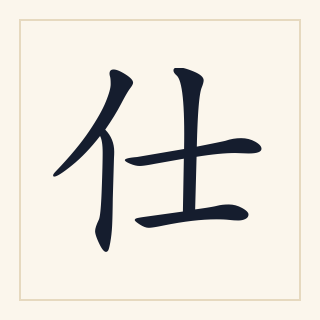
Object sketchBefore writing · drawing what was seenOracle boneShang dynasty · c. 1300–1046 BCESeal scriptQin dynasty · 221–206 BCEClerical scriptHan dynasty · 206 BCE–220 CERegular scriptWei–Jin to Tang · c. 3rd–9th century CE
⚠ Some ancient forms are not attested:oracle bone form。No excavated oracle bone / seal artifact is attested for this character yet; we leave it blank rather than fabricate.
「仕」从人从士,小篆从人士声,会意兼形声。
What the sketch shows
Origins & notes
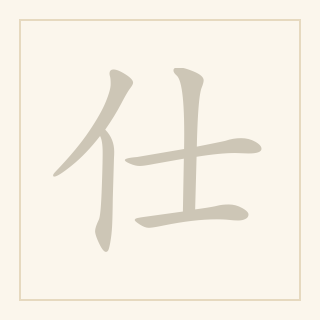
「仕」本义为做官、仕宦,引申士人。
Structure
从人、从士,会意字,士亦表音,本为出仕为官。
At a glance
Pinyinshì
Radical亻
Strokes5
UnicodeU+4ED5
Character type会意
Theme政事
Six languages, one character
Each page offers hreflang versions; switching language keeps the glyphs and meanings aligned.
English
official
official; serve government
Français
fonctionnaire
Fonctionnaire, servir l'État. «学优登仕» : entrer au service de l'État.
Español
funcionario
Funcionario, servir al Estado. «学优登仕»: entrar al servicio del Estado.
العربية
موظف
موظف، يخدم الدولة. «学优登仕»: دخول خدمة الدولة.
Русский
чиновник
Чиновник, служить государству. «学优登仕»: поступить на службу.
Common words
- 仕shìofficial
- 仕途shì túofficial career