宜
convenir
De un vistazo · 宜
Evolución del glifo
Cinco etapas, desde el dibujo del objeto hasta el kaishu: toque una etapa, arrastre la línea de tiempo o reproduzca la animación.
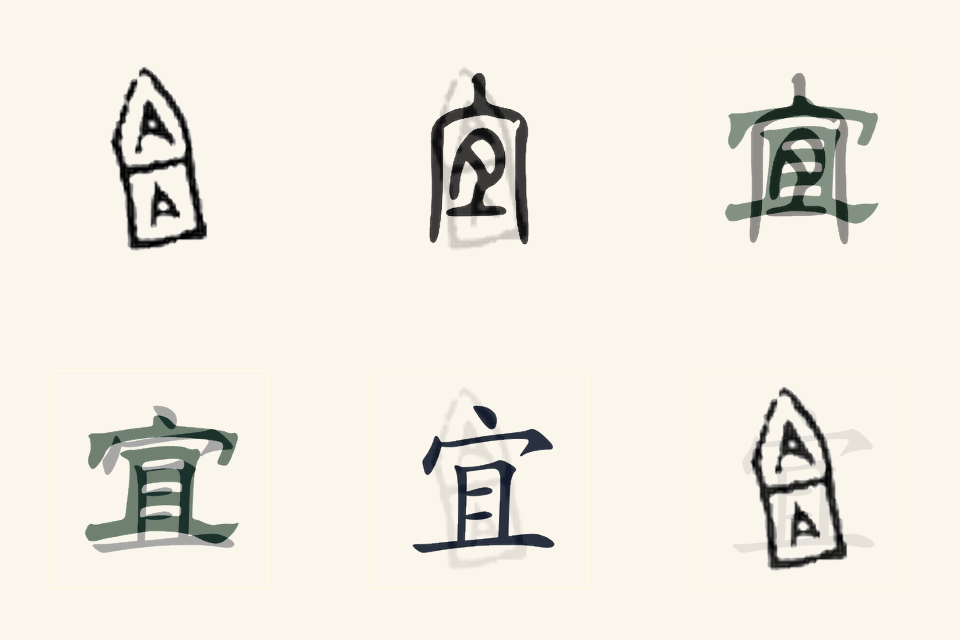
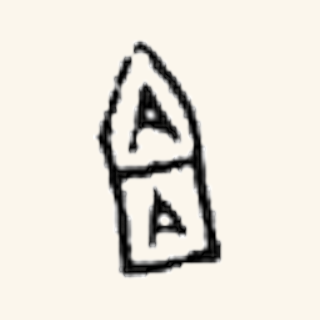
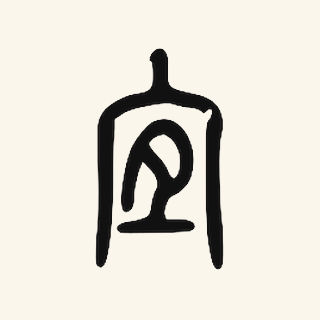

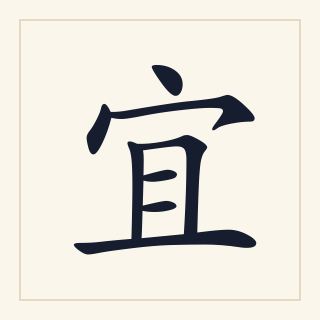
Dibujo del objetoAntes de escribir · dibujar lo que se veíaHueso oracularDinastía Shang · h. 1300–1046 a. C.Sello pequeñoDinastía Qin · 221–206 a. C.Escritura clericalDinastía Han · 206 a. C.–220 d. C.Estilo regularDe Wei-Jin a Tang · h. siglos III–IX d. C.
「宜」甲骨文从肉在俎上,象祭肉适宜,金文小篆承之。
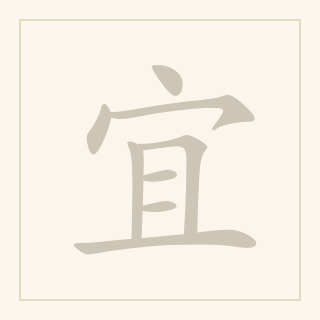
Qué muestra el dibujo
Origen y notas
「宜」本义为适宜、合适,引申应当、便利。
Estructura
从宀从月(肉)从二,会意字,象俎上置肉,本为适宜。
De un vistazo
Pinyinyí
Radical宀
Trazos8
UnicodeU+5B9C
Tipo de carácter会意
Tema德行
Seis idiomas, un solo carácter
Cada página ofrece versiones hreflang; al cambiar de idioma, los glifos y los significados siguen alineados.
English
suitable
suitable, right, fitting, proper
Français
convenir
Convenir, approprié. «慎终宜令» : il convient d'être bon.
Español
convenir
Convenir, apropiado. «慎终宜令»: conviene ser bueno.
العربية
ينبغي
ينبغي، لائق. «慎终宜令»: ينبغي أن يكون حسناً.
Русский
подобает
Подобает, подходящий. «慎终宜令»: следует быть добрым.
Palabras comunes
- 适宜shì yísuitable
- 宜yíshould